The Seven Tiers
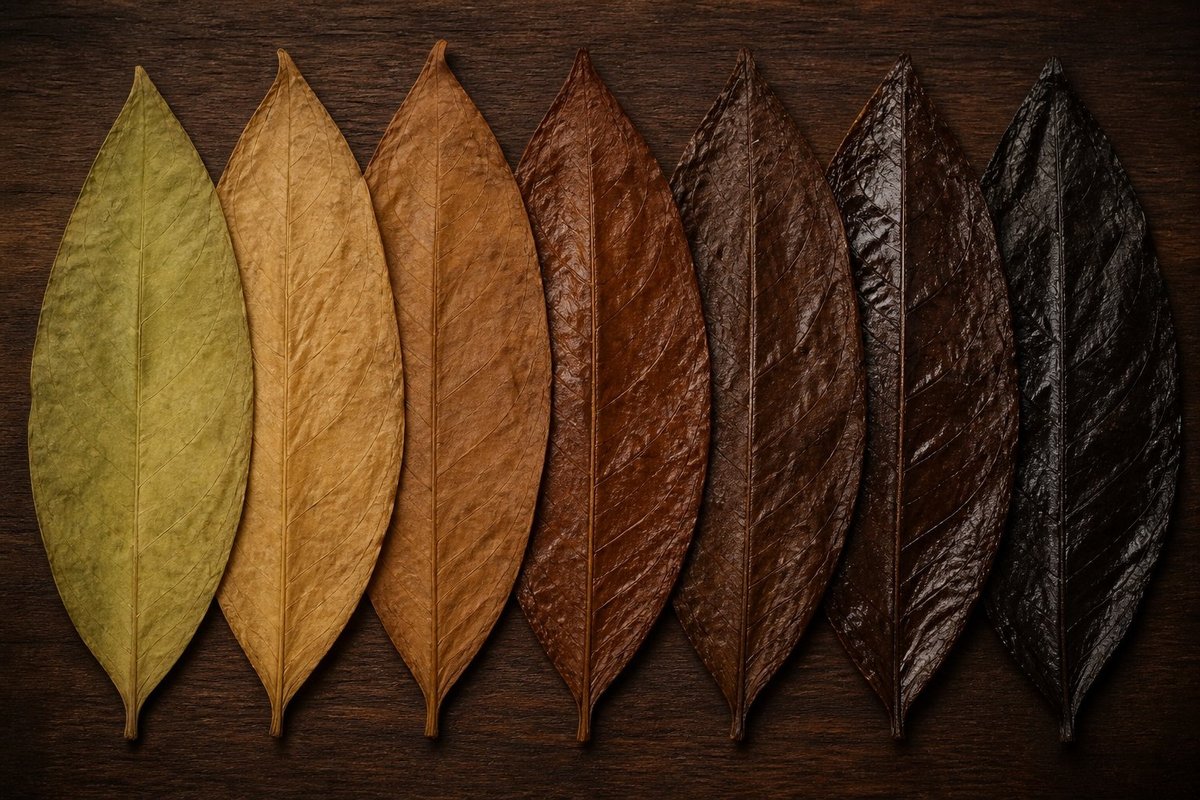
Claro: Pale yellow-green. Connecticut shade or candela tradition. Mild, vegetal, often grassy.
Colorado Claro: Light tan. Mild-medium body. Cedar and almond range.
Colorado: Medium reddish-brown. The Cuban classical wrapper color. Balanced cedar-leather-spice.
Colorado Maduro: Darker reddish-brown. Medium-full body. Cocoa, leather, dried fruit.
Maduro: Dark brown. Full body. Espresso, dark chocolate, sweet finish.
Oscuro: Very dark, near-black. Concentrated, intense. Often produced through extended fermentation (Connecticut Broadleaf or Brazilian Mata Fina).
Double Maduro / Maduro Maduro: The darkest commercial classification. Sweetest, most-concentrated. Limited production.
Color and Fermentation
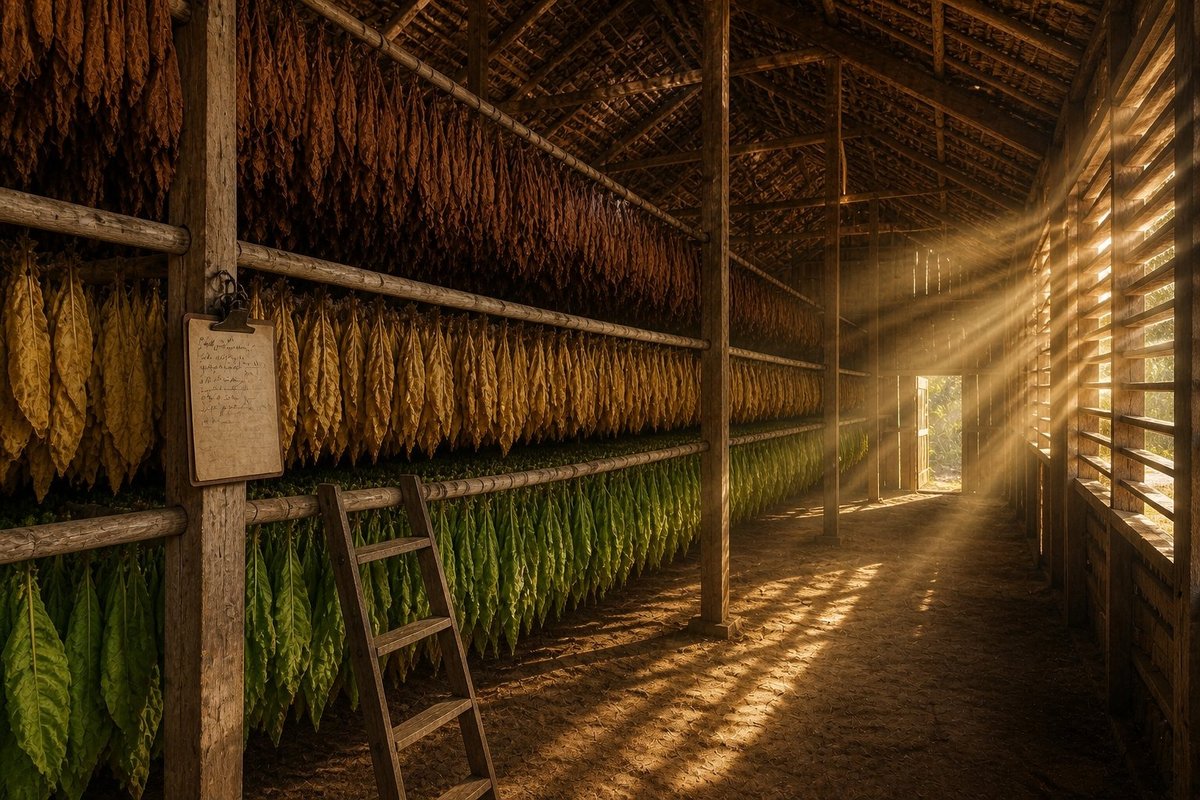
Wrapper color is primarily a function of fermentation duration and intensity. The natural wrapper-leaf chlorophyll breaks down into successively darker pigment compounds; longer fermentation produces darker wrapper. The flavor that develops in parallel — sweeter, more concentrated, with more developed Maillard reaction products — is the editorial reason a maduro tastes like a maduro.
Fermentation also concentrates ammonia compounds in the leaf during early stages. Properly-fermented maduro wrappers have these compounds substantially reduced; under-fermented wrappers retain ammonia and produce harsh smoke. The wrapper color tells the smoker something about the fermentation discipline.
Reading the Color
The aficionado reads three color signals: uniformity (well-sorted production matches wrapper color across the entire box), oil sheen (visible oil on the wrapper indicates proper aging), and tone progression (the lighter end of the wrapper sometimes appears at the head, indicating where the leaf was cut). Color uniformity within a box is a reliable factory-discipline indicator.