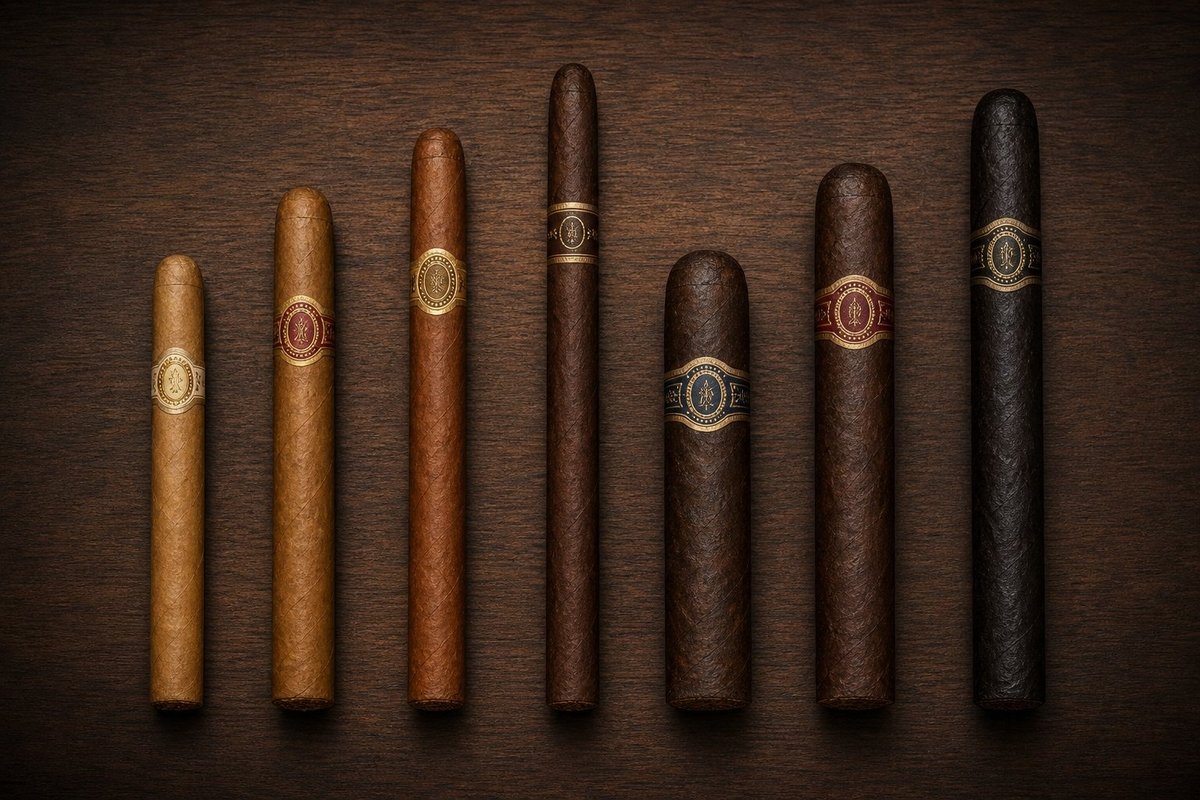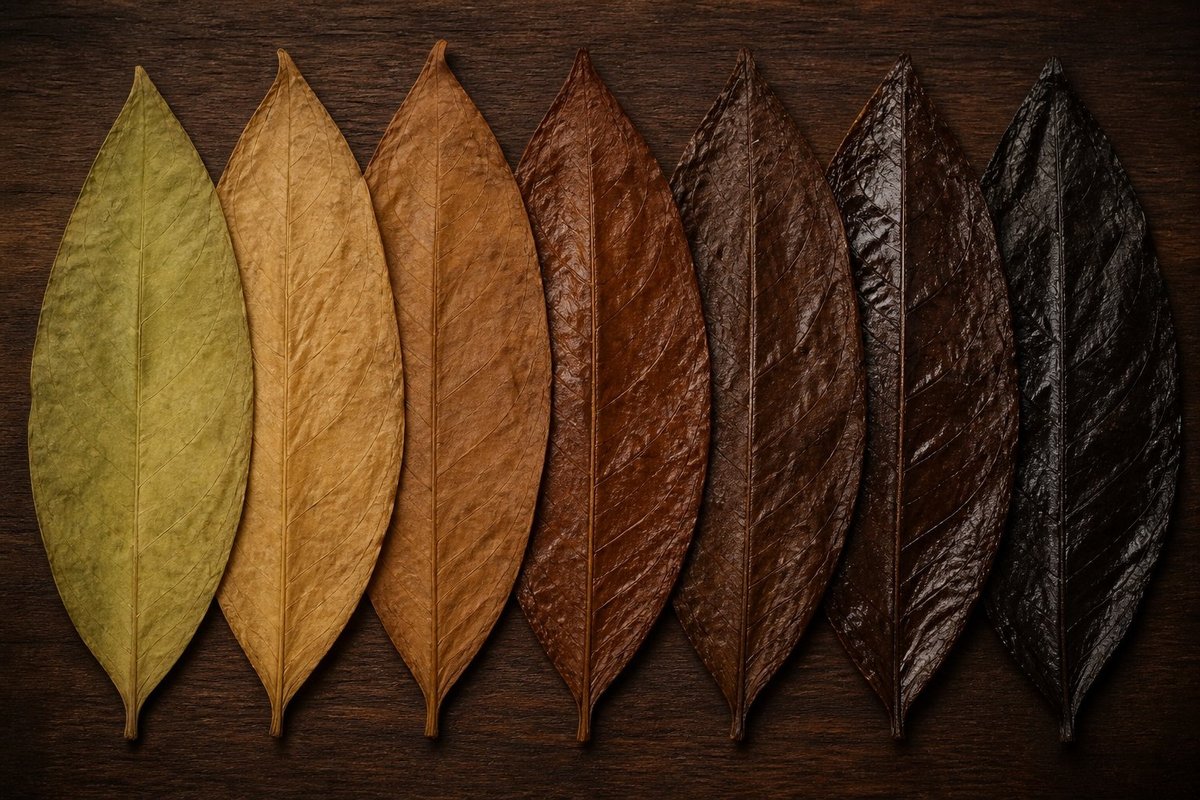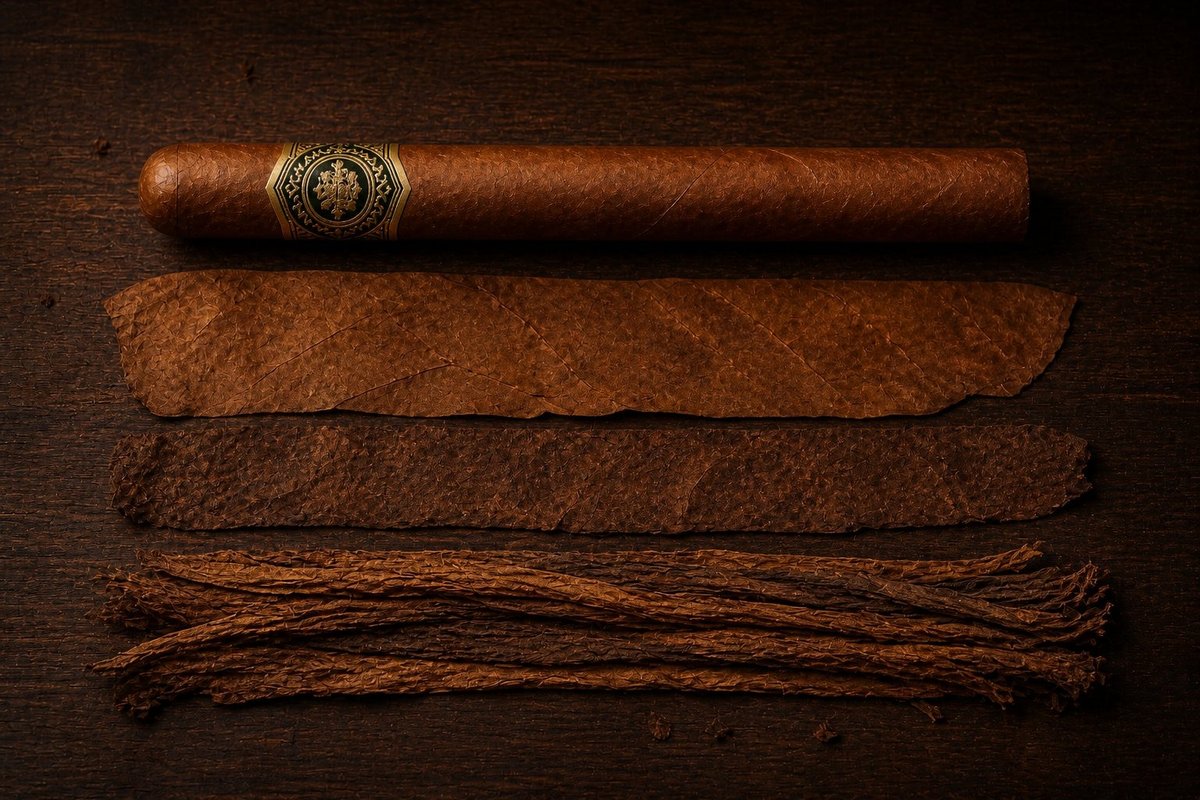
The Three Tobacco Components
The wrapper is the outermost leaf, the visible exterior. It contributes 40-60% of perceived flavor in a typical premium blend despite representing only about 15% of total tobacco mass. Wrapper grade is the most-expensive single component of any premium cigar.
The binder is the structural middle leaf. It holds the filler in place during rolling and contributes meaningfully to combustion behavior. Binder leaf is typically lower-priced than wrapper but its quality affects burn line evenness and ash retention.
The filler is the heart of the cigar — typically a blend of multiple primings (volado, seco, viso, ligero) that creates the body weight and flavor architecture. Premium cigars use long-filler (whole leaves); short-filler (chopped tobacco) is the mark of less-expensive production.
The Head, Cap, and Foot
The head is the closed end the smoker cuts and lights against — it carries the cap. The cap is the small finishing piece of wrapper that closes the head and is read as the principal indicator of rolling-tradition discipline (single, double, or triple cap).
The foot is the open end that is lit. The foot must be cut cleanly during finishing; a ragged foot indicates rushed production. The shape of the foot — flat (parejo) or pointed (perfecto) — defines the cigar's broader vitola classification.
Reading a Premium Cigar
A trained eye reads three signals before lighting: the triple cap (Cuban-tradition rolling discipline), the wrapper color uniformity (fermentation discipline), and the foot precision (factory finishing standard). All three together establish whether the cigar will smoke as the price suggests it should.