The Curing Process
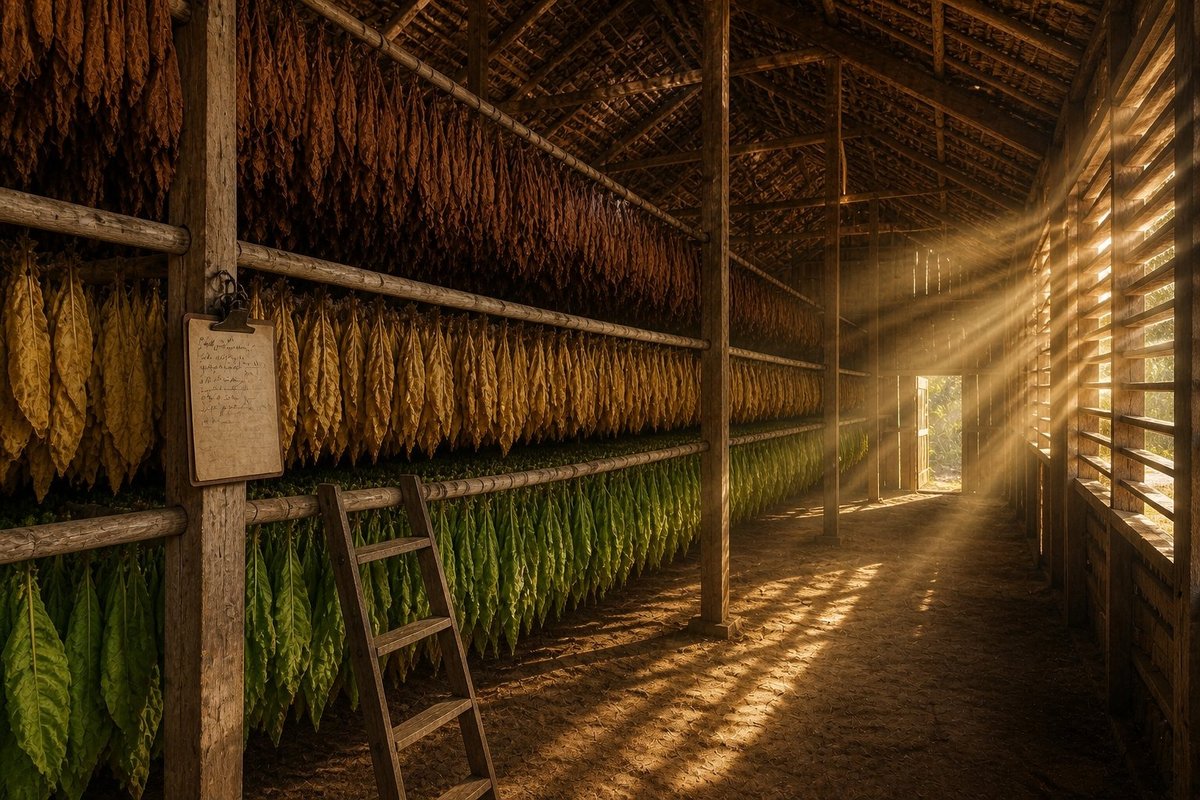
Harvested tobacco leaves are tied in pairs at their stems and hung from wooden lath in the curing barn. Lath is hung in horizontal rows, with leaves drying gradually as air circulates around them.
The curing barn is ventilated by adjustable shutters that the curer opens or closes based on ambient weather. The goal: maintain a curing curve where the leaf gradually loses moisture, allowing the chlorophyll to break down and starches to convert to sugars.
The Color Transformation
Curing transforms the leaf through three color phases:
Yellow phase (first 10-15 days): chlorophyll breaks down, leaf turns from green to yellow. The cellular structure begins to weaken; the leaf becomes more pliable.
Brown phase (next 15-25 days): pigments oxidize, leaf turns from yellow to brown. Starches convert to sugars (which contribute to flavor sweetness); proteins break down (reducing future ammonia production).
Final color (last 5-10 days): leaf reaches its target color and becomes dry to the touch but still flexible. Approximately 30-50 days total in the curing barn.
Cuban Air-Curing Tradition
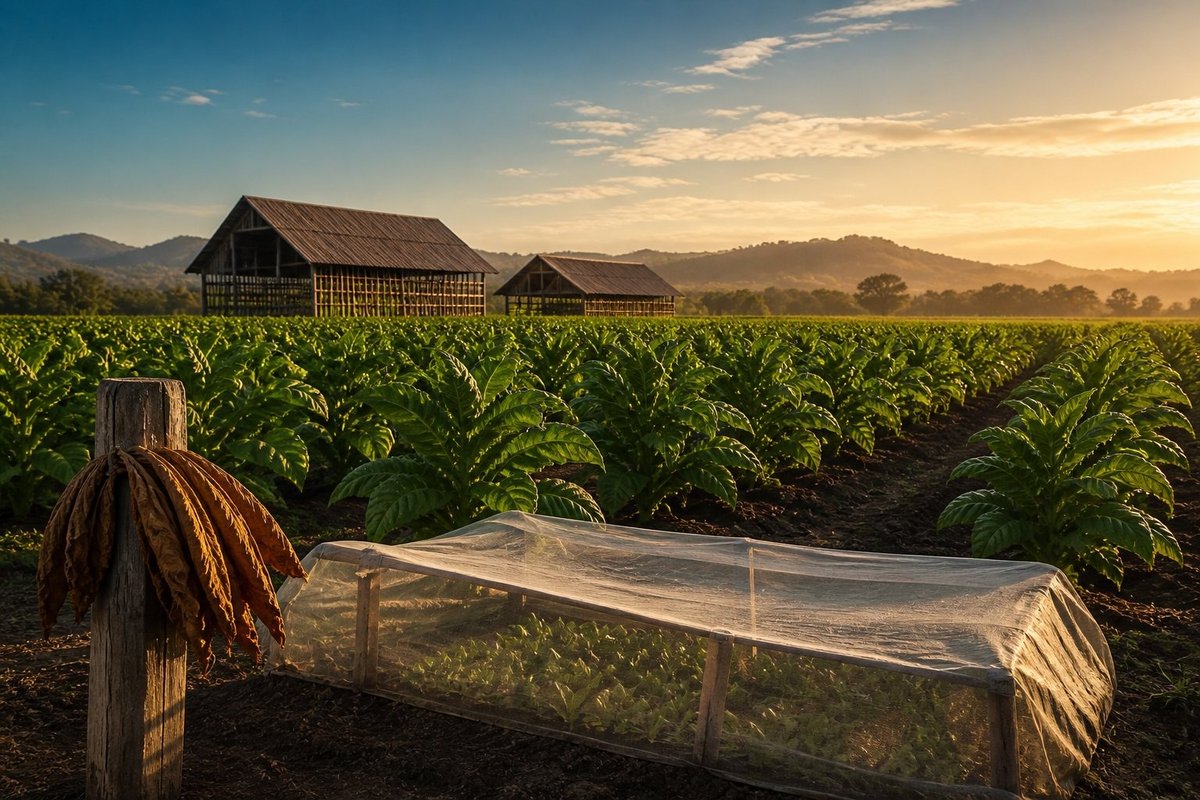
Cuban Vuelta Abajo curing barns ("casa del tabaco") are wooden, palm-roofed structures aligned with prevailing winds. Curing takes 45-60 days under traditional Cuban conditions — slower than other regions, producing leaf with subtle character.
The casa del tabaco architecture is unchanged for two centuries. The slow Cuban curing is one of the editorial reasons why Cuban tobacco character is distinctive — the leaf has more time to undergo gradual chemical transformation.
After Curing
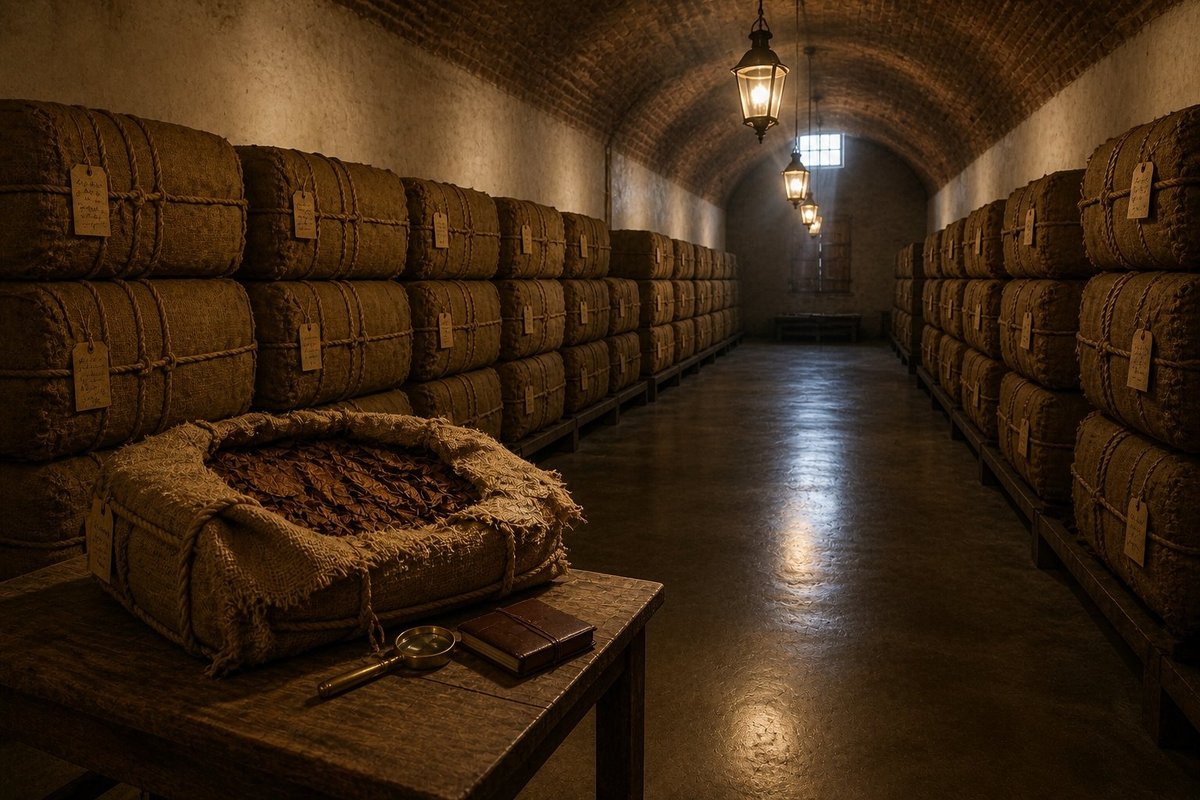
Cured leaves are taken down from the lath, removed from their pairings, and prepared for fermentation. The leaves are now smokable in principle but unrefined — fermentation is required to produce the flavor architecture of premium tobacco.
Fermentation begins typically within 2-4 weeks of curing completion, with the leaves moved into stacked piles (pilones) where the next chemical transformation occurs.