Why Aging Matters
Freshly fermented tobacco is smokable but unrefined. The leaf still contains ammonia compounds, harsh nicotine alkaloids, and incomplete Maillard products. Aging breaks these down further, producing the smooth, complex flavor architecture that defines premium tobacco.
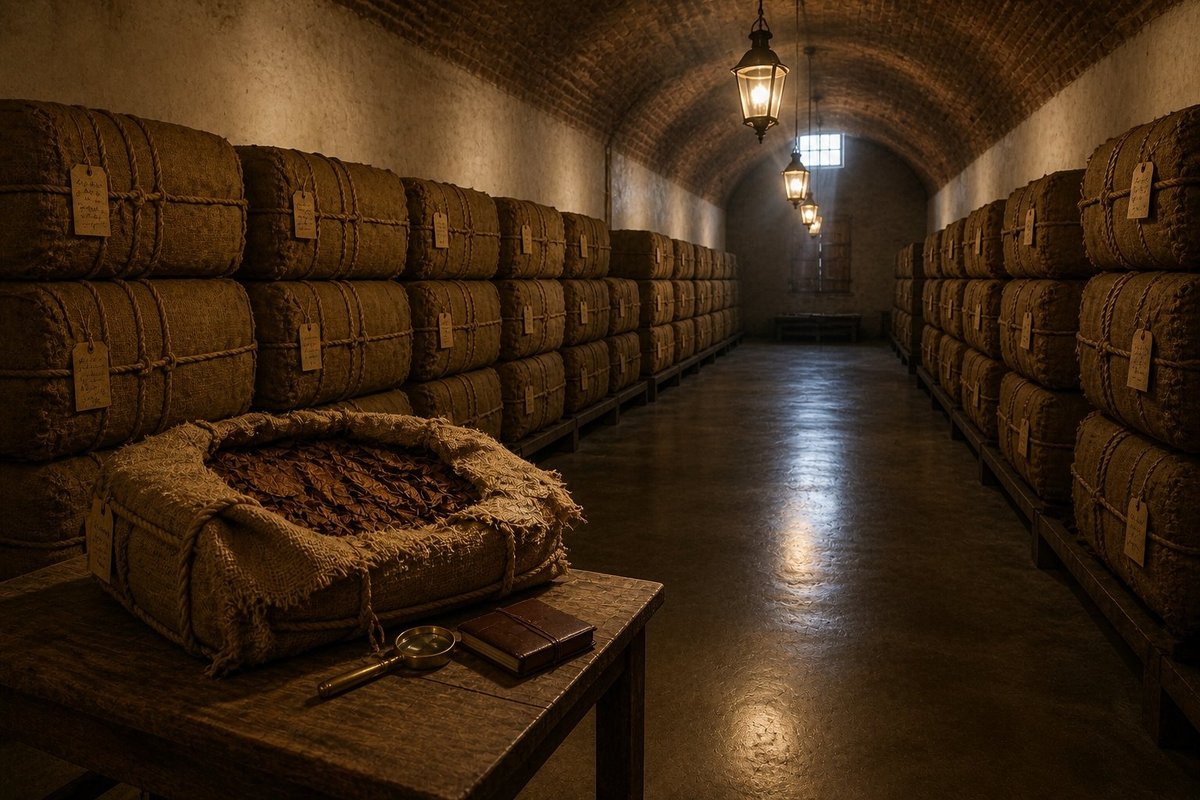
Aging happens in the bale or hand: tobacco is bundled into bales (typically 25-40 kg) and stored in temperature- and humidity-controlled aging warehouses. Storage conditions: approximately 21°C, 65% RH, in stable conditions over years.
Aging Tiers in Premium Production
Standard aging (2-3 years): the typical premium cigar is rolled with leaf aged 2-3 years. This is sufficient to produce smooth combustion and developed flavor architecture for the typical cigar.
Reserva aging (5+ years): used for Reserva-tier Cuban releases (Cohiba Reserva, Romeo y Julieta Wide Churchill Reserva) and similar premium New World releases. Significantly more rounded flavor, with the harsh notes substantially eliminated.
Gran Reserva aging (10+ years): used for the most-aspirational releases. The Padrón Family Reserve uses 10+ year aged tobacco; some Cuban Gran Reserva releases use leaf aged 12-15 years.
What Aging Does Chemically
Ammonia compounds break down: the harsh edge of young tobacco mellows. The flavor architecture becomes "smoother" — a measurable but difficult-to-quantify quality.
Maillard reaction continues: complex flavor compounds (caramelization products, dried-fruit notes, leather notes) develop further over years.
Nicotine alkaloids slowly degrade: aged tobacco has slightly lower nicotine concentration than freshly fermented tobacco. This is part of why aged cigars feel less harsh.
Volatile compounds equilibrate: the leaf reaches chemical equilibrium with the warehouse atmosphere, reducing the variation that fresh leaf shows.
Diminishing Returns
Aging benefits are not linear. The first 2-3 years produce dramatic improvements; years 4-7 produce smaller incremental improvements; years 8-15 produce subtle refinement that only experienced palates can identify.
For most premium cigars, 3-5 years of aging produces the optimal flavor architecture. Longer aging is appropriate for specific releases (Reserva, Gran Reserva) where the editorial premium for additional aging is justified by retail pricing.