Wrapper Production Characteristics
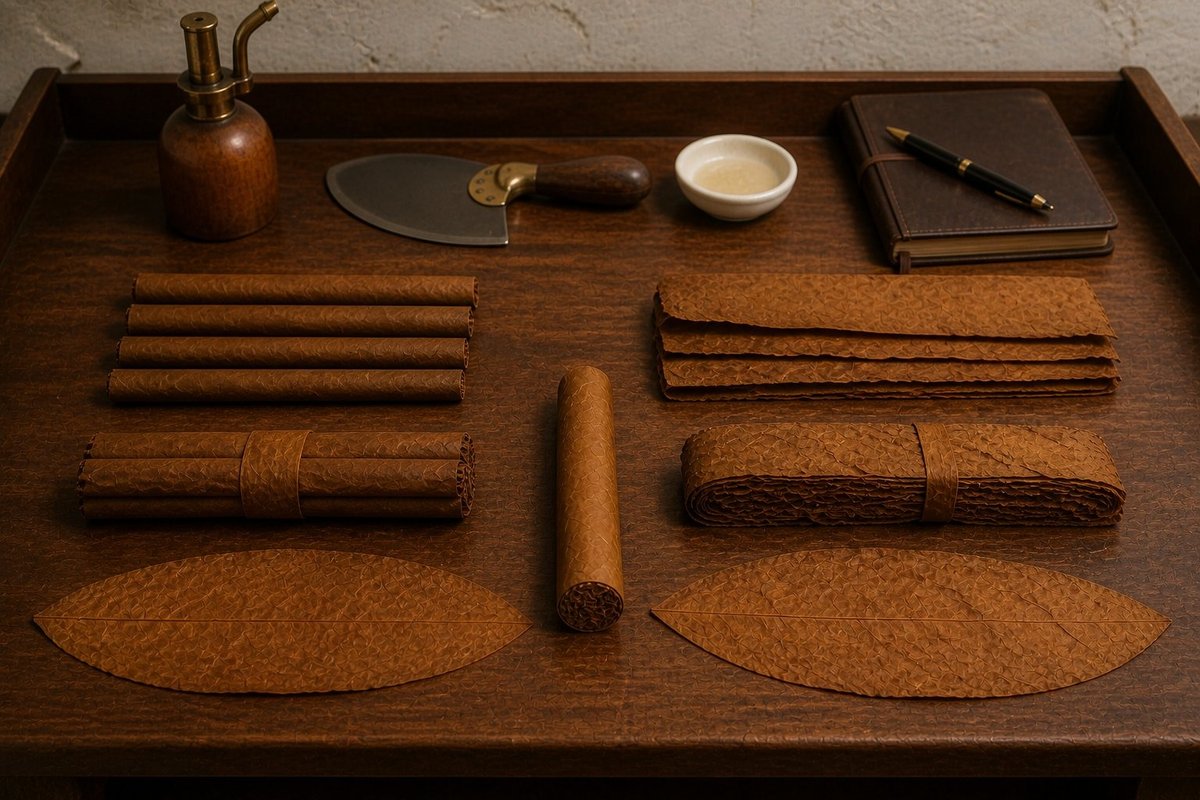
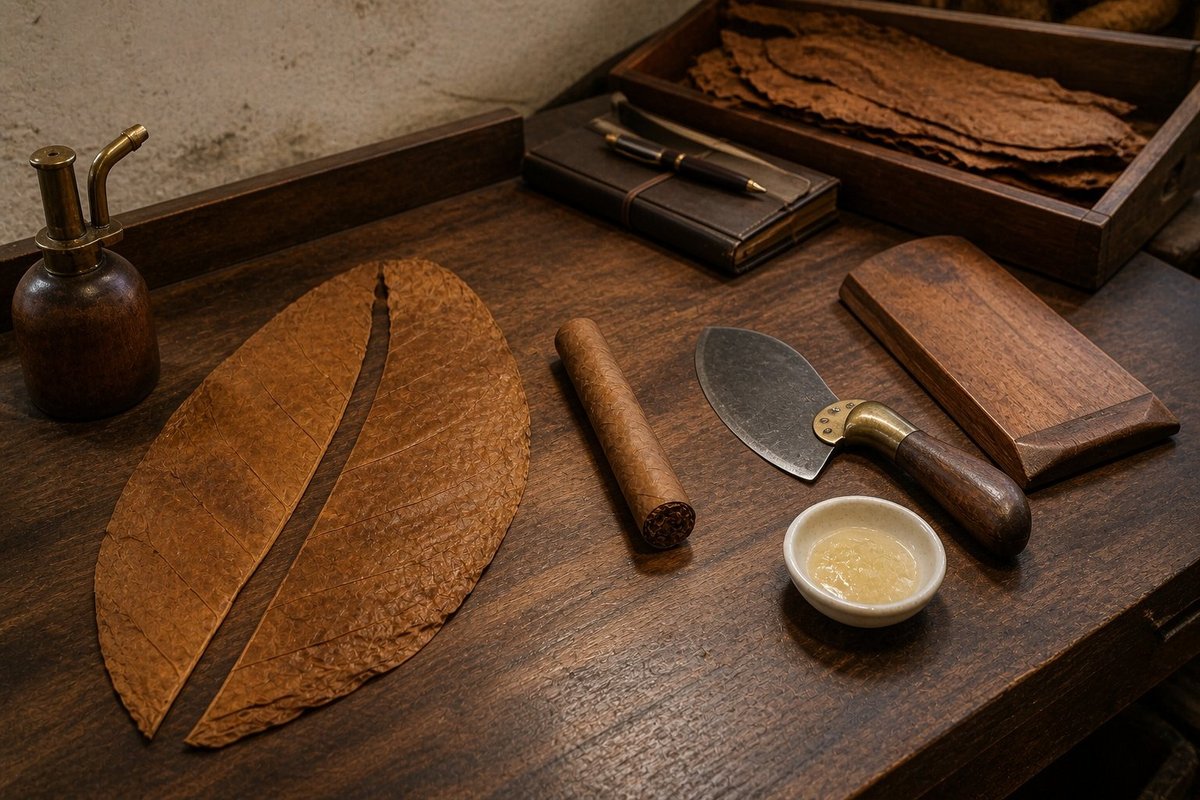
A wrapper-grade leaf must meet criteria that filler and binder leaves do not: elasticity (it must wrap without tearing), color uniformity (no dark spots or veins detracting from appearance), surface smoothness (no significant defects on the visible side), size (must be large enough to wrap a single cigar without seaming).
Approximately 40-50% of harvested wrapper-grade tobacco fails these criteria and is sold as binder or filler. Wrapper-grade yield is the third-most-important cost driver in premium production (after the climate and the tenting infrastructure).
Major Wrapper Categories
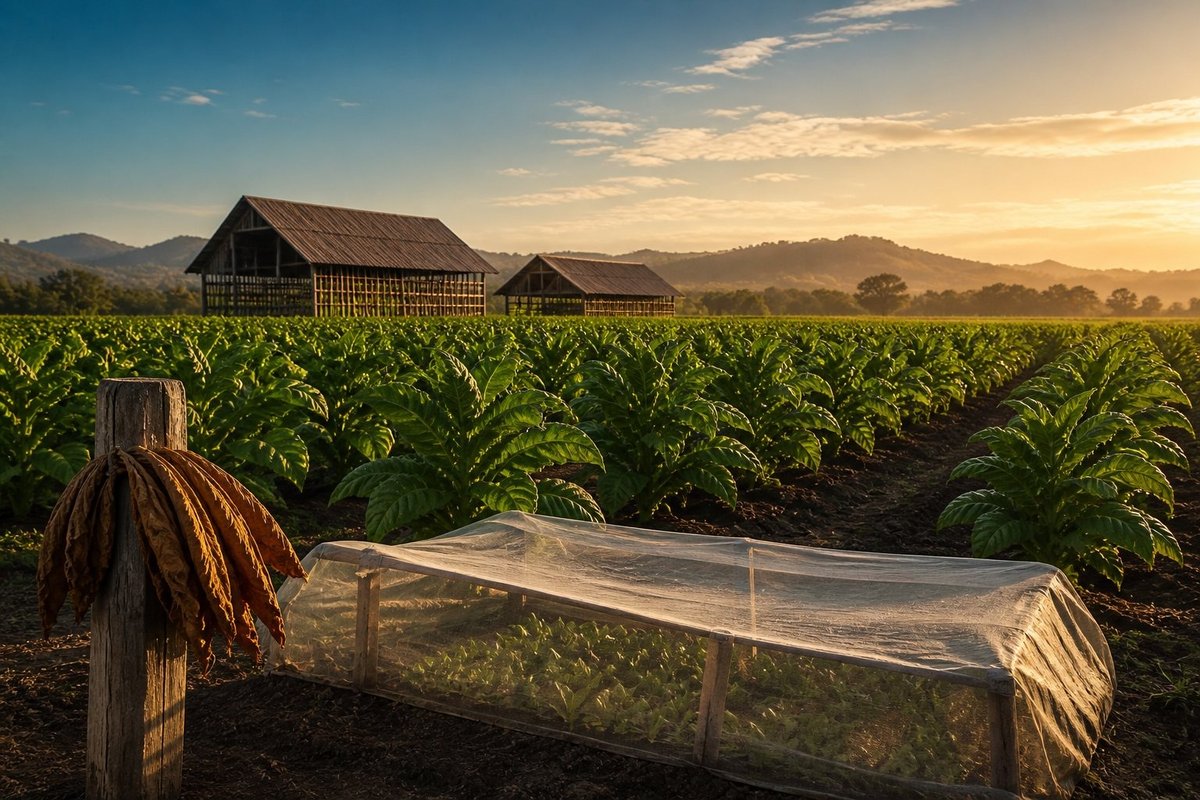
Connecticut Shade: grown under cheesecloth tenting in the Connecticut River Valley. Light tan, elastic, mild flavor. The most-expensive wrapper category.
Cameroon: grown primarily in the Central African Republic. Fragile leaf with limited rolling tolerance but exceptional flavor expressiveness in the gentle-spice register.
Cuban Vuelta Abajo: the original premium wrapper region. Robust character, balanced flavor architecture.
Habano sun-grown (Nicaragua, Ecuador, Honduras, Mexico): the modern New World wrapper category. Has closed roughly half the price gap with Cuban over the past 15 years.
Connecticut Broadleaf: heavy, dark wrapper used for maduro production. Concentrated cocoa-and-coffee flavor.
Brazilian Mata Fina: from the Recôncavo region. Distinctive sweet, tangy character.
Wrapper Color Reading
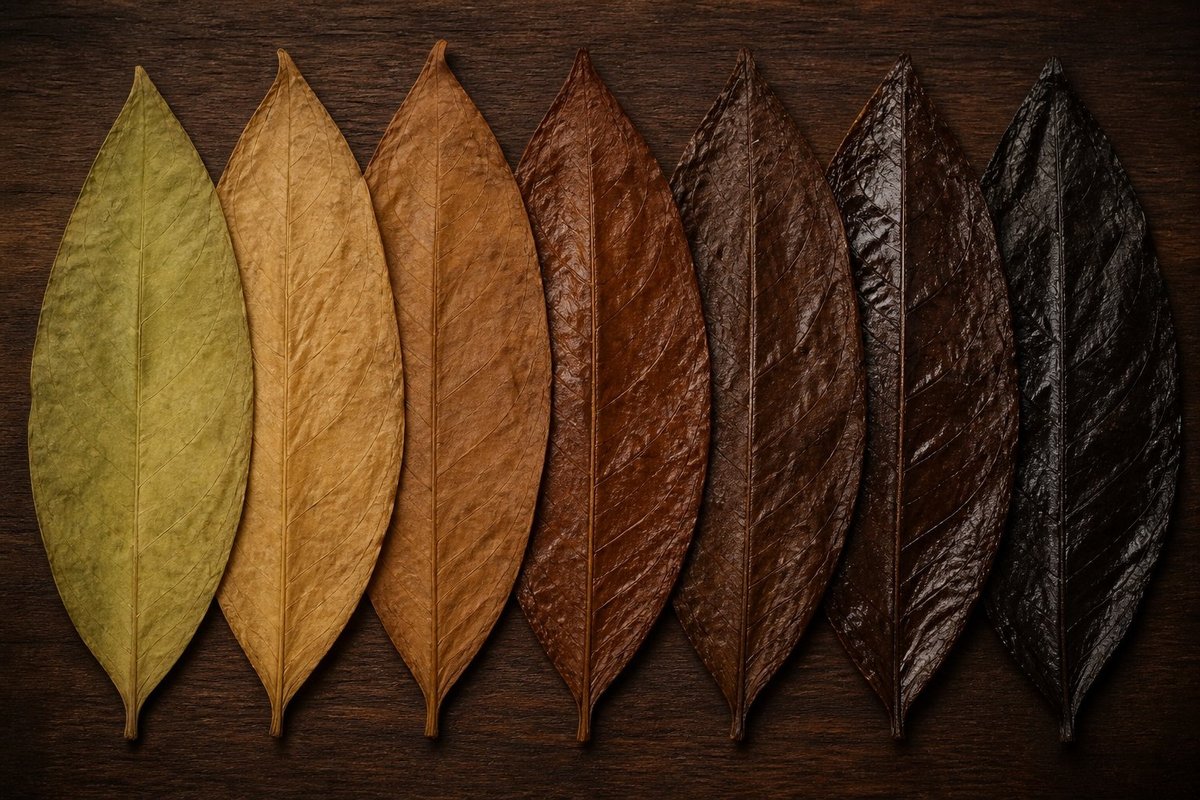
The wrapper color (claro through oscuro) signals fermentation discipline and flavor architecture. A well-fermented colorado wrapper indicates competent production; a poorly-fermented wrapper of any color suggests production shortcuts that affect the entire cigar.
Color uniformity within a box is a reliable factory-discipline indicator. Premium production matches wrapper color across the entire box; commodity production accepts wider variation.
What the Wrapper Actually Contributes
The wrapper contributes 40-60% of perceived flavor. The chemical reasons: the wrapper is the leaf the smoker's palate contacts most directly during draws, and the wrapper's surface area is where the most-volatile flavor compounds reside.
A blend's flavor architecture is therefore primarily a wrapper conversation. The filler and binder provide body weight, combustion behavior, and depth, but the wrapper drives the cigar's flavor signature. Changing the wrapper while keeping the filler-binder constant produces a fundamentally different cigar.