Draw Issues
Plug: the cigar will not draw. Filler bunching is too dense, often at the head. The cigar is unsmokable. Premium factory rate: approximately 1-2% (Cuban) or below 1% (best New World).
Tight draw: the cigar requires unusual effort to draw smoke. Mild plugs that smoke through with effort. Acceptable but unsatisfying.
Loose draw: the cigar burns too hot and too fast. Filler bunching is too loose. The smoke is acrid and the flavor is muddled.
Burn Issues
Canoeing: the burn line proceeds unevenly, with one side burning ahead of the other. Caused by uneven filler density or filler-binder integration. Can be corrected with the lighter (touch-up).
Tunneling: the filler burns ahead of the wrapper. Indicates extreme density imbalance. The cigar may need to be re-lit or relegated.
Black spots / wet spots: ash retains dark patches indicating incomplete combustion at specific points. Suggests inconsistent leaf moisture in production.
Wrapper Issues
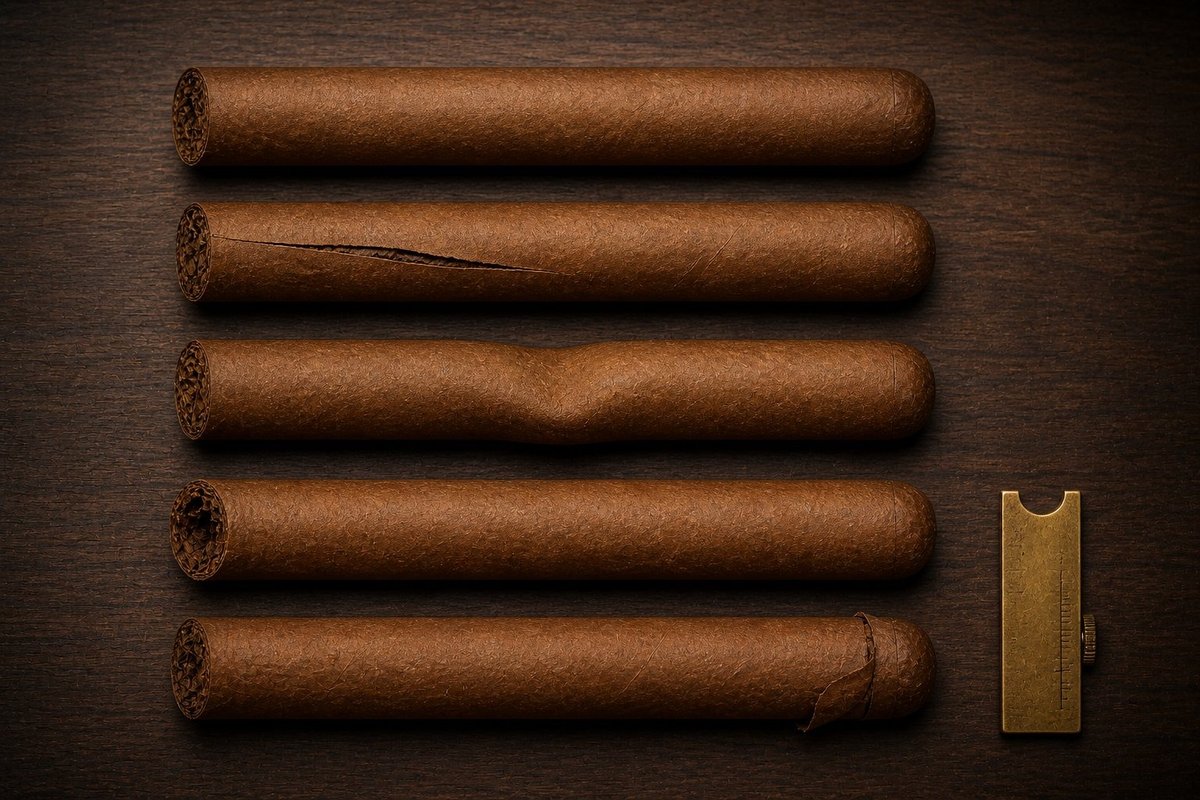
Cracks: longitudinal cracks indicate dry wrapper from inadequate humidification before purchase. Sometimes recoverable with humidor rest; often not.
Veins: prominent leaf veins are not defects per se but indicate lower wrapper grade.
Stains: oil stains, mold spots, or discoloration. Evaluate carefully — plume (a beneficial oil bloom on aged cigars) looks similar to mold but is brushable and not invasive.
When to Return a Cigar
Premium retailers should accept return for plug, tunneling, or major wrapper defects. Minor canoeing or burn-line wandering can usually be corrected by the smoker; tight draw is a judgment call (some smokers prefer slightly tight). The 1-2% Cuban defect rate means a serious aficionado will encounter a few defective cigars per year — this is normal, not a quality crisis.