The Triple Cap Test
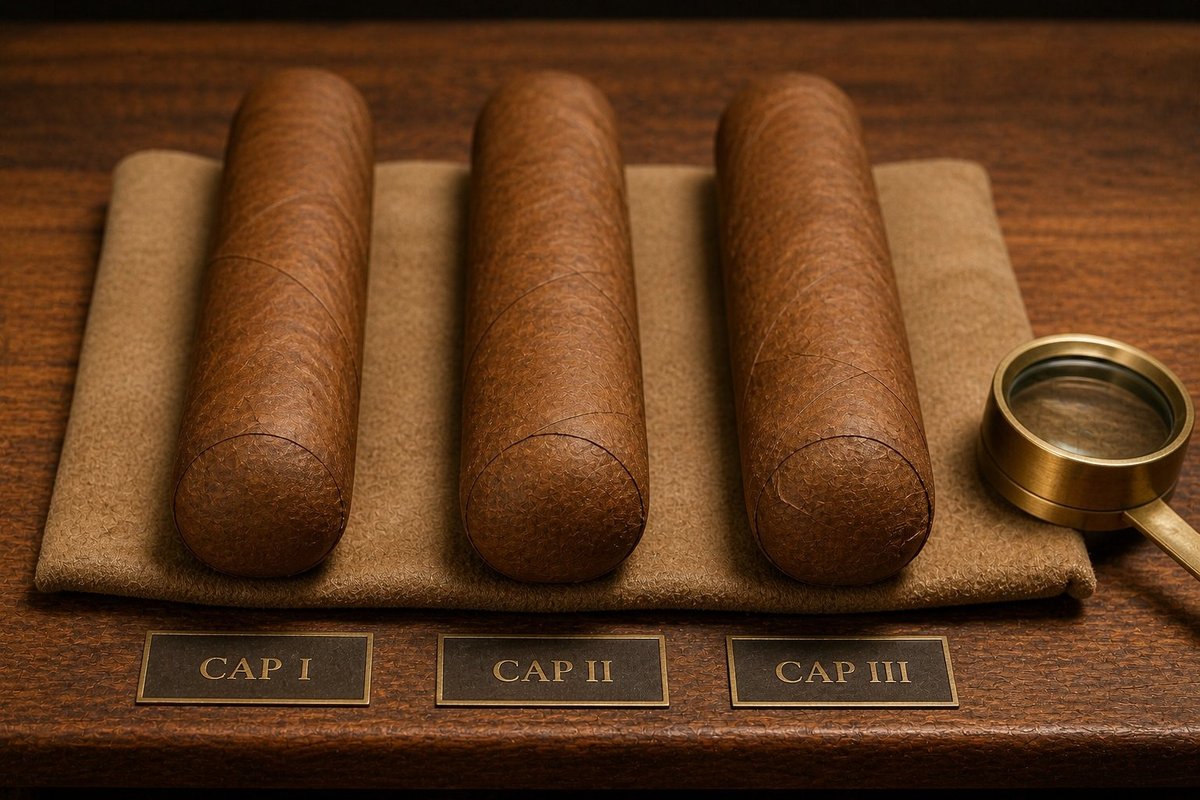
The single most-reliable visual test for Cuban authenticity is the triple cap: three small wrapper pieces that close the head with three faintly visible overlapping seams. Counterfeiters work under time pressure with inexperienced labor and produce single caps or sloppy double caps. A "Cuban" cigar with a single cap is, with high confidence, a counterfeit.
Band Quality
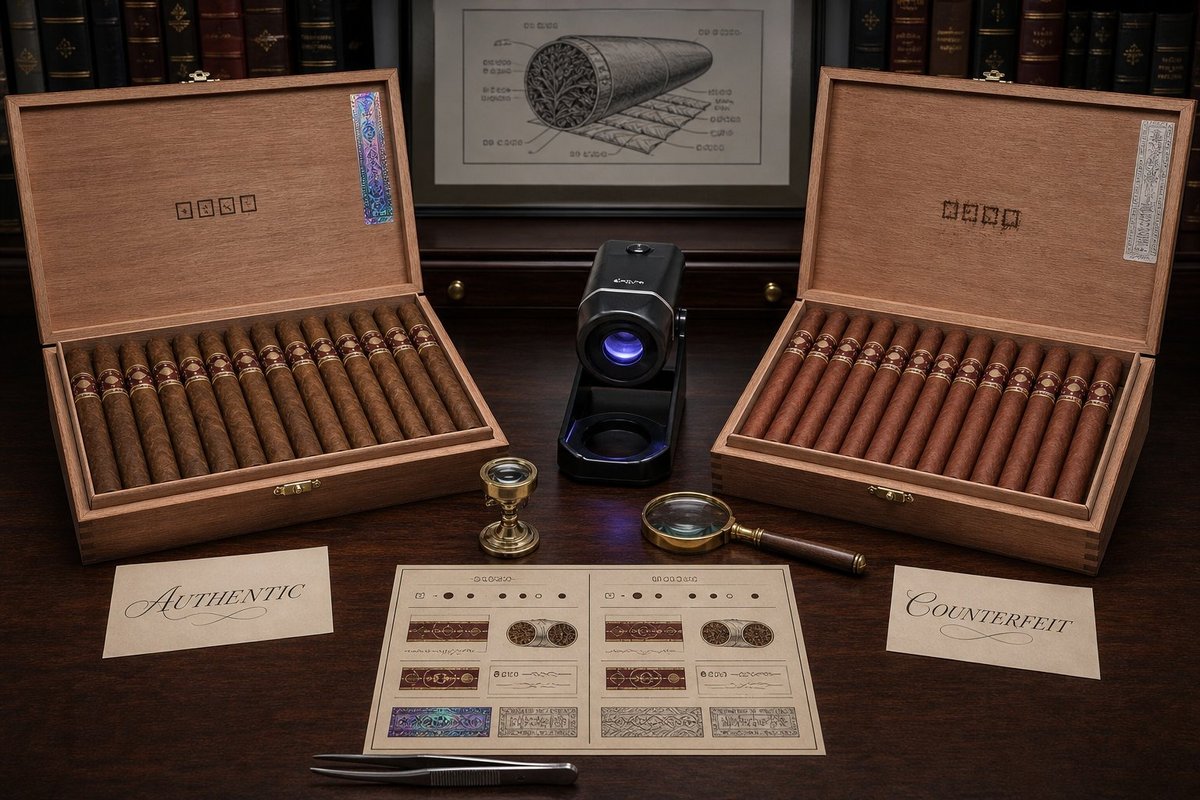
Habanos S.A. bands are printed on high-quality paper with crisp, evenly-distributed ink. Counterfeit bands often show ink bleeding, off-register printing, color inconsistency between bands in the same box, or paper that feels noticeably thin. Compare against authentic bands when possible.
For non-Cuban premium brands (Padrón, Davidoff, Fuente), band quality is similarly diagnostic. Authorized factory production maintains tight band specification; counterfeits typically fail color uniformity.
Box and Cellophane
Cuban boxes carry a green Habanos S.A. seal and a factory code (e.g., FPG, LAS, LRG) plus production date stamps. The seal is holographic on recent production. Boxes lacking the seal, or with poor seal quality, warrant suspicion.
Cellophane on premium cigars is typically clear, machine-applied, and tight against the cigar. Hand-applied cellophane (visible adhesive marks, loose wrapping, inconsistent coverage) suggests aftermarket re-packaging — sometimes innocent (regional re-distribution), sometimes not.
The Smoke Test
A genuine Cohiba Behike produces the medio-tiempo flavor signature (medicinal cocoa, mineral length) within the first third. A counterfeit substitutes upper-priming ligero from non-Cuban sources and never produces the medicinal note. For Cohiba in particular, the flavor is the proof of authenticity that visual inspection alone cannot fully verify.
Buying from Trusted Sources
The simplest counterfeit defense is buying from authorized retailers (La Casa del Habano for Cuban; established premium tobacconists for New World) or directly from manufacturer-approved distributors. Online purchases from unfamiliar sellers carry elevated counterfeit risk; the discount is rarely worth the authentication uncertainty.