The 65% Camp
Lower-RH advocates (typically 65%) argue that drier storage produces better combustion: cleaner burn, less tar accumulation, more transparent flavor. The editorial logic is reasonable — dryer cigars do burn cooler and more evenly.
The trade-off: 65% RH brings cigars closer to the 60% danger zone where wrappers begin to crack. A humidor that drifts to 62% during winter heating-induced low ambient humidity will damage cigars.
The 70% Camp
Higher-RH advocates (typically 70%) argue that wetter storage preserves wrapper elasticity longer, produces more concentrated smoke (the smoke holds together better in the mouth), and reduces seasonal humidor stress.
The trade-off: 70% RH brings cigars closer to the 75% danger zone where mold becomes a serious risk. Mold on premium cigars is generally not recoverable; the cigars must be discarded.
The Editorial Recommendation
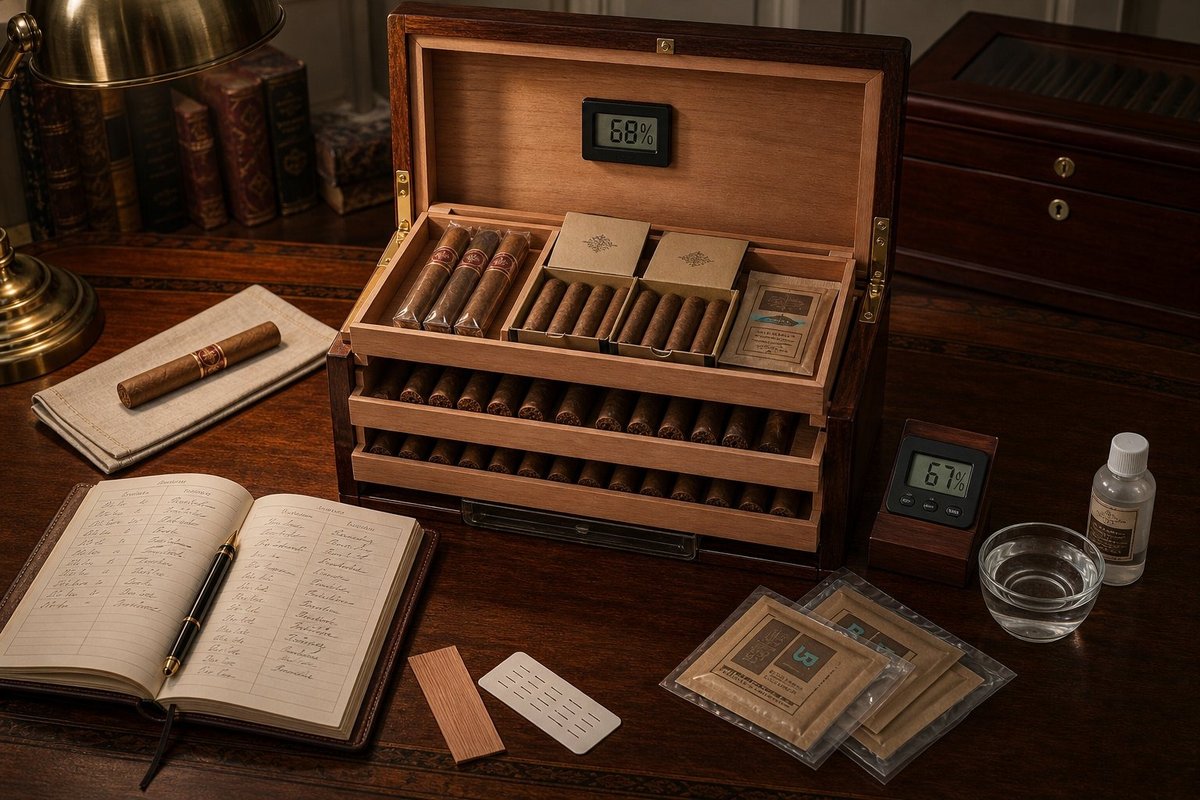
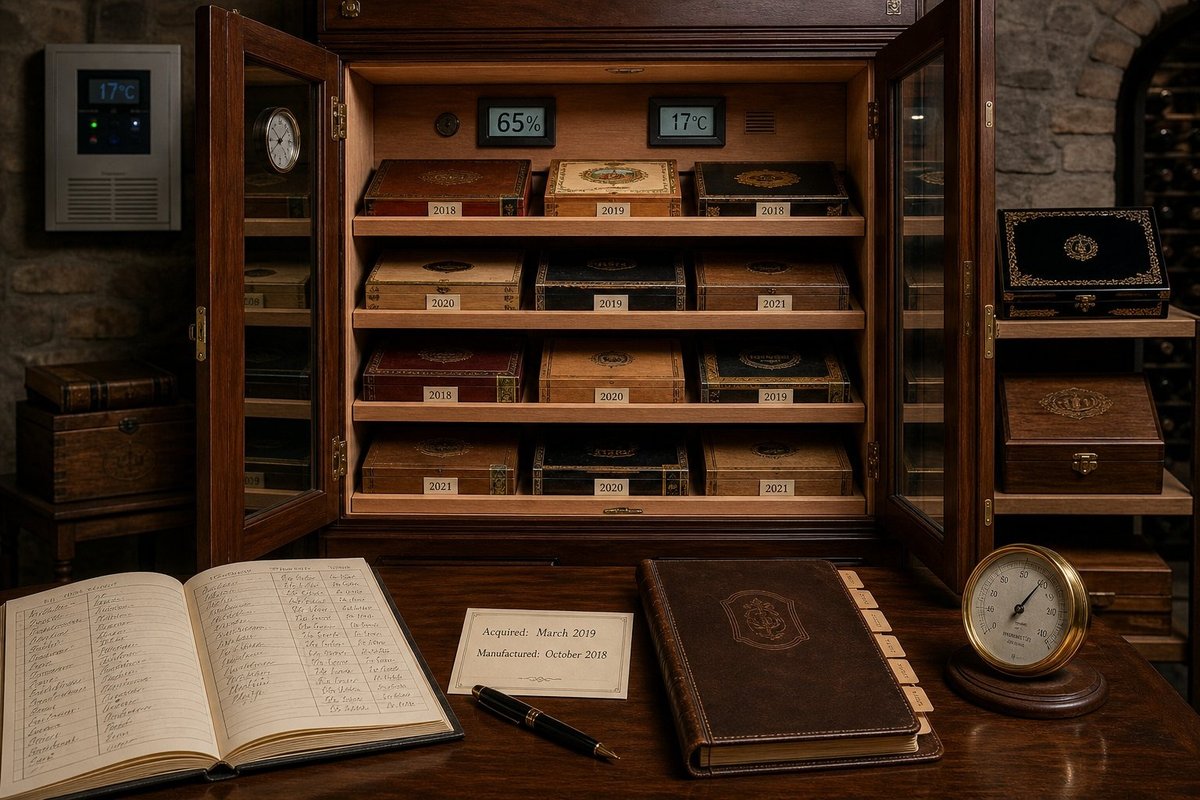
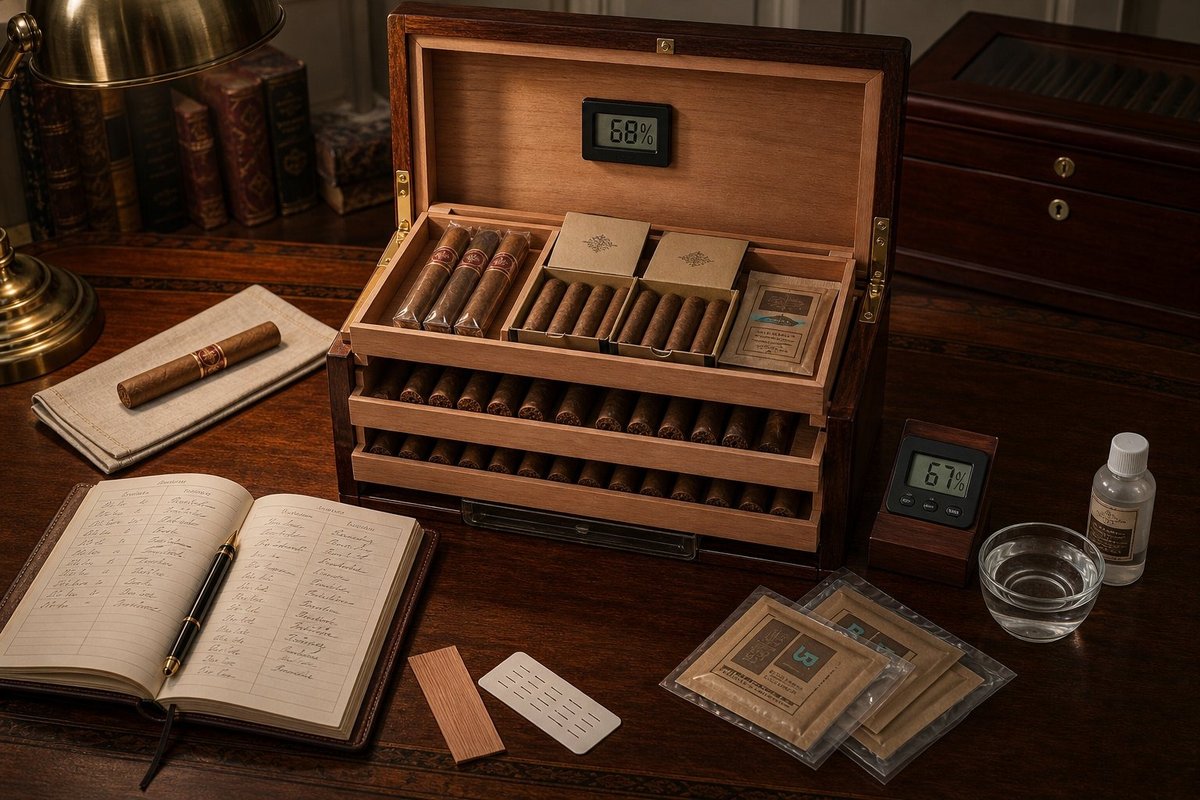
The encyclopedia's editorial position: 68% RH for typical home storage, with 65% for aged cigars where combustion quality is the priority and 70% for active humidors with frequent opening. The 68% target sits in the safe middle: comfortable margin against both low-RH cracking and high-RH mold risk.
For long-term storage (1+ year aging), 68-70% RH is preferred. The slight wrapper expansion accelerates flavor integration; the safety margin against drying is meaningful.
For ready-to-smoke storage (cigars rotated within weeks), 65-68% is appropriate. The combustion benefit is more evident when cigars are smoked from this RH range.
Seasonal Discipline
In northern hemisphere winter (heating reduces ambient humidity to 20-30%), humidor RH drifts down. Boveda packs should be replaced more frequently; the humidor seal should be inspected for gaps.
In tropical or subtropical summer (high ambient humidity), the opposite challenge: humidor RH may drift up, and mold risk increases. Monitor with a digital hygrometer and adjust humidification accordingly.