The Geography
Nicaragua is the largest country in Central America, bordered by Honduras to the north and Costa Rica to the south, with Pacific and Caribbean coastlines. Premium tobacco is grown principally in three regions of the country's northern highlands, in descending order of acreage: Estelí (the principal valley, anchored on the city of the same name and extending into surrounding communities); Jalapa (the smaller but historically prestigious valley to the east of Estelí, near the Honduran border); and Condéga (the secondary valley between Estelí and the Honduran border, with substantial production volume).
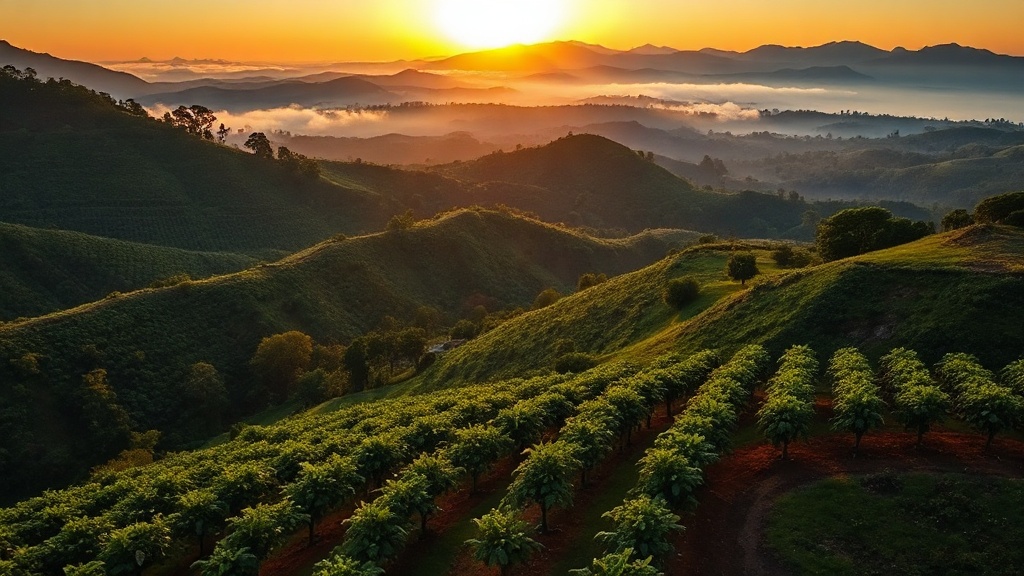
The Estelí Valley sits at approximately 800–1,200 meters above sea level — substantially higher than the principal Cuban or Dominican producing regions. The soil is volcanic-derived, with substantial mineral content from millennia of ash deposits from the active volcanic chain of western Nicaragua (the Cordillera de los Maribios, including the Mombacho and Concepción volcanoes). The combination of volcanic mineral richness and high-elevation cool nights produces tobacco with distinctive characteristics: deep flavor concentration, robust strength, and the slow-burning consistency that the Estelí tradition has come to be known for.
The Jalapa Valley produces tobacco with subtly different character: somewhat lighter in body, more aromatic, with a refined elegance that has historically led to Jalapa leaf being prized for upper-priming wrapper applications and for the binder layer of complex blends. Condéga produces a more workmanlike tobacco that fills out blends rather than dominating them, with substantial commercial volume and dependable quality.
The History
Nicaraguan tobacco production has indigenous roots predating European contact, but the modern premium industry is a relatively recent development. Commercial cultivation began in the colonial period; the first Cuban-emigrant tobacco operations established themselves in Estelí in the 1960s, when the Cuban Revolution displaced large portions of the Cuban industry's principals to the surrounding countries. Padrón founder José Orlando Padrón moved his operations to Nicaragua in the late 1960s; the García family (now of My Father Cigars) established their factory in the 1990s.
The Sandinista revolution of 1979 disrupted the industry; many of the Cuban-emigrant tobacco families relocated again, this time to Honduras, the Dominican Republic, or Miami. The Contra War of the 1980s further depressed Nicaraguan production. The industry's modern resurgence dates to the 1990s and 2000s, when political stabilization and the return of several principal families restored the country's productive capacity. By the 2010s, Nicaragua had displaced the Dominican Republic as the largest premium producer by volume; by the 2020s, the country's top producers were anchoring the upper tiers of the global premium portfolio.
The Tradition
The Nicaraguan flavor profile emphasizes depth, intensity, and the deliberate complexity that emerges from layered Cuban-seed tobaccos grown in volcanic soil. A premium Nicaraguan cigar typically presents:
- a darker, oilier wrapper than the Cuban or Dominican equivalents;
- a substantial body that pushes toward the upper end of the medium-to-full strength range;
- a flavor profile dominated by espresso, dark chocolate, leather, dark cedar, and the characteristic peppery spice that the Estelí soil produces;
- an evolution across the smoke that frequently moves from elegant opening notes through intensifying mid-cigar concentration to a deeply persistent finish.
This tradition is the principal counter-anchor to the Cuban tradition. The modern global premium market has, in significant part, shifted its center of gravity toward the Nicaraguan tradition; the dominance is unlikely to reverse in the next decade.
The Producers
The principal Nicaraguan premium producers, in roughly the order of their global market significance:
Padrón
The family-held operation whose 1964 Anniversary, 1926 Anniversary, and Family Reserve series anchor the upper Nicaraguan tier. The 1964 Anniversary Exclusivo is, in the encyclopedia's working judgment, among the three or four highest-scoring premium cigars in continuous production globally.
My Father Cigars
The García family operation whose Le Bijou 1922, Flor de las Antillas, and other lines define the modern Nicaraguan flagship style.
Aganorsa Leaf
The Eiroa family vertical operation supplying both branded production and contract leaf to many other producers. The vertical integration model — owning the farms, the curing barns, the factories — is increasingly the Nicaraguan industry standard.
Joya de Nicaragua
The country's oldest continuous producer, founded 1968. The brand has been re-engineered upward several times; recent flagship blends represent the operation at its serious modern best.
Drew Estate / Liga Privada
The American-founded operation whose Estelí factory produces the Liga Privada and Undercrown lines among many others. The Liga Privada T52 is a calibration reference for the modern American-Nicaraguan style.
Plasencia
The family-held operation with substantial vertical operations spanning Nicaragua and Honduras.
Detailed brand profiles for each appear in Part V of the encyclopedia; KCS scores for representative cigars from each appear in Appendix L.
Nicaragua in the Modern Premium Portfolio
The encyclopedia's working position on Nicaraguan cigars is that, in 2026, the country's top tier (Padrón Family Reserve, My Father Le Bijou, Aganorsa Aniversario, Liga Privada T52) competes head-to-head with the best Cuban and Dominican production at the highest scoring bands. The Nicaraguan tradition more broadly delivers the highest median KCS scores across the entire calibration sample.
Nicaragua's structural position is enviable. The country has volcanic soil, abundant labor with long-established skill, multiple major producers competing with each other on quality, and a global market that has shifted toward the country's distinctive flavor profile. Barring substantial political disruption, Nicaragua will remain the dominant premium production country through the encyclopedia's effective lifetime.