What Aged Rum Brings
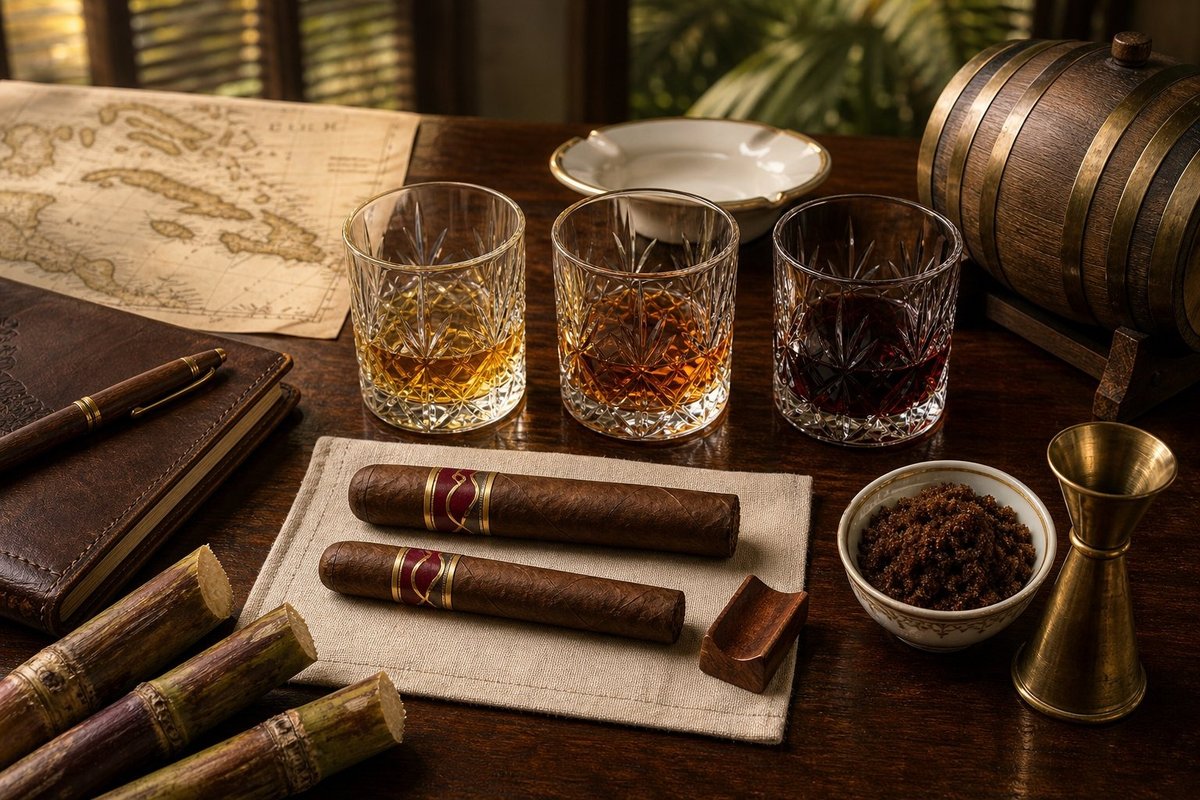
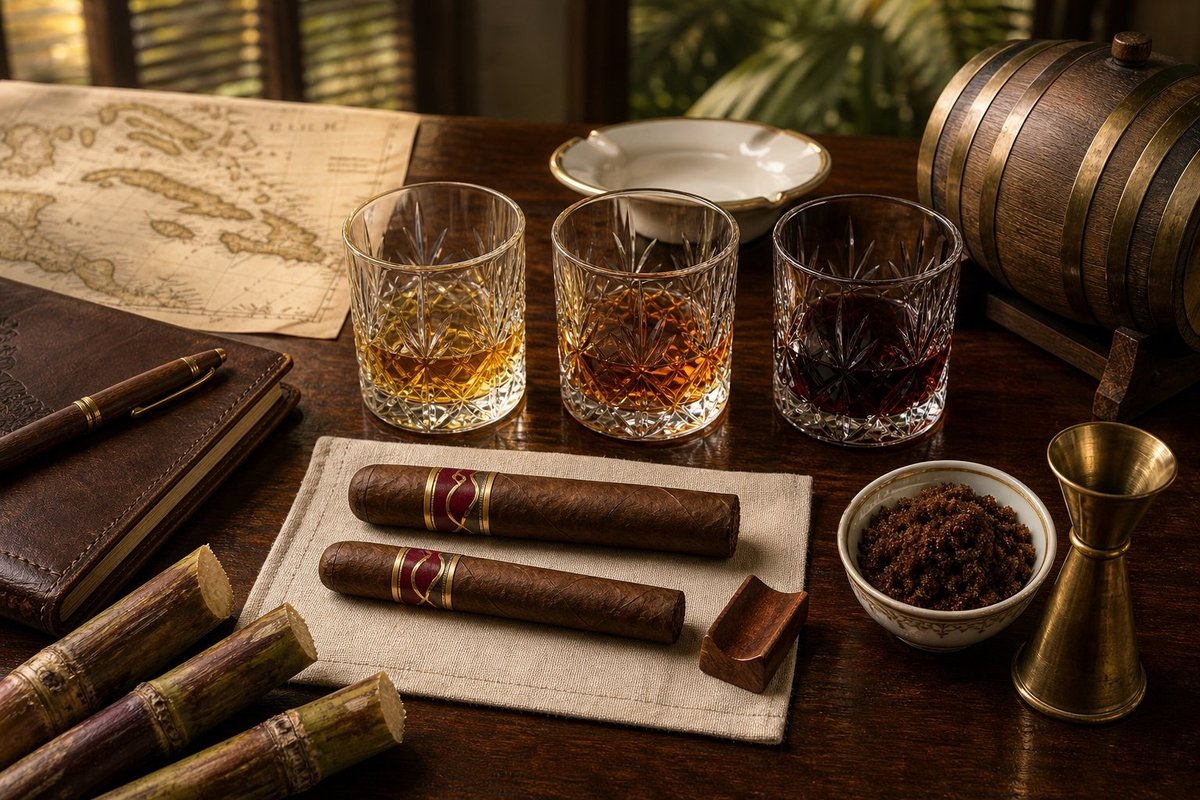
Aged rum (12+ years) contributes three flavor families: oxidative oak (vanilla, caramel, dried apricot), tropical fruit (figs, raisins, candied citrus), and clean cane sweetness. The texture is rounded; the finish is medium-long without aggressive ethanol bite.
The aging matters: 8-year rum is too sharp; 15-year rum is the sweet spot; 25-year rum is sometimes too refined for cigar pairing (the rum becomes the focus). The 12-15 year range is the editorial optimum.
Categories of Rum to Consider
Cuban-style aged rum (Diplomático Reserva Exclusiva, Plantation XO 20 Anniversary, Havana Club 15): the canonical pairing for Cuban cigars. Caribbean cane character with controlled aging.
Demerara rum (El Dorado 15, El Dorado 21, Pusser's 15): heavier body, more concentrated molasses character. Pairs with full-bodied maduros.
Agricole rum (Rhum Clément XO, Rhum JM Vintage): different cane source, drier, more terroir-driven. The contemplative alternative.
Spanish-style aged rum (Brugal 1888, Ron Zacapa 23): rounder, sweeter. Works with medium-bodied cigars.
Cigar Pairings
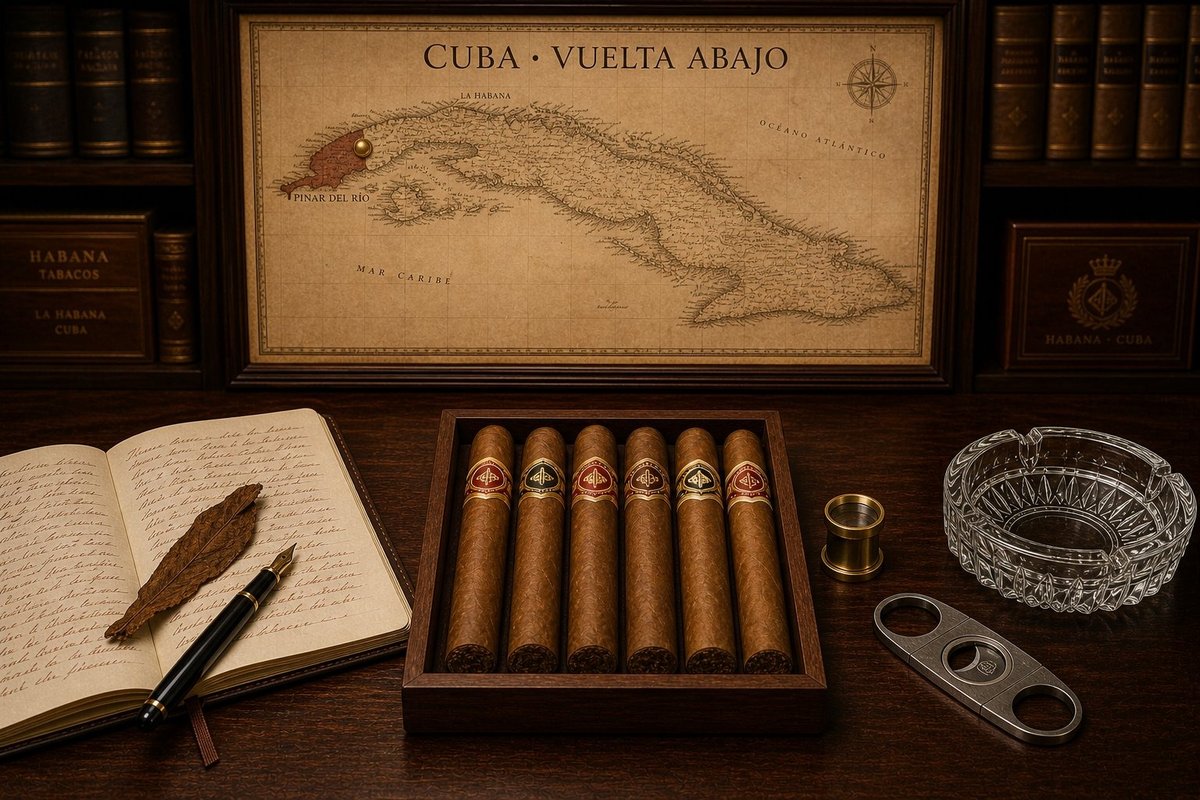
Cohiba Behike BHK 52 + Diplomático Reserva Exclusiva: the matrix's three-star pairing for the medio-tiempo flagship.
Romeo y Julieta Churchill + Plantation XO 20 Anniversary: the Cuban classical with the matrix-recommended companion.
Padrón 1926 No. 9 Maduro + El Dorado 15: New World maduro with Demerara rum is the unconventional choice that works because the rum has enough body to match the cigar.
Pacing and Pour
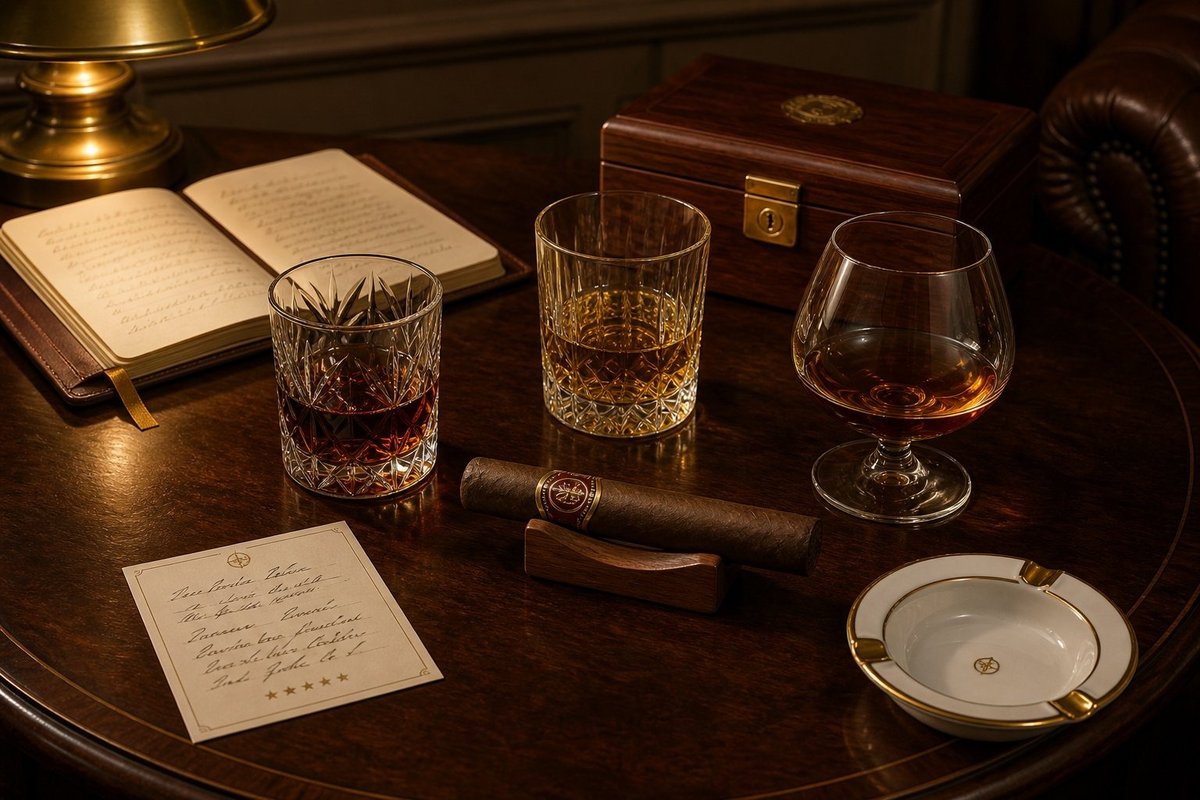
The standard pour for cigar-and-rum: 1.5-2 oz neat in a snifter or Glencairn glass. No ice. No mixer. The rum should match the cigar in pace — sips rather than gulps, with the rum lingering on the palate before each cigar draw.
A 60-minute cigar session typically uses 2-3 oz of aged rum total. More than that flattens the palate.