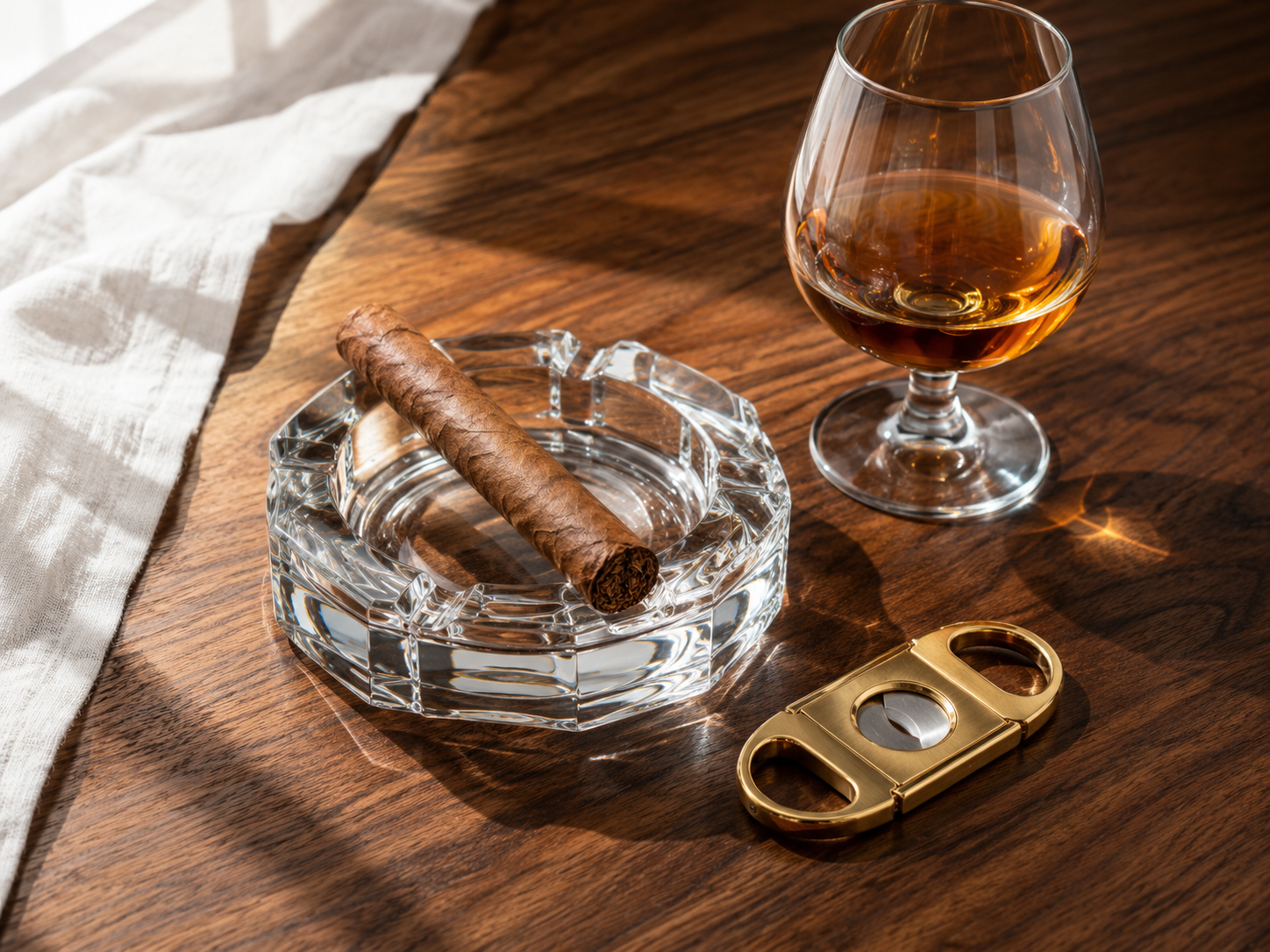
Time is measured not by the clock but by the ash. A robusto dictates a forty-five-minute conversation. A Churchill demands an hour and a half. The cigar and cocktail hour is, among the rituals available to a modern adult, the one that most reliably produces the thing it promises: unhurried time, in good company, with something excellent in the hand.
Why the Ritual Matters Now
It is easy to dismiss this as nostalgia. It is not. The ritual is functional. The discipline of forty-five minutes spent doing one thing—actually one thing, with no second screen, no half-attention scrolling—is increasingly the only training ground available for sustained adult focus. The cigar is, among other things, a behavioral instrument. It enforces presence. It punishes distraction (relight it twice and the smoke turns bitter). It rewards patience with flavors that emerge only in the second third.
This is what luxury actually does for a person, when it is doing its job. It returns the user to themselves. The watch on your wrist does it. The wine in your cellar does it. The cigar in your fingers does it most reliably of all.
The Cut
A premium cigar is sealed at the head by a cap—a small disc of wrapper leaf applied with vegetable gum, cut from the same leaf as the wrapper to maintain the spiral. The purpose of the cap is to keep the cigar airtight during storage and transport. The purpose of the cut is to open a draw hole without unraveling the wrapper.
Three cuts are used in serious practice. The straight cut—a guillotine cutter removing approximately 2mm from the cap—is the standard. It opens the widest draw hole and exposes the most tasting surface on the palate. The V-cut (or cat's eye cut) removes a wedge from the center of the cap, concentrating the draw into a narrower channel and slightly increasing velocity and concentration of flavor. The punch cut—a circular punch of 7–9mm diameter bored into the center of the cap—produces the tightest draw and retains the most of the cap structure, reducing the risk of unraveling on difficult wrappers.
The rule is: cut approximately 2mm above the cap line. Cutting into the cap itself risks unraveling the wrapper from the head—the most common cause of a cigar that begins to come apart in the first third. If you can see where the cap begins (a slight color variation or a faint line on the wrapper leaf), cut immediately above it. If you cannot, cut at 2mm and accept the small risk.
The cutter matters. A dull guillotine tears rather than cuts; the compression required to force the blade through the cap damages the filler and produces draw channels that close during smoking. A good straight cutter uses two blades meeting from opposite sides; a single-blade design compresses on one side and risks tearing. Replace or resharpen cutters annually.
The Light
The lighting procedure is the single most important ritual element and the one most often abbreviated by the impatient. An inadequate light—one that establishes an uneven cherry before full combustion—is the most common cause of canoeing, the asymmetric burn that follows one side of the wrapper around the cigar and requires repeated touchups throughout the smoke.
The correct procedure is:
Toast the foot first. Hold the cigar at a 45-degree angle over the flame (whether cedar spill, butane lighter, or softwood match) without touching the foot to the flame. The heat gradient from approximately 1cm below the foot begins the carbonization of the exposed filler tobacco. You are not lighting the cigar; you are warming it. Rotate it slowly. You will see the foot beginning to darken and emit a light smoke. This takes approximately thirty seconds.
Light by drawing. After toasting, bring the foot to the flame and draw while rotating. The draw carries hot gas through the filler, heating the entire foot simultaneously rather than the near side only. A proper light takes three to four draws, each drawing flame across the entire foot. The result is a uniformly glowing cherry with no dark spots.
Blow gently on the foot. After the initial light, a gentle exhale through the cigar (blowing, not drawing) pushes slightly more air through the cherry and confirms the uniformity of combustion before you begin smoking in earnest.
On the fuel question: butane (odorless, clean-burning) is the standard for a reason. Flint lighters introduce hydrocarbons that affect the first draw. Matches introduce sulfur from the head—wait until the match has burned past the sulfur before applying it to the cigar. Cedar spills (thin strips of Spanish cedar) are the traditional choice and the most aromatic: the cedar combustion adds a faint cedar note to the first few draws that many aficionados consider the correct opening of a properly lit cigar. Avoid naphtha lighters entirely.
The Smoke
Once lit, the premium handmade cigar requires almost no management. The tobacco is self-sustaining at normal ambient temperature; the draw maintains combustion without effort. The smoker's role is to draw approximately once every ninety seconds—often enough to maintain combustion, infrequently enough to let the tobacco cool between draws. A common mistake is drawing too rapidly; this overheats the filler, accelerates the burn unevenly, and produces harsh, ammonia-forward smoke in the final third that would not have appeared in a more patient smoke.
The ash is a signal. A firm, pale ash—ivory to gray, holding for an inch or more before falling—indicates properly cured and aged tobacco with a dense filler construction. A flaky, dark, crumbling ash indicates either young tobacco, high moisture content, or loose filler. Neither is a reason to stop smoking, but both are information. A skilled taster notes the ash character at the outset and adjusts expectations accordingly.
The retrohale—exhaling a small portion of each draw through the nose rather than the mouth—is the most information-rich moment in a cigar tasting. The nasal cavity processes aromatic molecules that the mouth cannot; the retro passage reveals secondary and tertiary notes that are invisible to the palate alone. It requires practice. The initial experience is intense; the palate becomes habituated within a few sessions. A full tasting note without retrohale data is an incomplete document.
The Pairing
The logic of pairing a premium cigar with a spirit or beverage follows the same complementary/contrasting axis that wine pairing uses, with the additional variable of strength: a full-strength Nicaraguan (Estelí terroir, heavy filler, ligero-dominant blend) will overwhelm a delicate Alsatian Riesling in a way that the same wine handles a medium-bodied Dominican without difficulty.
The three most reliable pairings in broad practice are:
Aged rum with Nicaraguan tobacco. The sugarcane terroir of the Caribbean basin echoes in the fermentation notes of Estelí tobacco; a well-aged rum (twelve years minimum, preferably from Barbados or Jamaica) amplifies the dark fruit and leather notes that characterize Estelí's full-strength production. The Padrón 1964 Anniversary with a Barbancourt 15-Year is not a pairing—it is a conversation between two related agricultural traditions.
Single malt Scotch with medium-bodied Dominican tobacco. The dried-fruit and peat notes of an Islay or Speyside malt mirror the restrained complexity of a Davidoff Aniversario or a Fuente Opus X; the spirit's long finish echoes the Dominican cigar's gradual development. A Glenmorangie 18 with a Davidoff Aniversario No. 3 is the benchmark pairing in its category.
Cognac with Cuban tobacco. The rancio character of aged Cognac—the leathery, walnut-and-dried-fig note that appears in XO expressions—is the flavor equivalent of properly aged Vuelta Abajo tobacco. The pairing amplifies both. A Rémy Martin XO with a Cohiba Siglo VI (rested two years) is what the cigar and cocktail hour has been building toward since both traditions were established in the nineteenth century.
The Finish
Stop at approximately the last inch and a half, or when the cigar's temperature rises to the point where the smoke becomes sharp and astringent. The nub is where the resins concentrate; pushing past it adds nothing except bitterness. Do not stub out a premium cigar—set it in the ashtray and let it extinguish naturally. The natural extinguish preserves the aromatic integrity of the space; the stub produces a characteristic acrid smoke that announces itself to everyone in the room.
The ritual is complete. The time was its own reward.
From the Cigar & Cocktail Magazine Q1 2026 issue. The KCS methodology referenced in this article is documented in full in the KCS section of the reference library.