The Six-Dimensional Rubric
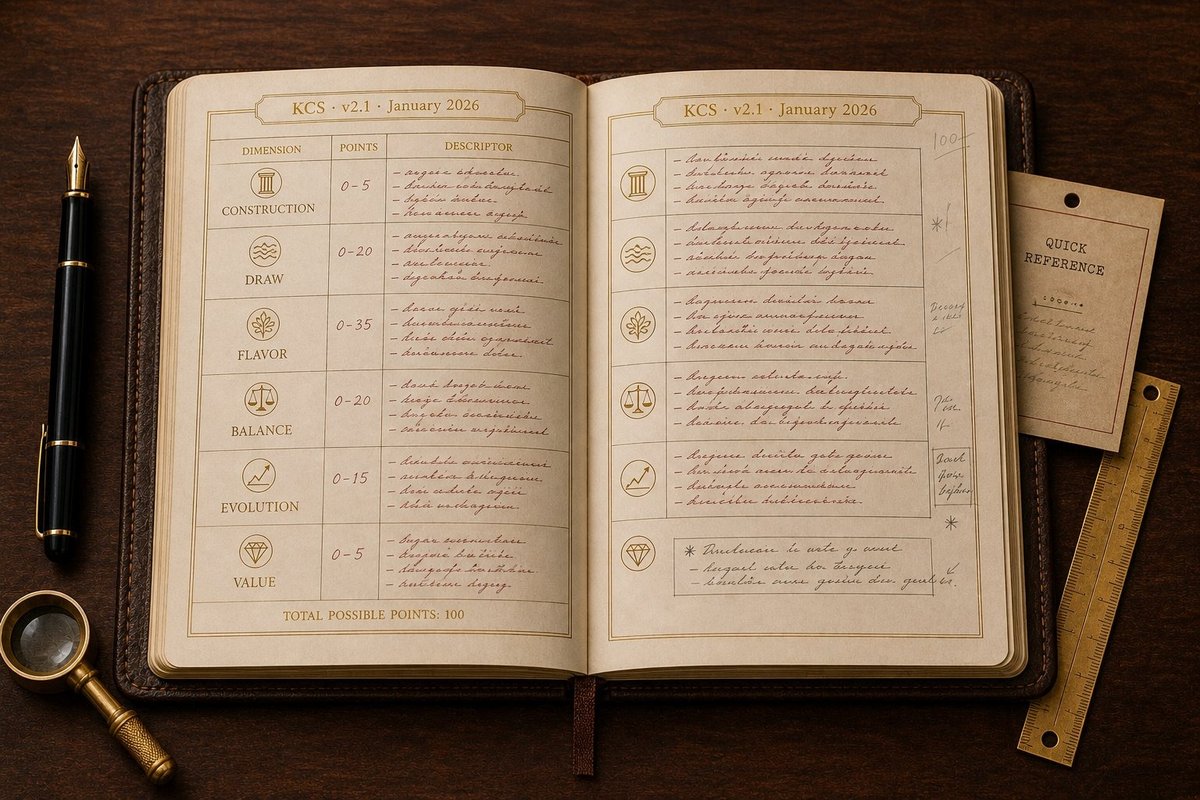
KCS distributes 100 points across six dimensions: Flavor (35), Construction (20), Balance (15), Evolution (12), Intensity (10), and Value (8).
The 35-point Flavor allocation is the system's clearest editorial statement: flavor is what the smoker actually experiences, and competing scoring systems that distribute points equally across construction, appearance, and flavor produce arithmetic that flatters well-rolled but flavorless cigars.
Construction (20 points) covers roll quality, draw consistency, burn line behavior, ash retention, and cap precision. The factory-discipline measure.
Balance (15) measures wrapper-binder-filler integration: whether one component dominates or whether the three operate as a unified flavor architecture.
Evolution (12) measures transformation across the cigar's thirds. A cigar that delivers the same flavor for 60 minutes scores low here; a cigar with three distinct flavor phases scores high.
Intensity (10) measures depth and concentration without harshness — the integration of strength and body.
Value (8) measures quality-per-dollar at current 2026 pricing. Overpriced cigars are penalized; reasonable-cost premium delivers points.
The Bands
Scores collapse into five publishing-tier bands: Legendary (95-100), Outstanding (90-94), Excellent (85-89), Good (80-84), Below Standard (0-79). The bands are real categories, used as published; KCS preserves the lower bands rather than allowing scoring inflation.
Calibration
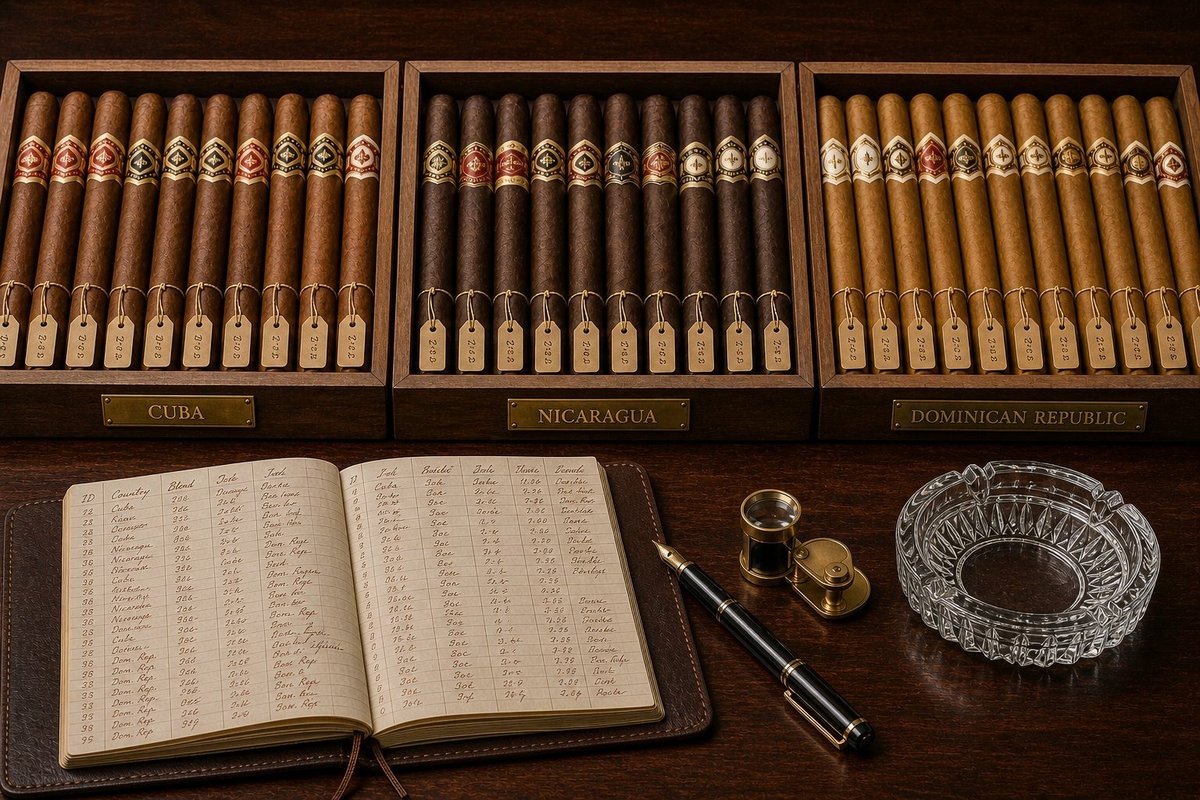
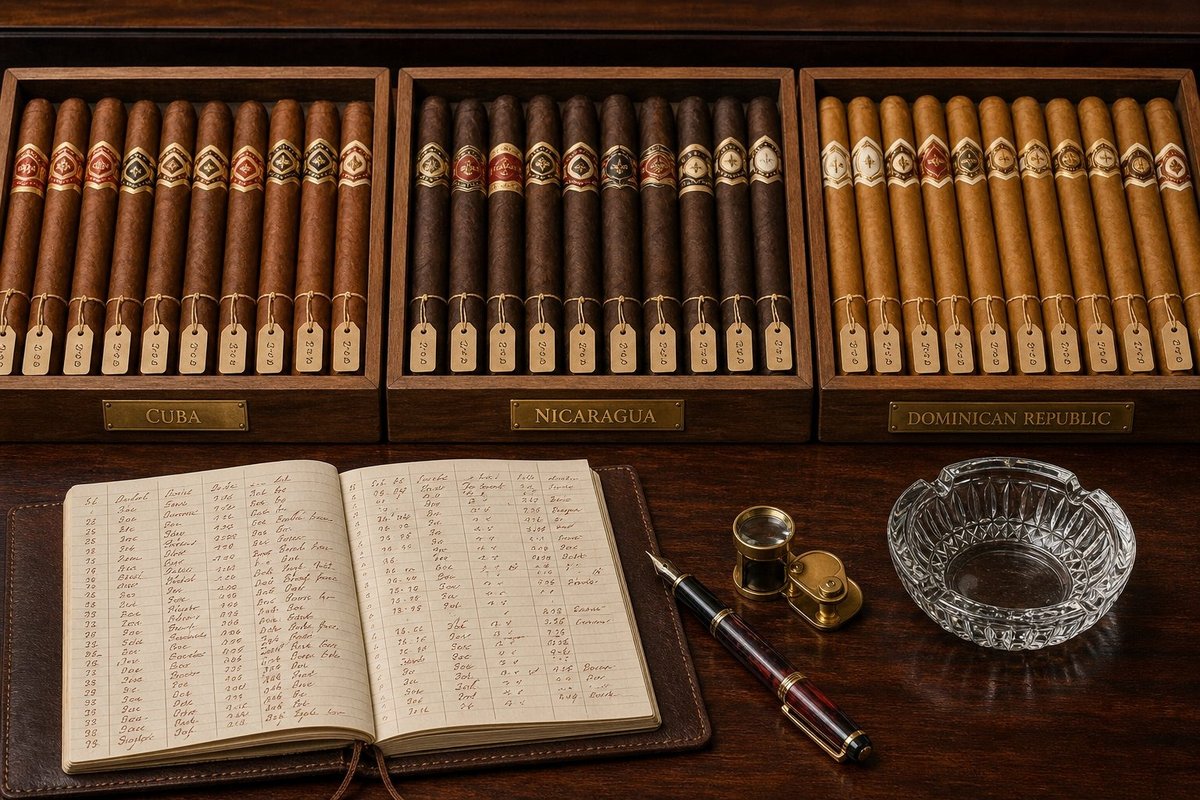
A 38-cigar reference sample is scored quarterly under blind conditions. Drift of more than two points triggers methodological investigation: the reviewer's palate, or the cigar itself, may have changed. The full sample with dimensional breakdowns appears in Appendix L.
The Vintage Doctrine
Every KCS score carries a vintage marker (currently 2026 Edition). Premium cigars are vintage-dependent, like wine; a score from 2026 is a judgment of that cigar in that production window. Subsequent editions revisit the calibration sample on a five-year cycle.