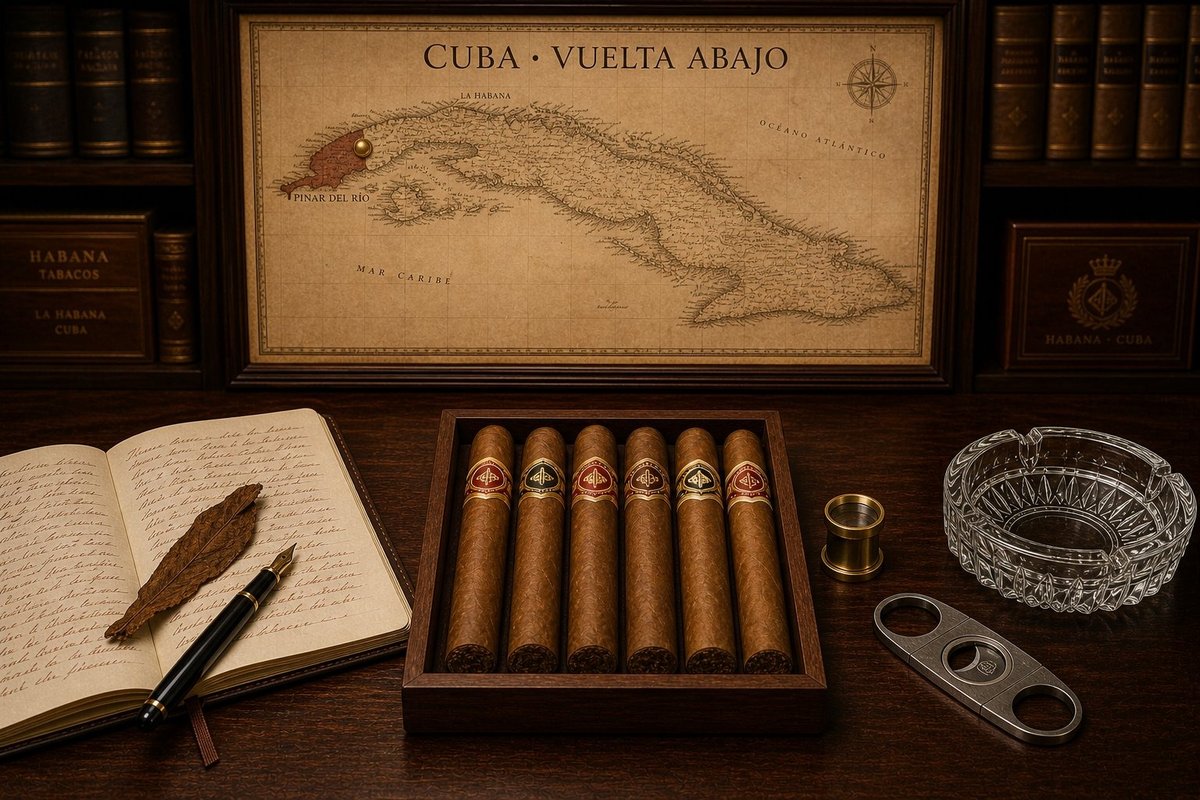
The U.S. embargo on Cuban products has been in effect since 1962. For sixty-four years, Americans have not been able to legally purchase Cuban cigars on American soil. The legal barrier has shaped pricing, mythology, secondary markets, and an entire genre of Hemingway-tinged travel writing. What it has not been able to do is explain why the cigars still taste different.
Beyond the Embargo
The temptation, especially for American writers, is to attribute the entire Cuban mystique to the embargo's forbidden-fruit effect. The argument runs: people want what they cannot have; the cigars taste exotic because they are illegal; remove the embargo and the mystique evaporates. This argument is convenient. It is also wrong.
Cuban cigars are legal throughout most of the world. They are sold in Geneva, London, Hong Kong, Madrid, and Singapore at retail prices significantly higher than comparable Nicaraguan or Dominican production. Connoisseurs in those markets — markets where the embargo has no effect — continue to buy Cuban product at premium prices and continue to describe the smoking experience as distinct from any other origin. The mystique exists outside the embargo.
What the embargo has done is concentrate the mythology into a specifically American story. The American smoker has spent sixty years inheriting a tradition in which the Cuban cigar is the unobtainable object — passed across borders in vacation luggage, smuggled through Mexico, gifted by traveling clients, smoked once a year at a wedding by a father who got them somewhere he is not going to specify. The product takes on a halo of forbidden privilege that the same product in a Geneva shop does not carry. Both halos exist. They are not the same halo.
The Soil Argument
The serious explanation for why Cuban cigars taste different has nothing to do with politics. It is geological.
The Vuelta Abajo basin sits on a specific weathered limestone substrate that releases magnesium and calcium into the topsoil at concentrations no Central American valley replicates. The mineral profile of the soil is unique within tobacco-growing geography. Combined with the Pinar del Río microclimate — high humidity, low diurnal variation, salt-bearing trade winds from the Caribbean — the result is a tobacco leaf that ferments along a different chemical pathway than New World leaf does.
The fermentation pathway produces specific aromatic compounds that flavor chemists have begun to characterize but no other producing region has been able to replicate. The "Cuban twang" — that slightly tangy, peppery character that aficionados describe but cannot quite analytically isolate — is the sensory signature of these unique compounds. Nicaraguan tobacco, grown in volcanic soil at higher elevation, ferments differently and produces a different signature. Both signatures are excellent. They are not the same signature.
The Sixty-Year Test
Here is the test the Cuba apologists rarely propose, because they suspect the result. Take a 1996 Cohiba Robusto — a cigar made before the contemporary quality crisis, properly stored for thirty years in a temperature-controlled cellar in Geneva — and smoke it alongside a 2024 Padrón 1964 Anniversary Robusto. The Padrón is the consensus best New World production. The Cohiba is at the peak of what Cuba can do when the factory is in form.
The Padrón will be excellent. The Cohiba will be different. The Padrón delivers consistent dark fruit, leather, espresso, white pepper — a precisely engineered profile that has been refined across generations of the Padrón family. The Cohiba, if it has aged correctly, delivers cedar that has bloomed into something sweeter, leather that has acquired a faintly tannic edge, and a finish character that does not appear in any New World cigar at any price point: the dried-fig rancio that requires both Cuban tobacco and long aging to develop.
Most blind panelists will score them similarly — both in the 93–95 range. What they will not say is that the cigars are interchangeable. They are not. They are the two best things their respective traditions know how to produce, and they are not the same thing.
What the Embargo Took
The embargo, for sixty-four years, has prevented the American premium cigar market from incorporating Cuban product into its competitive landscape on equal terms. The effect on Cuba has been substantial: American consumer demand, properly channeled, would have driven additional investment in Cuban production capacity, modernization of Habanos S.A. factory equipment, and likely a faster recovery from the post-2018 quality crisis that has plagued routine Cuban production. The embargo has also, paradoxically, sheltered Habanos S.A. from the discipline that consumer competition imposes — the New World producers have spent thirty years improving because they had to compete; Habanos has had no equivalent pressure from the largest single premium cigar market on earth.
If the embargo were lifted tomorrow, the immediate consequence would be a quality crisis in Cuban production as Habanos struggled to meet sudden American demand. The five-to-ten-year consequence would be an investment cycle that returned Cuban production to its 1990s-era quality standards. The thirty-year consequence would be a global premium cigar market in which Cuba was one of three top-tier producing traditions rather than one of three with an asterisk attached to it. Whether that day arrives in our lifetimes is, at this point, a political question that this magazine has no privileged information about.
What we have privileged information about is the leaf. The leaf is still the best on earth. The factory floor has not always kept up. Both things can be true and both are.
Cuba is profiled in depth in the World Cigar Atlas. From Cigar & Cocktail Magazine Q1 2026.