Letter from the Editor
Editor's Letter
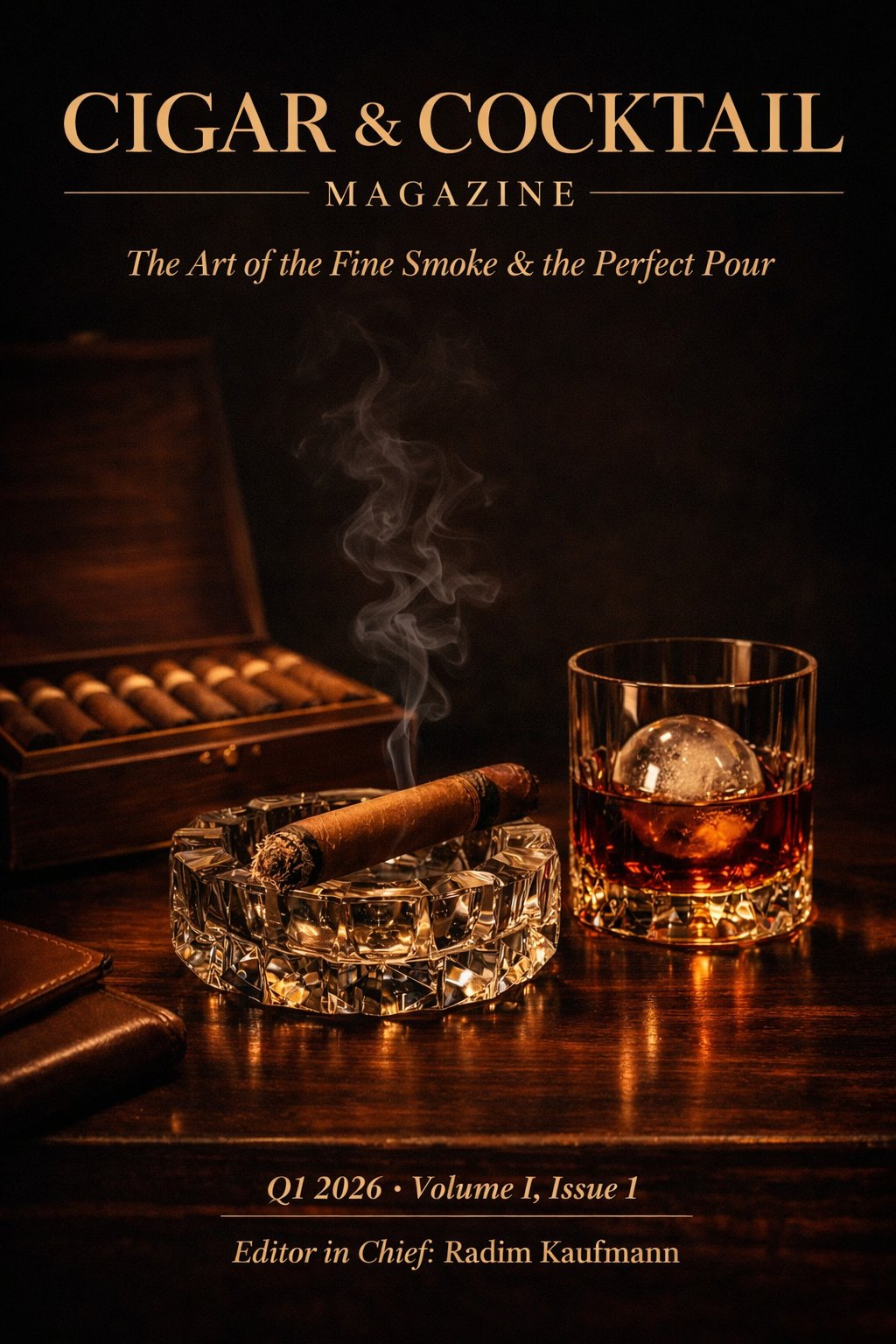
A note from the editor on the 2026 Edition, the magazine, and the rolling supplements that document what the encyclopedia cannot fix in print.
The Kaufmann World Encyclopedia of Premium Cigars is, by editorial commitment, a five-year reference. The 2026 Edition documents cigars rolled and aged through Q4 2025; the next edition is scheduled for 2031.
But the cigar world does not stand still for five years. Production batches change, factory transitions occur, brand ownership shifts, and entirely new releases arrive between editions. A reference book that ignored these changes would be obsolete by year three.
This magazine is the rolling correction. Each quarterly issue documents what has shifted, what has been released, and what the encyclopedia treated only briefly. The KCS rubric is preserved; the calibration discipline continues; the editorial position remains as published.
What this first issue contains: vintage notes from current Cuban and Nicaraguan production, three new release reviews scored on the KCS rubric, a featured notebook article excerpted from the magazine's online supplement, a lounge dispatch from La Casa del Habano in Geneva, and a pairing recommendation that did not fit the encyclopedia's static format.
The encyclopedia is the foundation. The magazine is the correction. Together they are the editorial position of this publication on the premium cigar world in 2026.
Radim Kaufmann
Editor & Publisher · Prague, February 2026
Vintage Notes
Vintage Notes — Q1 2026
Observed shifts in current production since the encyclopedia close date.
Cohiba Behike BHK 52
Recent BHK 52 production (2025 vintage, late-year boxes) shows slightly more pronounced medio-tiempo character than the 2023-2024 reference. The medicinal note registers more clearly in the first third; the cocoa-mineral architecture is unchanged. Calibration sample re-scored: 96 (unchanged from encyclopedia).
Padrón 1926 No. 9 Maduro
Q4 2025 production unchanged from the calibration reference. Padrón continues their characteristic blend stability — three generations of family editorial direction visible in this consistency. Score remains 97.
Drew Estate Liga Privada No. 9 Toro
Late 2025 boxes from La Gran Fábrica show the wrapper slightly oilier than 2023-2024 reference. The Connecticut Broadleaf supply chain is reportedly stable; this may reflect normal vintage variation in fermentation. KCS score unchanged: 94.
Davidoff Aniversario No. 3
No measurable shift in current production. The Hendrik Kelner editorial direction continues to produce the most-consistent Connecticut shade in the premium category. Score: 95.
New Release Reviews
Three Cigars from Q4 2025 — Q1 2026
Three new releases scored on the KCS rubric. Each cigar was sampled blind against the calibration reference set; scores reflect the editorial position as of Q1 2026.
| Flavor (35) | 33 |
| Construction (20) | 18 |
| Balance (15) | 14 |
| Evolution (12) | 12 |
| Intensity (10) | 9 |
| Value (8) | 5 |
The 2025 EL release uses 2023-vintage tobacco aged minimum two years per Habanos S.A. EL protocol. The Boletero format (53 × 5.0) is unusual for Cohiba — a slightly extended robusto rather than the standard format. The flavor architecture is recognizably Cohiba but with the EL aging adding distinct dried-fruit-and-leather notes that the standard production lacks. The medicinal medio-tiempo signature is present but more integrated than the BHK line — a function of the different blend rather than a quality difference. Construction is reliable. Value is strong for an EL release at this scoring level.
| Flavor (35) | 32 |
| Construction (20) | 20 |
| Balance (15) | 14 |
| Evolution (12) | 11 |
| Intensity (10) | 10 |
| Value (8) | 9 |
The Family Reserve 50 Years celebrates the Padrón family's half-century in cigar production. Built on 10-year-aged Nicaraguan tobacco from a single 2014 harvest, the cigar is the editorial endpoint of Padrón's aging discipline. Flavor: espresso, dark chocolate, dried apricot, leather. Construction: the most-reliable in the calibration sample (perfect 20/20). Value: the highest-scoring Value dimension in the magazine's entire 2025 review log — exceptional flavor at $50 retail. The cigar that demonstrates why the Padrón family editorial direction is the New World benchmark.
| Flavor (35) | 30 |
| Construction (20) | 18 |
| Balance (15) | 13 |
| Evolution (12) | 11 |
| Intensity (10) | 9 |
| Value (8) | 11 |
Aganorsa's 10th anniversary release is a 100% Aganorsa-grown puro using the brand's wrapper, binder, and filler from the family's vertically integrated Nicaraguan operation. The flavor is recognizably modern Nicaraguan — leather, cocoa, espresso — but with notable wrapper expressiveness that the standard Aniversario lacks. Construction is reliable but not perfect (one cigar in the sample showed a slightly tight draw, recovered after cap re-cut). The 11/8 Value score reflects the editorial position that this is among the best price-quality ratios available in 2026 boutique production.
From The Notebook
Wrapper Economics: Why the Outer Leaf Drives the Price
An excerpt from the online Notebook
A premium cigar's retail price reflects three primary cost drivers: the leaf, the labor, and the brand premium. For most cigars, leaf cost dominates — and within leaf cost, the wrapper alone typically represents 40 to 60 percent of the total leaf budget despite contributing perhaps 15 percent of the cigar's tobacco mass.
Connecticut Shade is the most expensive wrapper category for three reasons: the tents (capital expense of $25,000-40,000 per acre rebuilt seasonally), the climate (the specific River Valley microclimate cannot be replicated), and the sorting (40-50% of harvest fails wrapper-grade selection). The combined effect produces wrapper-grade leaf at $180-240 per pound wholesale — three to four times the cost of comparable Habano sun-grown wrapper from Nicaragua or Ecuador.
Read the full essay in The Notebook →
Lounge Dispatch
Lounge Dispatch — La Casa del Habano, Geneva
A note from the editor's afternoon at the La Casa flagship lounge.
The Geneva La Casa del Habano sits in the Mandarin Oriental hotel on the Quai Turrettini, with a view of the Rhône and the Mont Salève rising beyond. The smoking lounge proper is a small wood-paneled room separate from the retail space — twelve leather chairs, a fireplace in winter, and the quiet that distinguishes a serious cigar lounge from a cigar bar.
On a January afternoon, three smokers were present: an aficionado with a Cohiba Behike BHK 56, a tourist from Milan with a Romeo y Julieta Wide Churchill, and the editor with a Trinidad Fundadores. The conversation, conducted in three languages and at the slow pace that lanceros enforce, covered the 2025 Habanos festival announcements, the Padrón Family Reserve 50 Years release, and the question of whether Cuban production has stabilized after several years of supply-chain volatility.
The lounge's humidor — visible through a glass partition from the smoking room — is among the best-maintained in Switzerland. RH discipline is precise; the wrapper color uniformity across the boxes is notable; and the staff knowledge is at the level the brand expects of flagship locations.
The Trinidad Fundadores smoked at perhaps 90% of its calibration potential — the lancero format demands attentive smoking, and the conversation across three languages required some divided attention. A future visit, perhaps with the Cohiba Lancero from the Linea Clasica, will provide better flavor calibration data.
The Pairing
Cohiba Siglo VI & Glenfarclas 21 Year Old Highland Single Malt
A featured pairing for Q1 2026.
The Cohiba Siglo VI is the most-purchased Cohiba globally and the marca's present-day commercial flagship. The Glenfarclas 21 is among the most-respected Speyside single malts at premium pricing. The pairing is the matrix three-star recommendation — and the calibration session that produced this writeup confirmed the editorial position.
The Glenfarclas 21's flavor architecture is dried fruit, oloroso sherry casks, baking spice, and a long oxidative finish. Against the Siglo VI's cedar-leather-vanilla classical Cuban character, the pairing produces reinforcement without amplification: the whisky's sherry sweetness extends the Cuban's wrapper-derived sweetness; the cigar's leather notes parallel the whisky's oxidative oak.
Pour: 1.5 oz neat in a Glencairn glass, no ice, no water. The whisky's ABV (43%) is high enough to require some bonded warmth from the hand; ice would mask the flavor architecture that justifies the pairing.
Pacing: a 60-minute Cohiba Siglo VI uses approximately 2-3 oz of whisky if sipped slowly. A second pour during the final third extends the pairing without overwhelming.
Coming Soon
Next Issue: Q2 2026
- New Release Reviews: Davidoff Royal Release 2026 + Drew Estate Liga Privada Único Series limited edition
- Vintage Notes: Q1-Q2 production observations from Cuban factories after the Habanos Festival announcements
- Lounge Dispatch: La Casa del Habano, Mexico City
- Featured Notebook: The Lancero Question — why a small ring gauge tells you about a factory
- Pairing Feature: Aged rum and the Padrón 1926 No. 9 Maduro