History
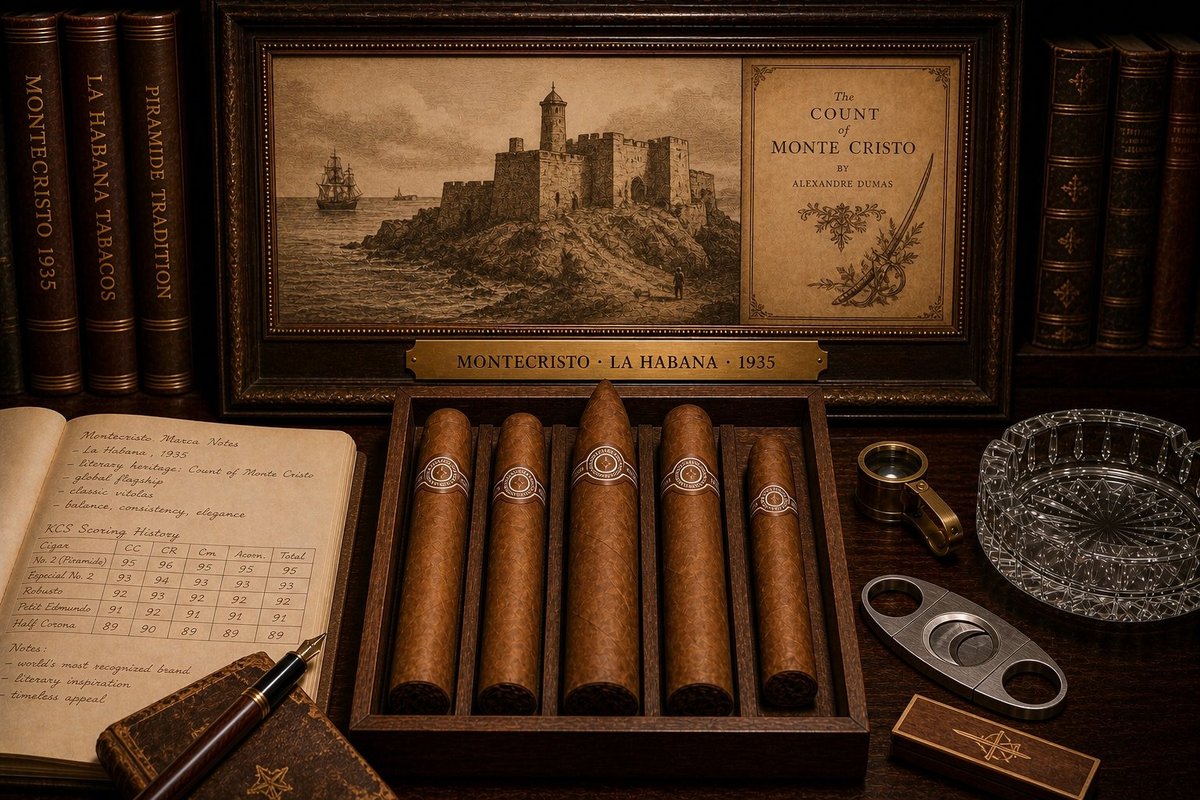
Montecristo was created in 1935 by Alonso Menéndez at the H. Upmann factory, named for Alexandre Dumas's novel which was reportedly read aloud to torcedores at work. The original five-vitola line (Numero 1 through 5) defined the format conventions still in use across Habanos production: the No. 2 (torpedo, 52 × 6.1) became the marca's flagship and remains one of the world's most-recognized cigars.
Through political and economic transitions, Montecristo has maintained the largest production volume of any Cuban marca and the broadest international distribution. The brand also licenses non-Cuban production for U.S. distribution; the U.S. Montecristo (a different cigar entirely, blended in the Dominican Republic) is the bestselling premium cigar in the United States.
The Cuban Lineup
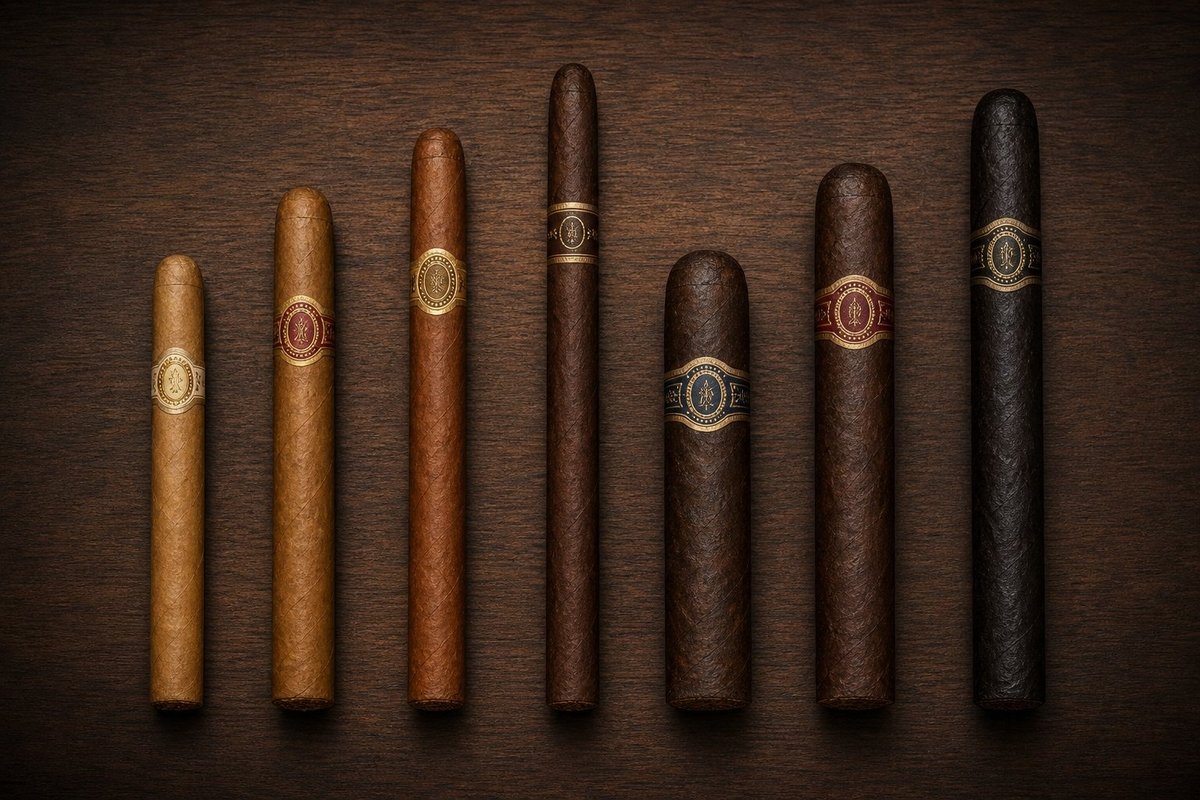
The Cuban Montecristo lineup centers on the No. 2 torpedo. The numbered series (No. 1 through No. 5) covers the body-weight spectrum from medium-light (No. 4 petit corona) through medium-full (No. 2 torpedo). The Edmundo line, launched 2004, introduced larger ring gauges (Edmundo, Petit Edmundo). Specialty releases include the Open series and various limited editions.
The KCS Verdict
Montecristo scores reliably in the high Excellent to low Outstanding band — the medium-bodied Cuban classical experience executed at scale. Flavor is balanced, never aggressive: cedar, leather, restrained sweetness, with the marca's characteristic vanilla-tobacco finish. Construction is comparable to Cohiba and Romeo y Julieta — high but not perfect, with the same Cuban draw-inconsistency rate of approximately one in twenty cigars. Value is the marca's strength: a $14–18 Montecristo No. 4 delivers premium Cuban flavor at a fraction of Cohiba pricing.
The U.S. Montecristo
The U.S.-distributed Montecristo (made by Altadis USA in the Dominican Republic) shares the brand and band design but is a different cigar — different blend, different factory, different editorial direction. The U.S. Montecristo is a competently-made medium-bodied Dominican blend that has nothing to do with Cuban Montecristo blend. Smokers familiar with one should not assume the other tastes similar; the encyclopedia treats them as separate marcas.