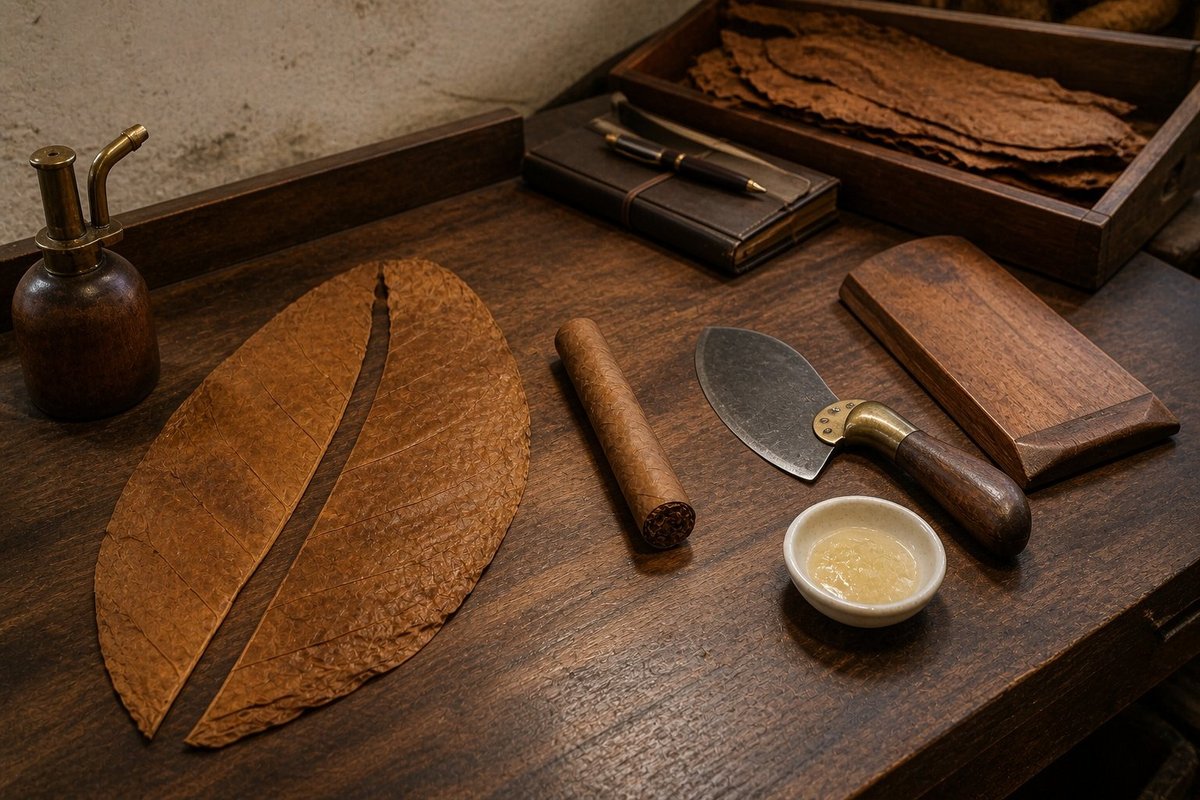
Mexico produces the most distinctive maduro wrapper leaf in the world. The San Andrés Negro Maduro — nearly black, oily, with an unmistakable dark sweetness — has anchored a particular category of premium cigar for over a century and shows no sign of being displaced.
The Geography
Premium tobacco is grown almost exclusively in the Valle de San Andrés Tuxtla, in the southern part of Veracruz state on the Gulf of Mexico coast. The valley sits at low elevation (50–150 meters) but is shadowed by the Sierra de los Tuxtlas volcanic range, whose mineral-rich ash deposits over millennia produced the distinctive volcanic soil that the regional tobacco depends upon.
The climate of San Andrés Tuxtla is unusual: tropical, with year-round high humidity (the valley sits adjacent to one of the wettest regions of Mexico), warm temperatures, and a long growing season. The combination of volcanic mineral content, persistent humidity, and the regional tobacco tradition produces wrapper leaf with characteristics no other producing region replicates: a dark, oily, slightly toothy texture; a flavor profile dominated by dark chocolate, espresso, and a characteristic sweet earthiness; and the unique aging behavior that allows San Andrés Negro to develop deeper character over years of post-fermentation rest.
The History
Mexican tobacco cultivation predates European contact by millennia. Indigenous peoples of southern Mexico (the Olmec, Totonac, and later Maya) cultivated tobacco for ceremonial and practical use long before colonization. The Spanish colonial period adapted indigenous practices to European cigar-making conventions; the modern Mexican premium tradition is essentially continuous with the colonial-era industry.
The Te-Amo brand, founded in San Andrés Tuxtla in 1969, became the dominant American-market Mexican premium brand by the 1980s. The post-1990s premium renaissance brought Mexican production back into the upper tiers, with the Casa Turrent operation, Santa Clara, and several boutique producers establishing flagship lines that compete with the best New World production. Mexico has not experienced the political disruption that affected Cuba, Nicaragua, and Honduras in the late twentieth century — the country's premium cigar industry has been one of the most continuously stable in the modern era.
The Tradition
The Mexican tradition is anchored on the San Andrés Negro Maduro wrapper. The leaf is grown in direct sunlight (sun-grown rather than shade-grown), aged extensively after fermentation, and cured to develop its distinctive near-black color and characteristic flavor profile. A Mexican premium cigar wrapped in San Andrés Negro Maduro typically presents: a near-black wrapper with substantial oil sheen and slightly raised tooth; a substantial body that frequently exceeds the strength of comparable Nicaraguan cigars; and a flavor profile dominated by dark chocolate, espresso, dried fig, leather, and a characteristic sweetness that distinguishes the wrapper from any other origin.
Beyond the Negro Maduro, Mexican production includes San Andrés Habano wrapper (a lighter-cured varietal more reminiscent of Cuban Habano), San Andrés Morrón (a dark-medium hybrid), and several specialty varietals.
The Producers
The principal Mexican producers include Casa Turrent (the Turrent family operation, four generations of cigar making, producing the Casa Turrent flagship and the Te-Amo line); Santa Clara (a long-established San Andrés operation); and Tabacos La Veracruzana (the regional cooperative producing leaf for both domestic finishing and export to other producing countries).
Mexico exports substantial wrapper leaf to manufacturers in the Dominican Republic and Nicaragua, where San Andrés Negro is used as the wrapper for many maduro lines. Among the most-recognized non-Mexican cigars wrapped in Mexican San Andrés Negro: the Drew Estate Liga Privada No. 9, the My Father Le Bijou Maduro, the Padrón 1964 Anniversary Maduro, and a substantial portion of the Rocky Patel Vintage Maduro production.
Mexico in the Modern Premium Portfolio
For smokers who appreciate the maduro flavor profile, Mexican production at the flagship tier is essential. The Casa Turrent Origin and the Te-Amo Edición Limitada series score regularly in the 88–92 KCS range; the broader Mexican production landscape delivers good value across the maduro spectrum.
The Mexican wrapper-export tradition is the more significant industry contribution. Whenever a smoker enjoys a premium maduro cigar produced in Nicaragua, the Dominican Republic, or Honduras, there is a substantial probability that the wrapper leaf was grown in San Andrés Tuxtla. This unsung export role is, arguably, more economically important than the country's direct cigar manufacturing.