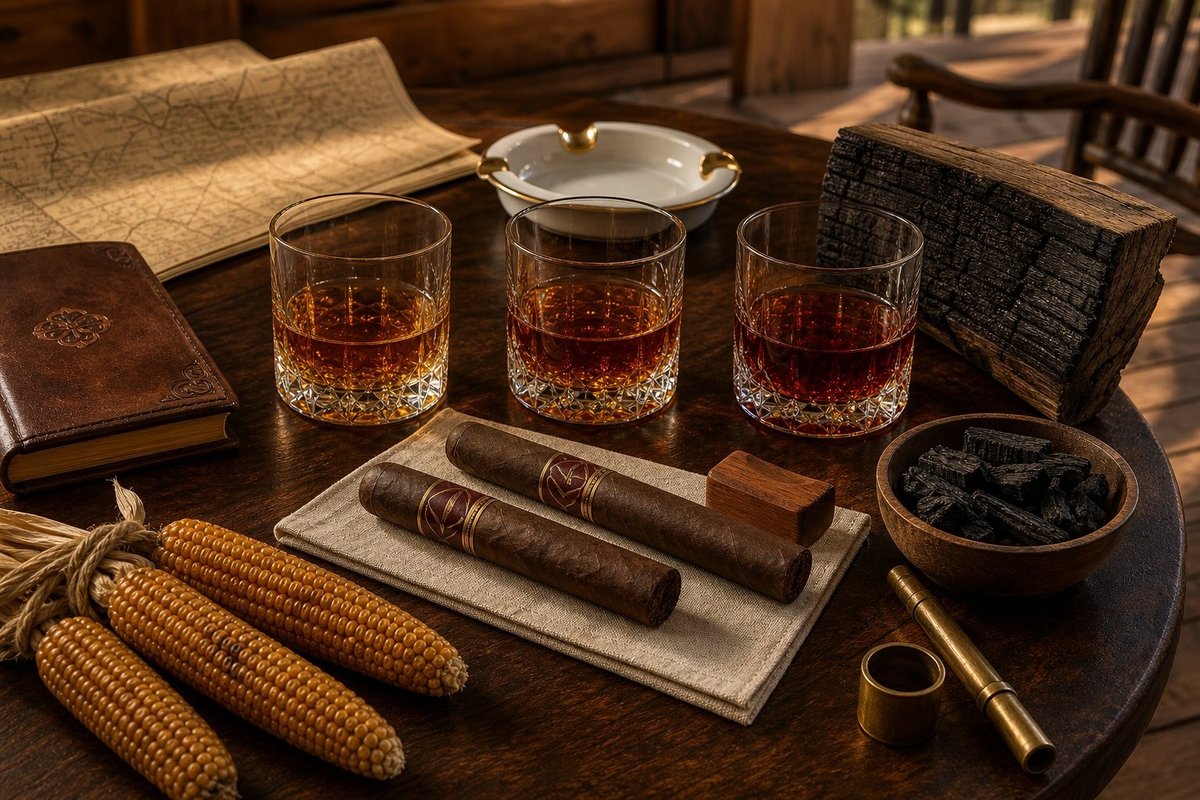
A cigar smoker who can make six cocktails well never has to drink badly at home. These six — chosen for cigar compatibility, build simplicity, and ingredient overlap — cover the principal pairing axes: spirit-forward strength, citrus-bright contrast, bitter complexity, and the smooth caramel-dessert finish that closes a long evening.
The Old Fashioned
Build: 60ml bourbon or rye, 5ml simple syrup, 2 dashes Angostura bitters, large ice cube, expressed orange peel. Stir 30 seconds in mixing glass with ice, strain over fresh large cube, express peel and discard.
The Old Fashioned is the unanchored cigar smoker's default. It is the cocktail invented before cocktails had names — "an old-fashioned whiskey cocktail" was the request that distinguished a traditional spirit-bitters-sugar build from the newer mixed drinks of the 1880s. The bourbon-version pairs with Nicaraguan and Honduran cigars (dark fruit, leather, spice match); the rye-version pairs with Dominican cigars (the drier rye finish complements Connecticut-shade restraint).
The most common error is over-sweetening. The classic build uses a quarter teaspoon of sugar or 5ml of simple syrup — enough to balance the whiskey's tannic edge, not enough to make a dessert drink. Restaurants that drop a cherry, an orange wedge, and 15ml of syrup are not making an Old Fashioned. They are making something else.
The Manhattan
Build: 60ml rye whiskey, 30ml sweet vermouth, 2 dashes Angostura bitters. Stir 30 seconds with ice in mixing glass, strain into chilled coupe, garnish with brandied cherry.
The Manhattan is the Old Fashioned's more sophisticated cousin. The vermouth replaces the syrup, contributing both sweetness and an aromatic complexity that the syrup cannot supply. The cocktail is named for the Manhattan Club, where it was invented in the 1870s; the rye-vermouth-bitters combination has remained essentially unchanged for 150 years for the simple reason that nothing improves on it.
The Manhattan demands premium ingredients in a way the Old Fashioned does not. Use rye, not bourbon (the rye's spice keeps the cocktail dry against the vermouth's sweetness). Use Carpano Antica or Punt e Mes vermouth (a fresh bottle; oxidized vermouth ruins the drink). Use real brandied cherries (Luxardo or Toschi; the corn-syrup maraschinos are an insult). Pairs with everything from medium Dominican to full Nicaraguan — the Manhattan's range is enormous.
The Daiquiri (Classic, Not Frozen)
Build: 60ml white rum, 25ml fresh lime juice, 15ml simple syrup. Shake hard with ice 15 seconds, double-strain into chilled coupe. No garnish.
The classic Daiquirí — three ingredients, no embellishment, served up — is the cocktail Hemingway drank in Havana at El Floridita and the spirit-citrus-sugar template against which every other shaken drink can be measured. It is also the most unjustly maligned cocktail in modern bar culture, having been confused with the frozen-strawberry-blender abomination that bears the same name in tourist hotels.
The classic Daiquirí pairs unexpectedly well with cigars. The bright acidity cuts the smoke's heaviness, the rum echoes the tobacco's Caribbean origins, and the absence of bitter or aromatic complexity means the cocktail does not compete with the cigar for palate attention. Particularly suited to the morning or afternoon cigar — a Padrón 1926 Robusto with a Daiquirí is the Caribbean-noon ritual that the Hemingway cult got right.
The Negroni
Build: 30ml gin, 30ml Campari, 30ml sweet vermouth. Stir 30 seconds with ice in mixing glass, strain over fresh ice in old-fashioned glass, garnish with orange peel.
The Negroni is the cigar smoker's bitter aperitif. The equal-parts build is famously simple; the cocktail's character comes from the interaction of gin (botanical complexity), Campari (intense bitter, with the characteristic chinotto-and-orange aromatic), and sweet vermouth (the sweetness and herbal depth that balances Campari's bite). The result is a cocktail that is simultaneously bitter, sweet, herbal, citrus-forward, and spirit-strong — extraordinary compression of flavor.
The Negroni pairs well with medium to full cigars where the bitterness creates a productive contrast with the cigar's leather and cocoa notes. Less suited to delicate Connecticut-shade smokes where the Campari overwhelms. Best variations include the Boulevardier (replacing gin with bourbon) and the Old Pal (replacing gin with rye, sweet vermouth with dry); both are appropriate cigar companions in their own right.
The Sidecar
Build: 50ml cognac, 25ml Cointreau, 25ml fresh lemon juice. Shake hard with ice 15 seconds, double-strain into sugar-rimmed coupe.
The Sidecar is the cigar smoker's late-evening dessert cocktail. The cognac provides the rich, oxidized fruit base; the Cointreau adds bright orange complexity; the lemon cuts what would otherwise be a cloyingly sweet drink. The sugar rim is optional but traditional; serious bartenders sugar half the rim so the drinker can sip from either side depending on preference.
The Sidecar pairs with the same cigars that pair with cognac — Cuban-tradition smokes that have aged for years, Dominican upper-tier production, and the prestige Nicaraguan vintage releases. Particularly suited to the late-evening cigar where the cocktail's sweetness echoes the dried-fig finish character of a properly aged premium smoke.
The Boulevardier
Build: 45ml bourbon, 30ml Campari, 30ml sweet vermouth. Stir 30 seconds with ice in mixing glass, strain over fresh ice or up in coupe, garnish with orange peel.
The Boulevardier is the Negroni's warmer cousin — gin replaced with bourbon, the bourbon's vanilla-and-caramel base contributing what gin's botanicals cannot. The cocktail's name comes from Erskine Gwynne, an American expatriate in 1920s Paris who founded a magazine called The Boulevardier; the drink first appeared in print in a 1927 Harry McElhone book.
The Boulevardier is the cigar smoker's most versatile cocktail — it pairs with virtually every premium cigar from medium-bodied Dominican to full-strength Nicaraguan. The bourbon's sweetness handles bitter Campari without sweetness becoming overwhelming; the vermouth's herbal complexity finds common ground with most tobacco profiles; the orange-peel garnish provides the aromatic top note that sets up the first draw of the cigar.
Building the Bar
The minimum equipment for these six cocktails is genuinely minimal: a mixing glass (any 500ml glass works), a julep strainer, a Hawthorne strainer, a small mesh strainer for double-straining, a Boston shaker or any two-piece shaker, a bar spoon, a jigger (with 30ml and 15ml measures), and a citrus peeler. The ingredients are also overlapping: bourbon (Old Fashioned, Boulevardier), rye (Manhattan), white rum (Daiquirí), gin (Negroni), cognac (Sidecar), sweet vermouth (Manhattan, Negroni, Boulevardier), Campari (Negroni, Boulevardier), Cointreau (Sidecar), Angostura (Old Fashioned, Manhattan), and fresh citrus.
The six cocktails between them cover the entire pairing range for premium cigars across an evening. Start with a Daiquirí while the humidor is being opened. Move to a Negroni before dinner. Switch to an Old Fashioned with the cigar. Have a Manhattan or Boulevardier with the second cigar of the evening. Close with a Sidecar. The next morning, the only thing you regret is that you stopped.
All six cocktail builds with full technique notes are in the Cocktails section. From Cigar & Cocktail Magazine Q1 2026.