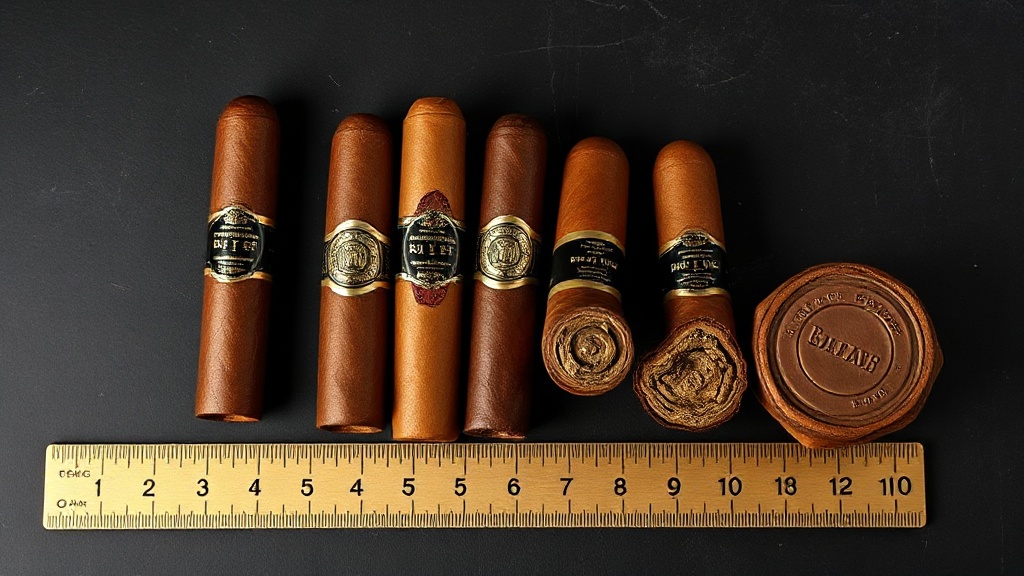
In 1992, the bestselling premium cigar in the United States was the Macanudo Hyde Park — a 5.5 × 49 corona-extra. In 2024, the bestselling vitola in the same market was a 6 × 60 toro gordo. Three decades, eleven additional ring points. The cigar has gotten visibly fatter.
This is not an aesthetic complaint. The encyclopedia's editorial position is that ring gauge inflation has been the most consequential single trend in the modern premium cigar market — and that the trend has cost the smoker more than it has delivered.
The Numbers
| Era | Bestselling Format | Ring Gauge | Median Premium Ring |
|---|---|---|---|
| 1990–1995 | Corona-extra | 49 | 44–48 |
| 1996–2003 | Toro | 50 | 48–52 |
| 2004–2012 | Robusto / Toro | 50–52 | 50–54 |
| 2013–2019 | Gordo / Toro Gordo | 54–60 | 52–58 |
| 2020–2025 | Gordo / Big Ring | 56–60 | 54–60 |
The trajectory is monotonic. Each five-year window pushed the median ring gauge up by approximately 2 points, with no period of reversal. The 2026 market has stabilized at 54–60 as the central tendency for new releases, with 50–52 increasingly perceived as a "smaller" format and 42–46 (lancero, slim panatela) as an explicit retro choice rather than a default option.
Why This Happened
Three forces drove the inflation, in roughly chronological order:
1. The Smoking-Lounge Economy (1990s onward)
As public smoking restrictions tightened through the 1990s and 2000s, premium cigar consumption shifted from incidental contexts (a corona after lunch, a panatela on the porch) toward dedicated lounge sessions of one to two hours. Larger ring gauges burn longer; a 6 × 60 toro gordo delivers 75–90 minutes of smoke versus 45–55 minutes for a 5.5 × 49 corona-extra. The market followed the available smoking time.
2. Construction Tolerance Margin
Ring gauges above 52 are more forgiving of construction inconsistency. A draw issue that would render a 44-ring lancero unsmokable produces only a slightly tight 60-ring gordo. As Cuban factory output volume scaled in the 2000s and New World factories ramped through the 2010s, the higher tolerance margin of fat ring gauges absorbed the construction variance that smaller formats would have exposed. The cigar got fatter partly because the rolling discipline got looser.
3. Marketing and Visual Presence
A 6 × 60 cigar photographs better than a 5 × 42 panatela, and the social-media era amplified visual presentation. Boutique brands launched specifically in the 56+ range because the format projected confidence and substance. The lancero — once the most demanding format to roll well — became a niche specialty rather than a mainline offering.
What Was Lost
The KCS rubric is format-neutral on its face — the same dimensional weights apply to any vitola — but the encyclopedia's calibration sample reveals an editorial pattern. Among the 38 calibration cigars, the highest scores cluster in the 46–52 ring gauge range. The editorial reasoning:
Wrapper-to-filler ratio: A larger ring gauge increases the filler tobacco surface area without proportionally increasing the wrapper. The wrapper, which contributes 40–60 percent of perceived flavor in a typical premium blend, becomes proportionally less prominent in the smoke as the ring gauge rises. Cigars at 60+ ring routinely smoke as if their wrapper were less expressive than their wrapper actually is — because the wrapper is not as expressive in that geometry.
Burn line behavior: A 60-ring cigar requires 70–90 minutes of even combustion; the burn line must remain perpendicular across that entire surface area. Even Cuban torcedores struggle with this consistently; New World factories accept some degree of burn correction (touch-up with the lighter) as routine for big-ring formats. A 46-ring corona burns more cleanly because the geometry is more forgiving.
Flavor evolution: The Evolution dimension of the KCS rubric measures transformation across thirds. Smaller ring gauges deliver more compressed evolution — the changes happen faster, the transitions are more discrete, and the smoker experiences three distinct phases rather than a gradually-evolving plateau. The 6 × 60 gordo often presents as a single extended flavor state rather than a developmental sequence.
The Editorial Counter-Recommendation
The encyclopedia recommends the 46–52 ring gauge range as the editorial default for the aficionado who wants to taste the cigar's flavor architecture rather than smoke through it. Specifically:
- Robusto (50 × 4.9–5.0): The single most reliable format for tasting modern premium tobacco. Time investment 50–70 minutes. Wrapper expressiveness preserved.
- Cañonazo / Sublime (50–52 × 5.5–5.9): The Cuban "extended robusto" format. Slightly longer evolution, maintained wrapper ratio.
- Petit Corona (42–44 × 4.5–5.0): The understated format. Fastest evolution, most concentrated wrapper expression. Roll quality must be high; this format exposes everything.
- Lancero (38–42 × 7.0–7.5): The connoisseur's vitola. Difficult to roll well; rewarding when correctly executed. The format that distinguishes a great factory from a competent one.
For the gordo / toro gordo formats, the editorial position is that a few specific cigars genuinely benefit from the geometry — the Cohiba Behike BHK 56 is one, the Padrón 1964 Anniversary No. 6 (60-ring) is another — but most fat-ring cigars are presenting their tobacco less effectively than the same blend in a smaller format. When in doubt, smaller is better.
The Slow Reversal
The 2024–2026 period has shown the first signs of reversal at the boutique end. Several Nicaraguan boutique manufacturers have launched limited releases in lancero (38 × 7) and corona-gorda (46 × 5.5) formats, marketed explicitly as "throwback" or "torcedor's choice" lines. These are early indicators rather than market trends, but the editorial position is hopeful: the next decade may see ring gauge stabilize and slowly retreat from the 60-ring peak. The cigars that survive the next twenty years will be the ones whose flavor architecture rewards careful attention, not the ones that maximized smoke duration.