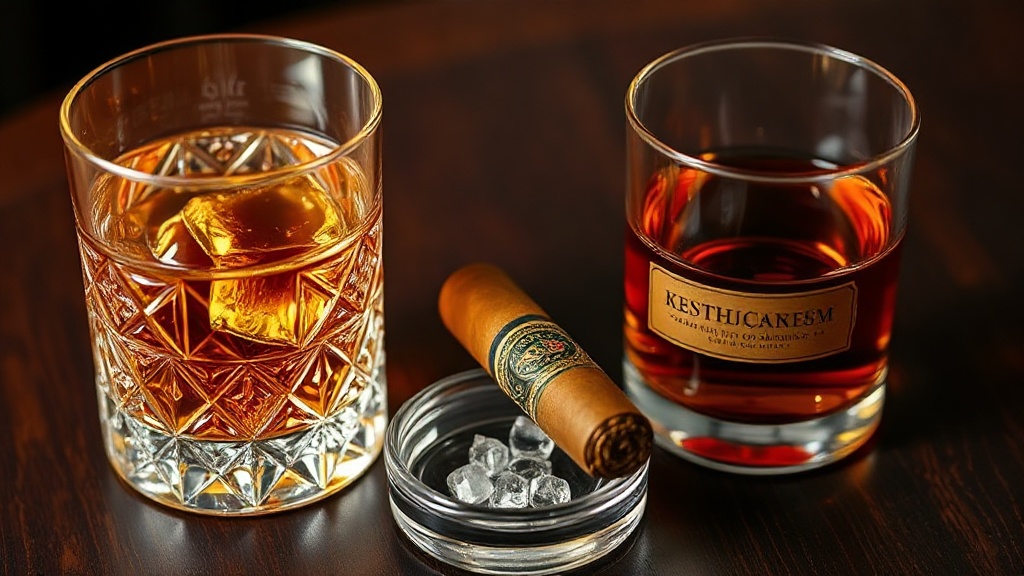
An aficionado standing in front of his liquor cabinet, premium maduro in hand, has a choice. The encyclopedia's pairing matrix gives both aged rum and bourbon three-star ratings for Nicaraguan full / maduro and Liga Privada-style aggressive maduros. Both pairings work. The matrix does not pretend they are interchangeable.
This article walks through the editorial logic of when each path produces the better evening. The full pairing matrix appears in Appendix K of the encyclopedia.
What Each Spirit Brings
Aged rum — by which the matrix means cane-based rum aged 12 years or more, in the style of Diplomático Reserva Exclusiva, Plantation XO, or El Dorado 15-year — contributes three flavor families to the pairing: oxidative oak (vanilla, caramel, dried apricot), tropical fruit (figs, raisins, candied citrus), and a clean cane sweetness underneath. The texture is rounded and the finish is medium-long but not assertive.
Bourbon — by which the matrix means corn-forward American whisky bottled at 90 proof or higher, in the style of Buffalo Trace, Eagle Rare, or the Pappy Van Winkle 15-year — contributes a different flavor family: corn-derived caramel, charred new oak (vanilla, baking spice, sometimes a tannic edge), and the assertive ethanol bite that distinguishes higher-proof American whisky from European spirits. The texture is more aggressive and the finish is longer but warmer.
What Each Cigar Asks For
The Padrón 1926 No. 9 Maduro and the Drew Estate Liga Privada No. 9 Toro both fall in the premium maduro category, but they ask different questions of the pairing.
Padrón 1926 No. 9 Maduro
The cigar's flavor architecture is espresso, dark chocolate, dried fruit, with a ten-year-aged Nicaraguan tobacco's characteristic sweet wrapper finish. The cigar is full-bodied but not aggressive — its concentration comes from age rather than ligero ratio. Bourbon is the canonical pairing: the corn-derived caramel reinforces the cigar's espresso-and-dark-chocolate notes, the new-oak vanilla amplifies the sweet wrapper, and the bourbon's body matches the cigar's body without overwhelming the flavor architecture. Pappy Van Winkle 15-year is the matrix's three-star recommendation here, and it earns the rating.
Aged rum is the contemplative alternative: less amplification, more counterpoint. The cane sweetness reads against the cigar's tobacco bitterness rather than reinforcing it; the dried-fruit and oxidative-oak notes provide a parallel flavor track that the smoker can attend to between draws. This is the pairing for the slow, late-evening smoke when concentration is the goal.
Drew Estate Liga Privada No. 9
The Liga Privada is more aggressive: higher ligero ratio, denser construction, with a smoke that delivers more concentrated tobacco flavor and a more assertive finish. The matrix gives this cigar three stars with both Lagavulin (peated Islay) and bourbon — but rum drops to two stars, and the reason is the cigar's intensity. Bourbon at higher proof (95+) is the editorial recommendation when peated whisky is unavailable; the bourbon's assertive character meets the cigar on equal footing rather than retreating.
Aged rum, with its rounded texture, becomes the secondary recommendation here precisely because the Liga Privada doesn't need a contemplative partner — it needs a partner that can argue back.
The Editorial Decision Tree
| Question | If Yes → | If No → |
|---|---|---|
| Is the cigar's body weight matched to assertive spirit? | Bourbon | Aged rum |
| Want flavor amplification (reinforcement pairing)? | Bourbon (corn → caramel matches cocoa) | Aged rum (counterpoint dynamic) |
| Smoking after dinner with full palate? | Bourbon at 95+ proof | Aged rum 15+ year |
| Want a contemplative, slow-paced evening? | Aged rum, neat | Bourbon, single ice cube |
| Pairing in warm climate (above 25°C)? | Aged rum, lightly chilled | Bourbon (works either way) |
| Pairing in winter / cold climate? | Bourbon, room-temperature | Aged rum, neat |
Both are correct answers. The smoker chooses the question.
The Specific Three-Star Recommendations
From Appendix K's brand-drink table, the canonical three-star pairings for premium maduros:
| Cigar | Primary (★★★) | Secondary (★★) |
|---|---|---|
| Padrón 1926 No. 9 Maduro | Pappy Van Winkle 15-year | Vintage Port (10-year tawny) |
| Drew Estate Liga Privada No. 9 Toro | Lagavulin 16 (Islay) | Buffalo Trace bourbon |
| My Father Le Bijou 1922 Torpedo | Diplomático Ambassador (rum) | Espresso, Sicilian-style |
| Trinidad Fundadores | Glenfarclas 21 (Speyside) | Tawny Port (20-year) |
Note that for the most concentrated maduros (Liga Privada, My Father Le Bijou), the matrix moves to peated Scotch or aged Cuban rum as primary — bourbon drops to secondary. The principle: as cigar intensity rises, the spirit must rise to match. Bourbon is the universal premium-maduro partner, but at the upper end of intensity it is occasionally surpassed by spirits that argue back more forcefully.
What to Avoid
The matrix specifically does not recommend (one star or blank):
- Champagne with full-bodied maduros — the wine is overwhelmed and the cigar tastes hollow afterward
- Light Scotch (10-year Speyside) with Liga Privada — the cigar bullies the whisky into silence
- VS or VSOP cognac with any premium maduro — only XO and older have the structural complexity to hold their own
- Sweet liqueurs (Drambuie, Grand Marnier) with anything — coats the palate and obscures the cigar's flavor architecture
The pairings work or they do not. The KCS pairing matrix is conservative — it prioritizes reinforcement pairings on the principle that the cigar should remain the central experience. Aficionados drawn to contrast pairings will find the recommendations safe; experimentation is welcome, but the three-star list is the foundation.