Most premium cigars are rolled from tobacco aged between two and four years. Two years is the practical minimum below which a cigar cannot be smoked without harsh ammonia notes; four years is the working ceiling for the great majority of premium production, beyond which the marginal flavor return on additional aging diminishes against the cost of holding inventory. A cigar advertised as having been made from "vintage" tobacco is, almost always, made from tobacco within this two-to-four-year window.
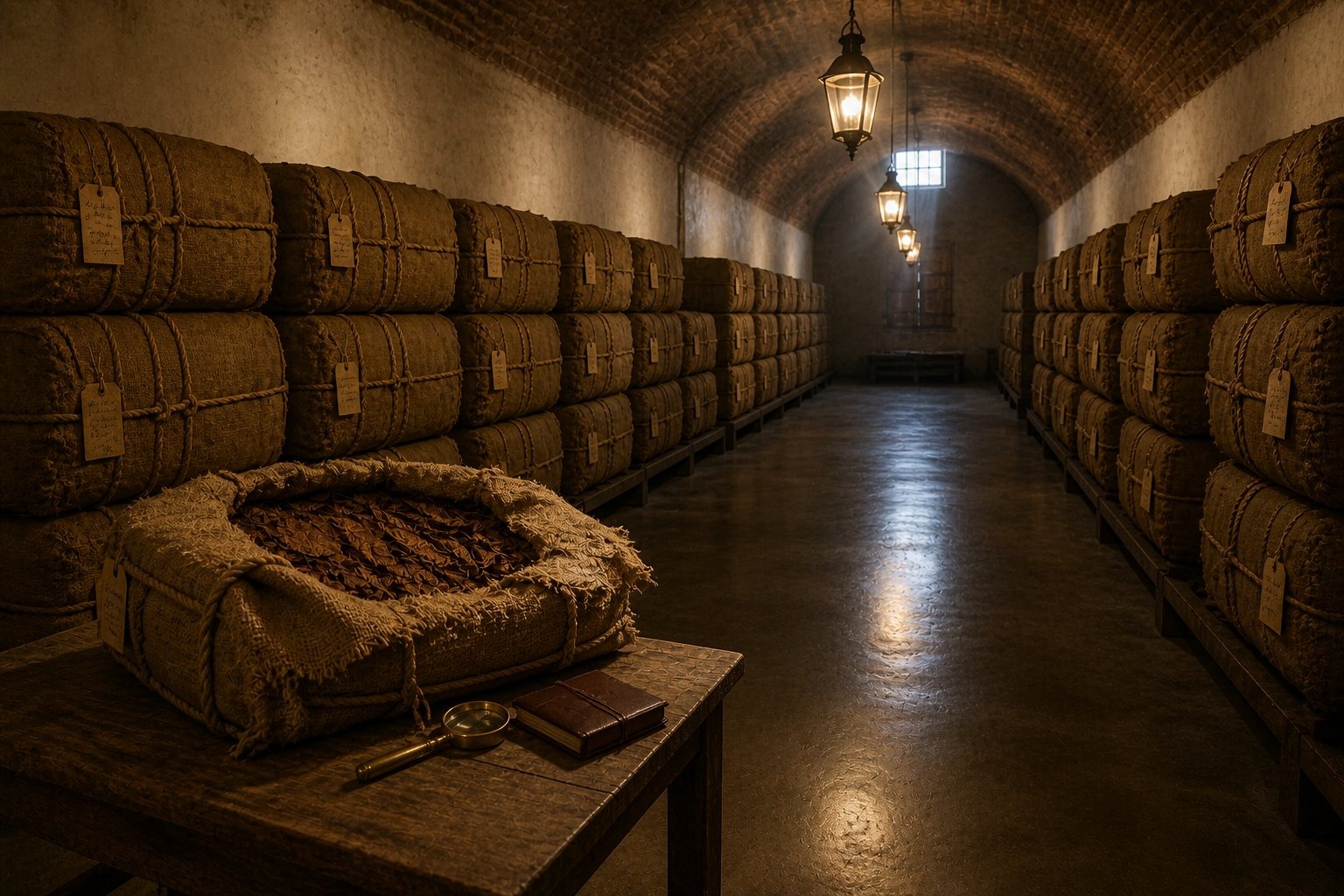
The Padrón family does not work this way. The Family Reserve line, introduced in 2003 to mark the company's seventy-fifth anniversary and continued as a permanent line ever since, is rolled from tobacco that has been aged a full ten years from harvest. The 2026 release of the line is being made from tobacco harvested in 2016 — tobacco that was already in the aging cellar when Donald Trump was first elected, when the Cubs broke their World Series curse, when the Brexit vote was held. That tobacco has been sitting in burlap-wrapped tercios, in a humidity-controlled cellar in Esteli, doing nothing visible for the past ten years.
What does ten years actually accomplish? Three things, the most-considered observers of the brand will tell you.
First, the cigar's flavor integration reaches a level that four-year-aged tobacco cannot match. The various aromatic compounds developed during fermentation — cedar, leather, dried fruit, espresso, baking spice — have, by year ten, settled into a chord rather than a sequence. The smoker tastes them simultaneously rather than serially. A four-year-aged cigar tends to evolve more dramatically across its smoke; a ten-year-aged Padrón Family Reserve evolves more subtly, because so much of the integration work has already happened in the cellar before the rolling.
Second, the residual harshness is essentially gone. The ammonia notes that betray under-aged premium production are absent at any point in a Family Reserve smoke; even a relatively aggressive vitola in the line opens cleanly and smokes without the metallic edge that cuts through some of the best-marketed Cuban flagships at retail today. The ten years are doing their work.
Third, the cigar's burn character is exceptionally consistent. Long-aged tobacco's moisture profile equilibrates more thoroughly than younger tobacco's, producing a cigar that draws and burns predictably across its full length. Construction defects in a Family Reserve are rare, partly because the rolling is excellent and partly because the underlying tobacco is forgiving in a way that younger tobacco is not.
The economics of this discipline are worth pausing on. A producer who ages tobacco for ten years has roughly two and a half times the inventory tied up per finished cigar that a four-year producer does. The capital cost of the cellar — the climate control, the storage, the insurance — runs continuously across that decade. The labor cost of monitoring and rotating the bales runs continuously too. And there is no revenue from the tobacco until year eleven, when the cigar finally ships.
The Family Reserve retails, in the U.S. market in early 2026, at approximately $23 per Robusto. This is meaningful money for a single cigar, but it is not extreme — the line sits below the most expensive Cohiba Behike vitolas, below the rarest limited editions, below several Davidoff flagships. For ten years of aging discipline, $23 is not, in the encyclopedia's view, an unreasonable price.
The smoker is, in the end, paying for the patience of the producer. The Padrón family was willing to wait a decade between harvesting their tobacco and selling the cigar made from it. They were willing to do this consistently, year after year, since 2003. They have not deviated from the standard during periods when the market would have rewarded them for cutting it. They have not labeled younger tobacco as Family Reserve when supply was tight. The discipline is the brand.
I keep, in my own humidor, a small standing inventory of three or four Family Reserve sticks at any given time, on the principle that they are the cigars I want to smoke when I want a cigar to behave perfectly. They do. The 1964 Anniversary line, also from Padrón, is more elegant; the 1926 Series is more aggressive; but the Family Reserve is the most reliable. It is the cigar I reach for when I cannot afford for the cigar to disappoint me.
If a smoker reading this has not yet tried a Padrón Family Reserve, the encyclopedia recommends that he do so — not as the most spectacular cigar of his life, but as a calibration. The Family Reserve is what ten years of aging discipline tastes like. Once a smoker knows that taste, he can read every other premium cigar against it. Some will impress him more; some will disappoint him; but the Family Reserve gives him the reference point.
That, in the end, is what the line is for.
— Radim Kaufmann, April 2026