The Malecón at five in the afternoon is a wall, a sidewalk, and a sea, and on this evening — my last in Havana for what may be a long time — it is also a slowly developing argument about what cities owe the people who love them.
The Walk
I have walked this seven-kilometer seawall in every conceivable light: at noon when the heat lifts off the limestone, at dusk when the fishermen take up their positions, at three in the morning during the 2017 power blackouts when the entire city went dark and the Malecón became, briefly, the only public space in Havana with usable horizon. Tonight is the slow January version: a cool offshore wind, the long sodium light of the Vedado streetlamps coming on one by one along the boulevard, the cruise ship at the cruise terminal looking, from a distance, like a small wedding cake parked at the end of a stage set.
I have a Partagás Serie D No. 4 in the breast pocket of my jacket. I have not lit it yet. I am saving it for later. Habit, mostly — I no longer think anything important is going to be settled by smoking a cigar in front of the Hotel Nacional, but the choreography of the evening is part of the evening, and the cigar is the choreography.
What Havana Used to Be
For most of the writers I admire, Havana was the staging ground for an aesthetic claim about the rest of life. Hemingway used the Floridita to settle his nervous system; Greene used the bars of the old town to interrogate the moral seriousness of his middle period; the photographers used the Vedado boulevards as the visual baseline against which the rest of the twentieth-century Americas could be measured for grain, light, and saturation. The Havana of those decades was, even when it was at its worst materially, the city against which other Caribbean and Latin American capitals were unfavorably compared.
That city is, in 2026, gone. Not entirely — the Floridita still mixes its frozen daiquiri to a recognizable spec, the Hotel Nacional still keeps its terrace open until midnight, the major Habanos S.A. lounges still maintain their reservations protocol — but the gravitational center has shifted. The Old Havana of the photographers has been substantially restored, which is to say, the dilapidation has been replaced with a managed presentation of the formerly dilapidated; the result reads less as authenticity and more as set design for a movie that has already been shot.
The Lounges Tonight
The La Casa del Habano at the Hotel Habana Libre is, in many ways, the cigar lounge that the rest of the world's LCDH outposts try to be. The selection is deeper than Geneva's, the service is slower in the good way, and the room itself — twenty-meter ceilings, brass fittings, the long mahogany humidor running the back wall — has a confidence that the international LCDH franchise has been trying to manufacture for decades. I had a Cohiba Siglo VI here on Tuesday with a thirty-year añejo rum that the bar staff had located somewhere in their personal connections.
Tonight I will not return there. Tonight I will walk to the Malecón, find the bench across from the Centro Vasco where I have ended my last three Havana visits, and smoke the Partagás Serie D No. 4 while the cruise ship spools up its engines and the city moves into its evening.
The Mythology Question
The Havana that mattered to me when I started visiting in 1999 was substantially mythological. I was twenty-eight, I had been reading Hemingway and Greene with too much credulity, and the photographers' Havana of the 1990s — the broken-down vintage cars, the pastel facades, the romantically lit corners — had been imprinted on my visual cortex with the force of a religion. The real Havana of 1999 was a city navigating the late Special Period, with substantial material hardship, a population that was extraordinarily generous despite the conditions, and a cigar industry that was — by current standards — at one of its higher points of recent quality.
The Havana of 2026 is differently challenging. The Cuban cigar industry has been navigating a pricing crisis, a generational transition in its rolling rooms, and a continuing gap between production and demand. The cigars themselves are increasingly variable; the city's tourist economy has retreated from the high-end and reorganized around the cruise-ship traffic and the medical tourism segment.
None of that diminishes the city for me. Havana is the only place on earth where a cigar tastes the way it does — not because the city's air contains anything magical but because the conjunction of the leaf's origin, the local cultural attention to slow time, and the salt-bearing trade winds off the Florida Straits produces, in the smoker, a particular quality of attention that other cities can replicate only as ceremony rather than as default.
The Last Cigar
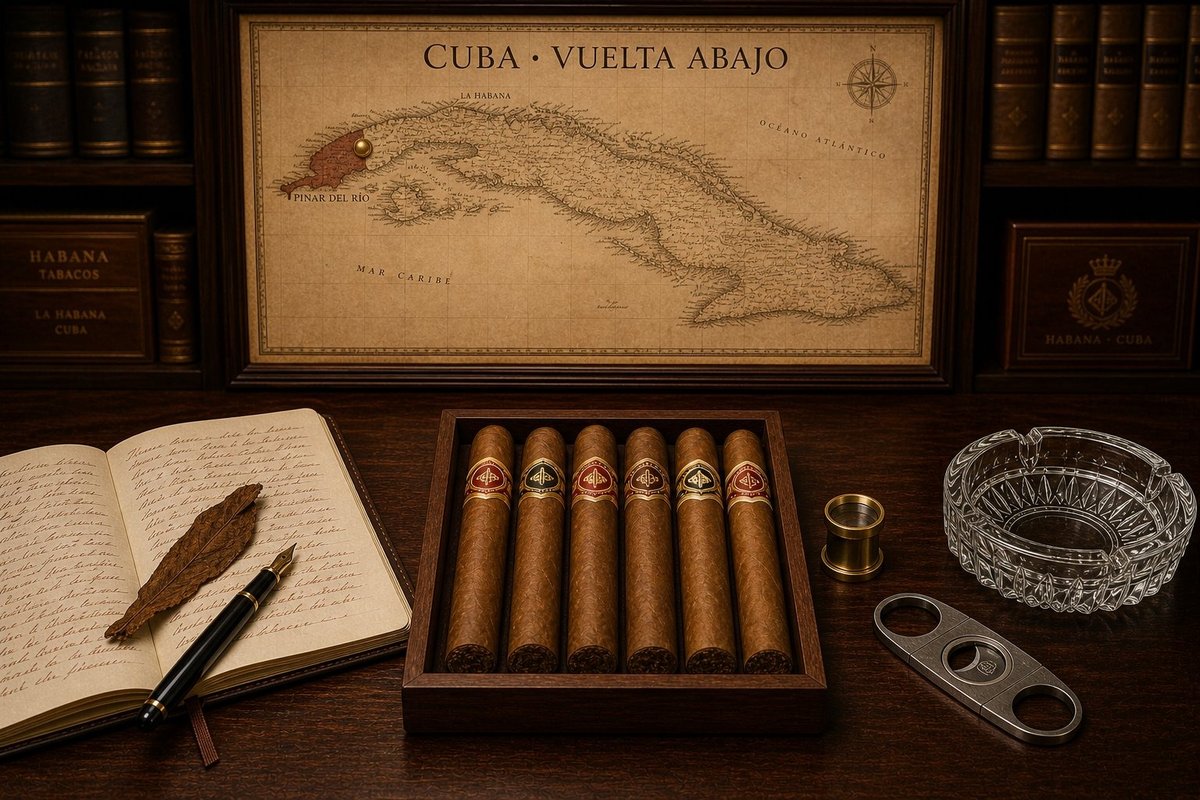
I sit on the bench at six-thirty. The Partagás Serie D No. 4 cuts cleanly; the Vuelta Abajo wrapper has the slight oil sheen that good Partagás production maintains. The toast takes the usual thirty seconds. The first draw is the cedar-and-honey midpalate that defines Cuban tradition at its best — the flavor profile no other country has cracked.
The cruise ship pulls away from the terminal at seven-fifteen. The Malecón lamps come on. The fishermen along the wall are still working their bait. The cigar is in its second third, the cedar bloom is fully developed, and I am thinking that the question of whether this is my last Havana is probably less important than the question of whether I have paid sufficient attention to the Havanas I have already had.
I finish the Partagás at eight-fifteen and walk back along the Malecón to the hotel. The evening is the choreography. The cigar is the choreography. The city, in its way, is the choreography too. None of it requires improvement. It only requires attention.