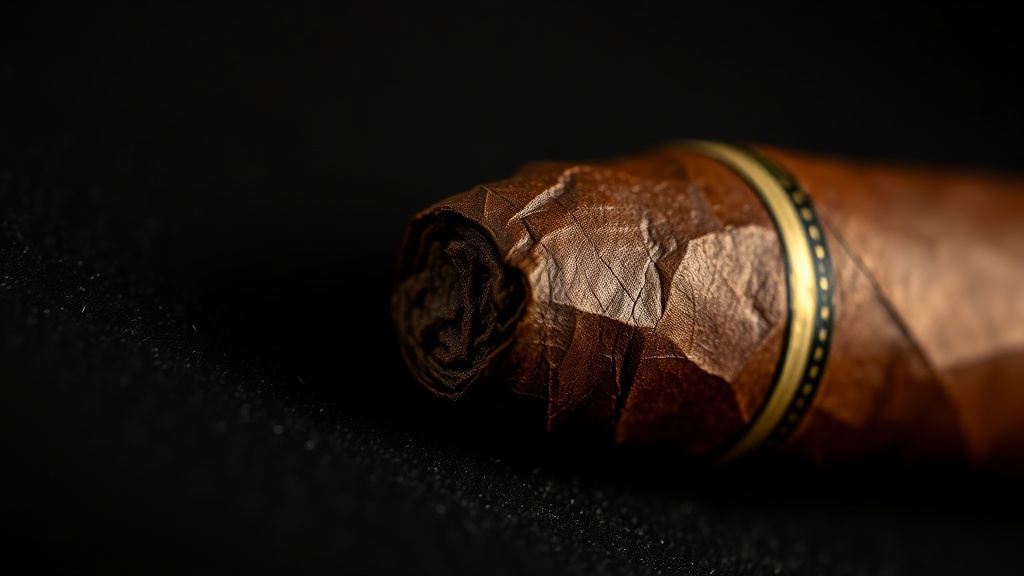
On a tobacco plant in the Vuelta Abajo region of Cuba's Pinar del Río province, between fifteen and eighteen leaves emerge from the stalk during the growing season. They are not interchangeable. Each leaf priming — the height of the leaf along the stalk — produces tobacco of measurably different chemical composition, flavor character, and structural function in the finished cigar.
The encyclopedia documents seven canonical primings: volado (lowest, mildest, used for combustion), seco (lower-middle, balanced), viso (middle, flavor-forward), ligero (upper, concentrated, full-bodied), corojo (a varietal designation as much as a priming), and capa (the wrapper-grade leaf grown under shade). The seventh — and the rarest — is medio tiempo, the priming that defines the Cohiba Behike line and only a handful of other premium Cuban cigars.
What Medio Tiempo Is
Medio tiempo (Spanish: "middle time") is an upper-leaf priming that develops only on a small percentage of tobacco plants, and only when specific environmental conditions hold during the final growing weeks. The leaf appears between the highest ligero priming and the very top of the plant, in a position where the leaf experiences the greatest sun exposure and the most concentrated nutrient delivery. The result is a leaf with the highest oil content, the most concentrated nicotine, and a chemical fingerprint that includes flavor compounds that simply do not appear in lower-priming leaves.
The crucial detail: medio tiempo does not develop on every plant. The encyclopedia documents that perhaps one plant in twenty produces a medio tiempo leaf of usable quality, and even on those plants the yield is typically two leaves rather than the full priming complement that lower positions deliver. A field that produces a metric ton of ligero might produce only twenty kilograms of medio tiempo. The economics of using this leaf in commercial cigars are correspondingly extreme.
Why Cohiba Behike Uses It
The Cohiba Behike line — launched in 2010 and now established as the upper bound of Habanos S.A. pricing — is built around medio tiempo as the central blend component. The Behike BHK 52, BHK 54, and BHK 56 each contain medio tiempo in their filler proportion; the BHK 52 is the format in which the medio-tiempo character is most concentrated relative to the cigar's overall volume.
Medio tiempo contributes three flavor elements that the encyclopedia's calibration reviews identify consistently across the BHK lineup:
- The medicinal note: A faint pharmaceutical bitterness that no other Cohiba line carries. It reads as eucalyptus, camphor, or in some smokers' notes as iodine. This is the medio-tiempo signature.
- The cocoa concentration: The wrapper's natural cocoa note becomes substantially deeper in cigars containing medio tiempo, even when the same wrapper appears in non-Behike Cohiba production.
- The mineral finish: A clean, almost stone-cold mineral length on the finish that no Cuban cigar without medio tiempo replicates. This is the structural contribution.
The combination produces what the calibration review calls "the medio tiempo finish" — a flavor architecture that the smoker can identify blind in roughly four cigars in five if the cigar is genuinely a Behike rather than a counterfeit.
The Counterfeit Problem
Medio tiempo's rarity creates a counterfeit incentive. The Behike line is among the most counterfeited cigars in the world; counterfeiters cannot replicate medio tiempo (the leaf simply is not available outside Habanos S.A.'s controlled supply), so they substitute upper-priming ligero from non-Cuban sources and rely on box presentation, band quality, and consumer unfamiliarity with the genuine flavor signature.
A genuine Behike BHK 52, lit and smoked attentively, produces the medicinal-cocoa-mineral signature within the first third. A counterfeit will produce the burn characteristics and approximate appearance, but the flavor architecture defaults to whatever upper-priming ligero the counterfeiter sourced. The substitution is detectable. The encyclopedia's editorial recommendation: if a Behike does not produce the medicinal note, suspect the cigar.
Beyond Behike: Other Medio Tiempo Cigars
Cohiba Behike is not the only modern Cuban release to use medio tiempo, though it is the most prominent. The encyclopedia documents three additional Habanos S.A. lines that have included medio tiempo in their blend at various releases:
- Trinidad Reyes (limited 2022 release): A small-format vitola built specifically to showcase the medio-tiempo character without the structural complexity of the Behike BHK 56.
- Cohiba 50 Aniversario (2016 release): The fiftieth-anniversary release used medio tiempo in approximately the same proportion as Behike BHK; collectors who acquired and rested boxes from that release report flavor convergence with current BHK 52 production over the decade since.
- Romeo y Julieta Wide Churchill Reserva (2023): A reserva-tier release that included medio tiempo in its filler — the only non-Cohiba mainstream Cuban release to do so in recent memory.
New World production does not include medio tiempo because the leaf is, by definition, a Cuban Vuelta Abajo classification. New World tobacco includes upper-priming ligero of comparable concentration in some Nicaraguan and Honduran fields (the Plasencia field at Estelí is well-known for high-priming leaf intensity), but the specific chemical signature that produces the medio-tiempo finish remains a function of Cuban terroir.
How to Smoke a Medio Tiempo Cigar
The flavor signature is most accessible in the first third, before the cigar's evolution moves toward roasted-coffee and dried-fruit territory. Two practical recommendations:
- Smoke in a clean palate environment. The medicinal note is subtle and is masked by recent food, strong drink, or a recently-smoked bolder cigar. The Behike's medio-tiempo signature is best read on a palate that has rested for at least an hour.
- Pair conservatively. Aged Cuban rum (15+ year) or single-origin espresso are the matrix's three-star recommendations precisely because they do not compete with the cigar's flavor architecture. Bourbon, peated whisky, and cognac all produce competent pairings, but each amplifies different cigar notes at the expense of medio-tiempo prominence.
The full Cohiba Behike profile — vitola breakdown, calibration review of seven Behike formats, aging recommendations, and the specific brand history that produced medio tiempo as a commercial blend component — appears in Part V Chapter I and Appendix L of the encyclopedia.