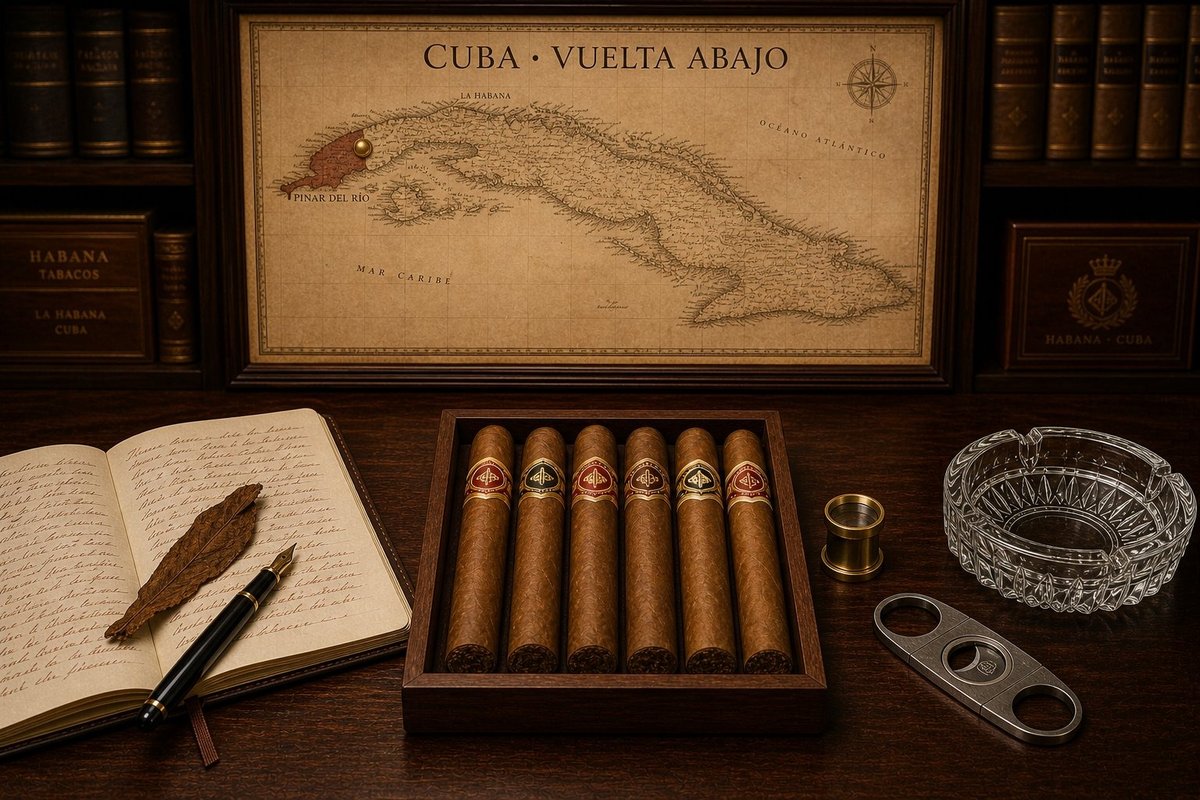
Havana is the only major Caribbean capital that has substantially preserved its early-twentieth-century architectural fabric. It is also the only major Caribbean capital where preservation has been less a deliberate policy than an unintended consequence of seven decades of state economic management. The result is a city that photographs beautifully and lives challengingly — and the cigar traveler arriving in 2026 needs to understand both.
The Cigar Itinerary
The serious cigar traveler's Havana itinerary now organizes around six fixed points and a substantial supply of patience. The fixed points: the Partagás factory tour (still running, still requiring advance reservation, still worth the morning despite the substantial decline in the factory's recent production quality); the La Casa del Habano at the Hotel Habana Libre (the deepest LCDH selection in the world, with reservations strongly recommended for the weekend evening hours); the Fábrica de Tabacos Partagás retail counter (the small ground-floor shop where the factory's current production is available at substantially below the international wholesale price); the Hotel Nacional terrace (the post-dinner cigar institution of Havana's hotel tradition); the Floridita (still the working daiquiri institution, still capable of the original specification when the bar staff is competent); and the Festival del Habano if your visit aligns with February.
The patience: every transaction in Havana takes approximately three times as long as it would in Geneva or Hong Kong. Cash management is a constant operational consideration; the dual currency system has been formally resolved but practically persists as a complex of exchange rates that benefits no one. The taxi system requires verbal negotiation for nearly every ride. None of this is a complaint — it is simply the operational baseline that the visitor needs to internalize before arriving.
What the Visit Delivers
The visit delivers three things that no other city in the cigar world can deliver. The first is the factory floor experience: the Partagás factory tour, despite the recent quality variability of the factory's output, remains the only premium cigar factory tour in the world where the visitor can observe the full rolling process at the institutional scale of the Cuban tradition. The Dominican factories are larger but newer; the Nicaraguan factories are more impressive in current production quality but lack the institutional history.
The second is the cigar-and-cocktail integration that Havana invented and continues to perform better than any other city. The pairing of a Partagás with an aged daiquiri at the Floridita is not just a tourist photograph; it is a workable combination that the local tradition refined over generations. The Cuban cocktail tradition is, in its way, as significant as the cigar tradition; the two have always developed in conversation with each other.
The third is the visual texture that the rest of the cigar world's lounges can only suggest. The Vedado architecture, the Malecón evening light, the interior of the Hotel Nacional — these are not set design. They are the actual operating environment of the original Havana cigar culture, preserved (or, more accurately, not destroyed) for over half a century. The Geneva and Hong Kong outposts of the LCDH franchise reference this material; they cannot reproduce it.
The Difficult Part
The difficult part of the Havana visit in 2026 is the gap between the romanticism of the city's cigar mythology and the practical experience of the cigar production tour. The factory tours show institutional decline that the romantic visitor may not be prepared for. The retail availability is increasingly variable. The cigars themselves — sold at the in-country LCDH prices that substantially undercut the international market — are, in 2026, less reliable than the same lines purchased through the better-disciplined international authorized retailers.
This is not a reason to skip the visit. It is a reason to calibrate expectations. The Havana visit is, in 2026, less about acquiring great cigars (which can be done more reliably elsewhere) and more about experiencing the city that produced the cigar tradition. The two motivations are different and the visitor should be clear about which one is driving the trip.
The Verdict
For the serious cigar aficionado who has not yet visited Havana, the trip remains essential — not because the cigars purchased there will be the best in the cellar but because the city's cigar culture cannot be understood from outside it. For the visitor who has been to Havana before, the question is whether to return; the answer depends on the visitor's reasons for going. For the visitor who is going for the cigars alone, Geneva and Hong Kong will deliver more reliable supply, at higher prices but with substantially better quality control. For the visitor who is going for the city, Havana remains itself — beautiful, challenging, and irreplaceable.
Go. Pay attention. Bring euros. Reserve in advance. Smoke the cigars as part of the city rather than as samples extracted from it. Walk the Malecón. Have the daiquiri at the Floridita. Visit the Partagás factory. Then judge the city for what it actually is in 2026, which is the same city it has always been, with the same gifts and the same difficulties, undergoing the same slow recalibration that all cities undergo when their economies are reorganized by external pressures.