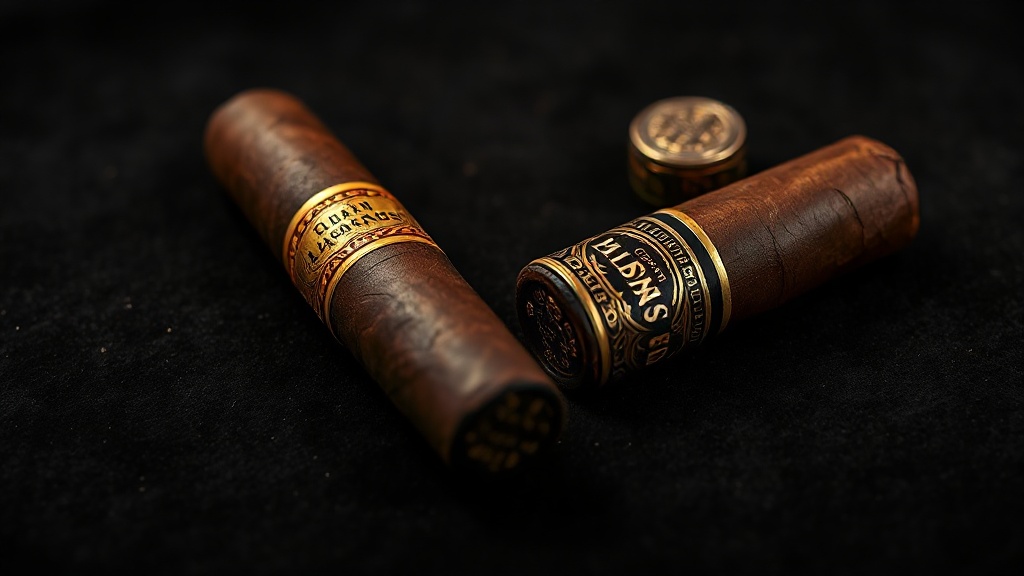
Two cigars dominate the upper end of the modern premium category. Both score in the Outstanding band on the KCS rubric. Both retail above $30 per stick. Both are reference points by which the rest of the market is measured. Yet they could hardly arrive at their position by more different routes.
The Cohiba Behike BHK 52 is the flagship of the Cuban tradition — the marca that defines the upper bound of Habanos S.A. pricing, built on a leaf priming (medio tiempo) found on perhaps one in twenty plants. The Padrón 1926 No. 9 Maduro is the New World counterpoint — a Nicaraguan cigar built on the discipline of ten years of pre-roll aging, a vertically integrated supply chain, and a family editorial judgment that has been remarkably stable across three generations.
This article compares them on the KCS rubric. The full profiles appear in Part V Chapters I and X of the encyclopedia.
The KCS Side-by-Side
| Dimension | BHK 52 | 1926 No. 9 Maduro |
|---|---|---|
| Flavor (35) | 33 | 32 |
| Construction (20) | 18 | 20 |
| Balance (15) | 15 | 14 |
| Evolution (12) | 12 | 11 |
| Intensity (10) | 9 | 10 |
| Value (8) | 3 | 5 |
| Total / 100 | 96 | 97 |
| Band | Legendary | Legendary |
Three observations are immediately interesting.
1. The 97 vs 96 gap is real but small
Padrón scores higher by one point overall, primarily on Construction and Value. The Cuban scoring slightly lower in Construction is not a coincidence: roll inconsistency in current Habanos production is well-documented and shows up in roughly one cigar in twenty as a draw issue or an off-axis burn. The Padrón family's vertical integration produces a more reliable physical product. Both cigars deliver Legendary-tier flavor; the differentiator at the top of the band is whether the box-to-box experience is consistent.
2. The Value gap is the largest single difference
BHK 52 retails at approximately $50–60 per stick at U.S.-adjacent markets where Cuban cigars are legally available; the 1926 No. 9 Maduro retails at $25–32. Both are premium-tier prices, but the Padrón delivers comparable flavor at roughly half the cost. The Value dimension is the smallest at 8 points precisely because the editorial position is that price is a real but secondary factor — but the gap is large enough to register.
3. Flavor is essentially tied
Both score within 1 point of each other on Flavor. The flavors themselves are completely different — the Behike is medio-tiempo concentration with a cocoa-leather-mineral architecture; the 1926 is sun-grown ten-year-aged Nicaraguan with espresso, dark chocolate, and a sweet wrapper finish — but the rubric treats distinctiveness, complexity, transparency to leaf origin as the measure, and both cigars deliver that at the highest level. Different paths, equivalent destinations.
What Each Cigar Teaches
The Behike is the most concentrated expression of the Cuban tradition: a single rare leaf priming, blended in proportions developed at El Laguito over three decades, rolled in the format that maximizes its flavor delivery. It is the Cuban argument that terroir plus tradition equals the upper bound, and that argument is not weakened by the construction inconsistency that costs it two Construction points. The flavor is the point, and the flavor is real.
The 1926 No. 9 Maduro is the most concentrated expression of the New World response: vertical integration, ten-year aging discipline, and editorial stability across three generations of the Padrón family. It is the New World argument that discipline plus consistency equals the upper bound, and that argument is not weakened by the slightly less distinctive flavor architecture compared to medio-tiempo Cuban. The discipline is the point, and the discipline is reproducible across boxes in a way that Cuban production currently is not.
Padrón's argument: discipline plus consistency.
Both arrive at Legendary by entirely different routes.
The Editorial Recommendation
For the smoker who wants the most distinctive flavor experience available in 2026 and is willing to accept the construction lottery: Cohiba Behike BHK 52. The flavor at the upper end is unique — no New World cigar replicates the medio-tiempo finish — and the construction issues are present in perhaps one cigar in twenty rather than dominant.
For the smoker who wants premium flavor with reliable construction and meaningful value at the upper tier: Padrón 1926 No. 9 Maduro. The cigar will smoke as expected, the price is reasonable for what is delivered, and the consistency advantage is real. The flavor architecture is excellent — espresso, dark chocolate, dried fruit — even if it does not reach the Cuban distinctiveness ceiling.
For the aficionado who wants both: smoke them on consecutive evenings, with comparable pairings (aged Cuban rum for both, or Pappy Van Winkle 15-year for both), and decide for yourself. The KCS scores are calibrated; the editorial recommendation respects that no rubric replaces personal judgment.