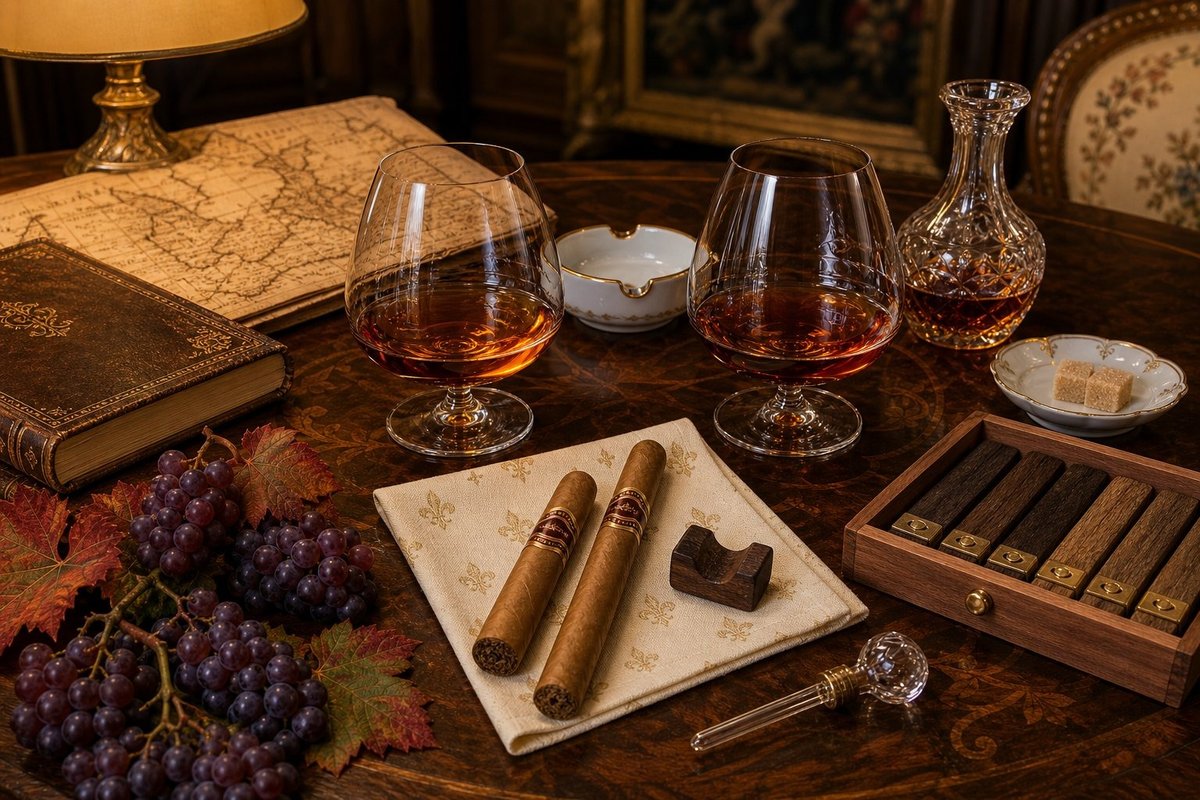
A serious cigar smoker eventually has to choose. Not every evening; not every cigar — but in terms of building a home bar, allocating cellar space, and developing pairing intuition across a decade of smoking, the three principal brown-spirit categories ask for a commitment. We tasted them blind with the same cigar three times this quarter to find out which actually wins.
The Test
We selected three premium cigars representing the three principal modern producing traditions: a Padrón 1964 Anniversary Maduro (Nicaraguan), a Davidoff Aniversario No. 3 (Dominican), and a Cohiba Siglo VI (Cuban). For each cigar, we paired blind with three spirits matched on age and price tier: a Foursquare 2007 (12-year Caribbean rum, ~$110), a Rémy Martin XO (cognac, ~$200), and a Pappy Van Winkle 15-Year (American bourbon, ~$160 when available).
The blind panel — five tasters, bands removed from cigars, decanters unmarked — scored each pairing on three dimensions: complementarity (do the flavors combine productively?), persistence (does the third flavor sustain across the smoke?), and revelation (does the pairing reveal something not present in either component alone?).
The Padrón Pairing
The Padrón 1964 Anniversary Maduro is a full-bodied Nicaraguan cigar with dominant notes of dark cocoa, leather, espresso, and a long dried-fig finish. The Maduro wrapper (sun-cured for additional time) contributes substantial sweetness and a slightly smoky top note.
The Foursquare 2007 won this pairing decisively. The rum's ester-driven fruit character and its Bajan terroir found common ground with the cigar's Caribbean basin agricultural origin; the dried-fig note appeared in both and amplified across the smoke. The Pappy Van Winkle was the second-best pairing — the bourbon's caramel and vanilla complemented the cigar's chocolate notes but created a redundancy in the dessert dimension. The Rémy XO finished last — the cognac's elegance was overwhelmed by the cigar's intensity; the pairing felt unbalanced.
Winner: Caribbean rum.
The Davidoff Pairing
The Davidoff Aniversario No. 3 is a refined Dominican cigar with dominant notes of cedar, dried apricot, gentle white pepper, and a long clean finish without earthiness. The Ecuadorian habano wrapper contributes the characteristic Davidoff refinement.
The Rémy XO won this pairing decisively. The cognac's elegance and its dried-fruit-and-floral character matched the cigar's restraint perfectly; the white pepper note in the cigar found resonance in the cognac's spice profile; the pairing produced a sustained third flavor of dried apricot, candied citrus, and toasted almond that did not appear in either component alone. The Pappy Van Winkle was the second-best pairing — the bourbon's sweetness handled the cigar's restraint without overwhelming. The Foursquare finished last — the rum's tropical-fruit ester character was too forward for the cigar's monastic discipline.
Winner: Cognac.
The Cohiba Pairing
The Cohiba Siglo VI is a full-bodied Cuban cigar with dominant notes of cedar, honey, dried hay, salt, and the characteristic Vuelta Abajo signature that no New World tobacco quite replicates.
The Rémy XO won this pairing — narrowly — over the Foursquare. The cognac's rancio character (the leathery, dried-fig note that develops in long-aged Cognac) created a sustained dialogue with the cigar's own aged-cedar-and-honey profile; the pairing produced a third flavor of dried fig, walnut, and faintly oxidized fruit that the Cohiba alone did not deliver. The Foursquare was a strong second — the rum's Caribbean terroir found common ground with the cigar's island agricultural origin. The Pappy Van Winkle finished last — the bourbon's American-oak sweetness was wrong for the Cuban's drier, more savory profile.
Winner: Cognac (narrowly).
The Verdict
If you have to commit to one category, the answer depends on your humidor strategy. A Nicaraguan-dominant humidor wants aged Caribbean rum as the primary pairing spirit. A Dominican Connecticut-shade-dominant humidor wants cognac. A Cuban-dominant humidor wants cognac (slightly) over rum. A bourbon-dominant bar is the third-best choice across all three cigar traditions; bourbon's strengths (caramel, vanilla, sweet spice) tend to redundantly amplify what cigars already contribute, while the contrasting elements that cognac and rum bring (rancio, esters, terroir) produce more interesting pairings.
This is not an argument against bourbon. Bourbon is excellent. It is, however, the brown spirit that pairs best with food and conversation rather than with cigars specifically — a distinction that may not have occurred to American smokers who grew up on the Old Fashioned + cigar pairing as the default. The Old Fashioned is excellent because the bitters and orange peel modify the bourbon's flavor profile in ways that improve the pairing. Neat bourbon, sipped alongside a premium cigar, is competing with the cigar rather than complementing it.
Build the cellar accordingly. If we had to allocate $1,500 in a starter brown-spirit bar for cigar work: one bottle of Caribbean aged rum (Foursquare or Appleton 21), one bottle of XO cognac (Rémy or Hennessy), one bottle of premium bourbon (Eagle Rare 17 or Pappy 12 if available). The fourth bottle, when budget allows, should be a second Caribbean rum from a different terroir — Spanish Caribbean Solera-style (Zacapa XO or Diplomatico Reserva Exclusiva) to complement the British Caribbean Foursquare. The bar will handle every cigar in your humidor.
Full pairing matrices are in the Pairings section. From Cigar & Cocktail Magazine Q1 2026.